
by Emmitt Barry, Worthy News Washington D.C. Bureau Chief
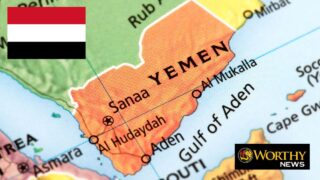
(Worthy News) – Saudi Arabia carried out airstrikes on the southern Yemeni port city of Mukalla on Dec. 30, saying the operation targeted weapons and military vehicles allegedly shipped from the United Arab Emirates to support separatist forces. Riyadh warned that its national security was a “red line” and demanded Emirati forces leave Yemen within 24 hours.
Saudi officials said the vessels involved had disabled tracking systems and unloaded large quantities of weapons intended for the UAE-backed Southern Transitional Council. Saudi state television aired footage of armored vehicles moving from the port, while Yemeni media showed smoke and burned equipment. Independent verification of the cargo was not possible.
The UAE denied shipping weapons, saying the vehicles were for its own forces and expressing surprise at the strike. Hours later, Abu Dhabi announced it would withdraw its remaining troops from Yemen, citing concerns over recent developments and their impact on security operations.
The escalation exposed deepening divisions within the anti-Houthi coalition. Yemen’s Saudi-backed Presidential Leadership Council canceled a defense pact with the UAE and accused it of fueling internal conflict by backing the STC’s recent advances in Hadramout governorate.
Beyond Yemen, the confrontation threatens wider regional repercussions. Saudi Arabia and the UAE are key members of OPEC, which is scheduled to meet virtually on Jan. 4, 2026. Analysts warn that a prolonged dispute could complicate coordination on oil output policy and impact global crude prices.
The strike comes amid Yemen’s decade-long war, which began in 2014 after Iran-backed Houthi rebels seized the capital, Sanaa, and has since fractured the country among rival authorities, worsening one of the world’s gravest humanitarian crises.
Copyright 1999-2026 Worthy News. This article was originally published on Worthy News and was reproduced with permission.
Latest News from Worthy News
U.S.-Iran peace negotiations faced new turbulence Thursday after Iran’s Islamic Revolutionary Guard Corps warned commercial vessels against using routes outside Tehran’s approved passage through the Strait of Hormuz, while Iranian officials also rejected U.S. claims that unfrozen funds would be used to buy American agricultural products.

Fulani herdsmen attacked a Christian village in Plateau state, Nigeria, early Monday, killing 28 Christians, including a pastor, after reportedly being guided toward the homes of church leaders, according to Christian Daily International-Morning Star News.
U.S. Central Command said Wednesday that American forces killed a senior ISIS leader in a precision airstrike in northwest Syria, as the terror group seeks to exploit the country’s unstable security environment following years of war and political upheaval.
An incident at a beauty salon in Pakistan’s largest city has sparked renewed debate about discrimination against Christians after a customer reportedly refused to be served by a Christian employee because of her faith.

A series of major earthquakes shook different parts of the world within less than 24 hours, killing nearly 200 people, injuring many more, and briefly raising fears of a wider global seismic crisis.
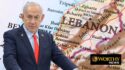
Israeli Prime Minister Benjamin Netanyahu said Thursday that Israel will not withdraw from its security zone in southern Lebanon, insisting the Israel Defense Forces will remain in key positions for as long as necessary to protect Israeli citizens from Hezbollah and other jihadist threats.

A federal judge in Boston on Thursday blocked the Trump administration from enforcing major portions of President Donald Trump’s executive order aimed at tightening rules for mail-in voting, delivering another legal setback to the White House as the administration presses its election integrity agenda ahead of November’s federal elections.