
by Stefan J. Bos, Worthy News Chief International Correspondent
Christian Minority Voices Concern As Mayor Restricts Non-Halal Meat Sales In North Sumatra
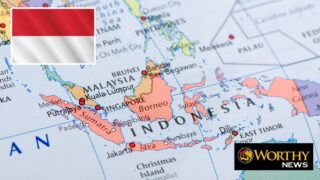
MEDAN, INDONESIA (Worthy News) – The mayor of Medan, one of Indonesia’s largest cities and the capital of North Sumatra province, has restricted the sale of pork and other “non-halal” meat along roadsides and certain public areas, triggering alarm among minority Christians and other non-Muslim vendors.
In a rare display of interfaith unity, more than 1,000 protesters — including Muslims, Christians, traders, housewives and youth groups — marched from Medan Merdeka Square to City Hall, calling on city leaders to reconsider the policy.
A tense calm returned to the city Friday following Thursday’s protest.
The controversy stems from a February 18 municipal directive, known locally as a “circular,” issued by Mayor Rico Waas prohibiting non-halal meat vendors from slaughtering and selling meat on sidewalks, roads and other public facilities.
PORK RESTRICTIONS DRAW CHRISTIAN CONCERN
The directive also bars sales near mosques, prayer rooms and densely populated Muslim neighborhoods, allowing trade only in enclosed kiosks or government-designated market areas.
City officials said the measure was intended to improve hygiene, waste management and traffic flow, along with what they described as “city aesthetics,” particularly during Ramadan, the Islamic fasting month.
However, critics say the policy disproportionately affects vendors from predominantly Christian Batak communities and reflects a broader pattern of increasing religious conservatism that has left some minorities feeling vulnerable.
“This is crazy,” a Christian church worker and entrepreneur told Worthy News on Friday, saying the directive threatens both livelihoods and Medan’s multicultural character.
SOCIAL AND REGIONAL PRESSURES
The move comes amid ongoing concerns about the spread of radical and conservative Islamic influence in parts of Indonesia and its impact on Christians and other religious minorities.
Indonesia, the world’s largest Muslim-majority nation, has roughly 270 million people. About 87 percent identify as Muslim, while 10 to 11 percent identify as Christian, making Christianity the country’s second-largest religion.
On the annual Open Doors World Watch List, which measures persecution of Christians worldwide, Indonesia ranks 59th, reflecting ongoing social and regional pressures despite its democratic framework.
North Sumatra is one of Indonesia’s provinces with a comparatively high Christian population, heightening sensitivities when policies are perceived to single out non-Muslim communities.
PEACEFUL PROTEST, POLICE PLEDGE SAFETY
Lamsiang Sitompul, a representative of a local pork traders’ community, urged Mayor Waas to “revoke the ban,” warning that many families’ livelihoods are at stake.
Among the groups participating in the protest were the Medan Pork Traders and Consumers Solidarity Action Alliance, the Indonesia Christian Youth Movement and several Batak civic organizations.
Police were deployed around City Hall during the rally to maintain order, but no clashes were reported.
Medan Police Chief Jean Calvijn Simanjuntak met demonstrators and led a brief prayer with participants apparently to ease tensions ahead of talks with city officials, witnesses said.
North Sumatra province, home to roughly 15 million people, has one of Indonesia’s larger Christian populations outside Java — the country’s most populous and predominantly Muslim island — adding to concerns that the directive could further strain religious harmony in the diverse regional capital.
Copyright 1999-2026 Worthy News. This article was originally published on Worthy News and was reproduced with permission.
Latest News from Worthy News
Hezbollah Secretary-General Naim Qassem on Thursday rejected a U.S.-brokered ceasefire framework between Israel and Lebanon, warning that the Iran-backed terrorist group would continue attacks as long as Israeli military operations continue in Lebanon.

Several Republican governors are marking June with observances centered on traditional family values, offering a contrast to the month’s broader association with LGBT Pride celebrations.
Israel’s Mossad reportedly carried out a covert operation to supply Kurdish militias with weapons and military aid as part of a broader effort to destabilize Iran’s ruling regime, according to recent investigative reports in Israeli media.

California’s primary election results remained unresolved Thursday, with two of the state’s most closely watched contests — the governor’s race and the Los Angeles mayoral race — still unsettled as officials continued counting mail-in and provisional ballots.

The Department of War has officially reduced the number of recognized religious affiliation codes available to U.S. service members, cutting the list from more than 200 faith codes to 31 in a sweeping reform of the Military Chaplain Corps.

Israel and Lebanon have agreed to a ceasefire provided the Iranian-backed Hezbollah movement also halts hostilities and withdraws its operatives from areas south of the Litani River, the United States announced Thursday.

President Donald Trump has signed an executive order directing the Centers for Disease Control and Prevention and its vaccine advisory panel to review a Department of Health and Human Services assessment calling for a reduced core childhood vaccine schedule, marking a major shift in federal public health policy.