

by Worthy News Jerusalem Bureau Staff
(Worthy News) – The United States has issued a stark warning to its key allies, the United Kingdom and France, against unilaterally recognizing a Palestinian state during a high-stakes United Nations conference set for June 17 in New York, Middle East Eye reported Tuesday.
The conference, co-hosted by France and Saudi Arabia, aims to revive the long-stalled two-state solution. However, diplomatic sources say France is preparing to move ahead with recognition of Palestinian statehood regardless of broader international consensus, pressuring Britain to join and setting the stage for a potentially seismic shift in Western policy.
French media reports suggest that Paris believes it has tacit agreement from the British government, though UK officials remain publicly cautious. Foreign Secretary David Lammy has stated that London would recognize Palestine only when a viable path to a two-state solution is clearly in view. “We won’t act unilaterally,” Lammy said Monday.
Yet pressure is growing within Lammy’s Labour Party. MP Uma Kumaran, a member of the Foreign Affairs Committee, reminded the public that the new government was elected on a platform pledging recognition of Palestine as a step toward lasting peace. “We must act on our promises,” she stated.
Observers say the move could trigger what has been described as a “political earthquake” within the G7. No G7 nation has yet taken the step of recognizing Palestine, making any shift by the UK or France highly consequential, especially given their deep historical and diplomatic ties to Israel.
Israel has expressed sharp opposition to the prospect. Strategic Affairs Minister Ron Dermer warned last week that recognition could prompt unilateral Israeli annexations in parts of the West Bank. “Such a step would not bring peace, but rather inflame tensions,” he told Haaretz.
Meanwhile, Chris Doyle, director of the Council for Arab-British Understanding, criticized the Biden administration’s interference. “There is no legal or moral justification for the United States to intervene in a sovereign decision like recognition,” Doyle said, before acknowledging the unpredictability of U.S. President Donald Trump on the issue. “Trump’s position on Palestinian recognition could shift dramatically depending on negotiations or events on the ground.”
As the June 17 conference nears, the question of Palestinian statehood has become a fault line among Western powers. With France signaling determination and Arab states measuring the summit’s success by recognition outcomes, pressure is mounting on Britain—and on Washington—to clarify their positions before the diplomatic dominoes begin to fall.
Copyright 1999-2026 Worthy News. This article was originally published on Worthy News and was reproduced with permission.
Latest News from Worthy News
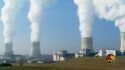
Romania and neighboring Hungary are facing an energy crisis linked to a record heat wave and the related low level of the Danube River, with Romania forced to shut down its last operating nuclear reactor while Hungary struggles to keep the only one of its four Paks reactors still operating online.

An elderly Christian leader has been detained in India for allegedly offending the religious sentiments of the Asian nation’s Hindu majority on social media.

Members of Pakistan’s Christian minority were reeling Friday after numerous violent incidents over faith and what they say were false allegations of blasphemy against Islam, the majority religion in the Asian nation.

The number of Americans filing for unemployment benefits remained relatively low in early August, offering another sign that widespread layoffs have yet to take hold even as hiring across the U.S. economy remains subdued.

The Israel Defense Forces (IDF) carried out a second preemptive airstrike in Gaza in two days Thursday, targeting a Hamas terror cell in Khan Yunis that Israeli military officials said was preparing an attack against Israeli forces.
The Trump administration has announced nearly $2 billion in health and humanitarian assistance for faith-based organizations, placing several major Christian ministries at the center of a reshaped U.S. foreign-aid strategy following sweeping cuts to USAID programs.

Hungarian Prime Minister Péter Magyar has cast doubt on a controversial Russian-led expansion of Hungary’s only nuclear power plant after record-low levels of the Danube River nearly forced its existing reactors into a complete shutdown.