
By Stefan J. Bos, Worthy News Europe Bureau Chief
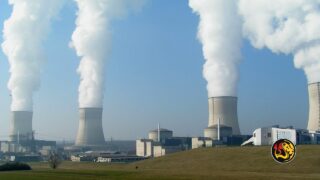
BUCHAREST/BUDAPEST (Worthy News) – Romania and neighboring Hungary are facing an energy crisis linked to a record heat wave and the related low level of the Danube River, with Romania forced to shut down its last operating nuclear reactor while Hungary struggles to keep the only one of its four Paks reactors still operating online.
Romanian authorities used controlled explosions in a desperate attempt to increase Danube water levels needed to cool the country’s Cernavodă Nuclear Power Plant.
But Romeo Urjan, director of the Cernavodă plant, suggested that the efforts were insufficient. “There is no issue affecting us from the standpoint of nuclear safety. But electricity generation can no longer continue with the Danube at such a low level,” he explained.
Romania has been forced to bring a 330-megawatt lignite-fired power plant online to help compensate for the loss of nuclear generation.
Authorities are also relying on increased wind and hydropower generation, depending on available water in reservoirs, to make up for the shortfall.
The situation is not much better in neighboring Hungary, where nuclear power normally provides about 40 percent of electricity generation.
ONE REACTOR
Only one of the four reactors at the Paks Nuclear Power Plant is currently operating as authorities struggle with exceptionally low Danube water levels.
Hungarian Prime Minister Péter Magyar said authorities had begun building “a submerged river barrier” near the plant to raise the water level needed for cooling.
Magyar stressed that the dam-like structure “would initially use 35,000 cubic meters of rock, followed by another 110,000 cubic meters.”
He said the project “should prevent the Danube from falling below minus 90 centimeters at the nuclear plant’s cooling-water channel, eventually allowing Paks to operate at full capacity.”
The simultaneous difficulties in Romania and Hungary are raising new questions about the future reliability of nuclear power in Central and Eastern Europe as heat waves and droughts become more frequent.
Copyright 1999-2026 Worthy News. This article was originally published on Worthy News and was reproduced with permission.
Latest News from Worthy News

Romania and neighboring Hungary are facing an energy crisis linked to a record heat wave and the related low level of the Danube River, with Romania forced to shut down its last operating nuclear reactor while Hungary struggles to keep the only one of its four Paks reactors still operating online.

An elderly Christian leader has been detained in India for allegedly offending the religious sentiments of the Asian nation’s Hindu majority on social media.

Members of Pakistan’s Christian minority were reeling Friday after numerous violent incidents over faith and what they say were false allegations of blasphemy against Islam, the majority religion in the Asian nation.

The number of Americans filing for unemployment benefits remained relatively low in early August, offering another sign that widespread layoffs have yet to take hold even as hiring across the U.S. economy remains subdued.

The Israel Defense Forces (IDF) carried out a second preemptive airstrike in Gaza in two days Thursday, targeting a Hamas terror cell in Khan Yunis that Israeli military officials said was preparing an attack against Israeli forces.

The Trump administration has announced nearly $2 billion in health and humanitarian assistance for faith-based organizations, placing several major Christian ministries at the center of a reshaped U.S. foreign-aid strategy following sweeping cuts to USAID programs.

Hungarian Prime Minister Péter Magyar has cast doubt on a controversial Russian-led expansion of Hungary’s only nuclear power plant after record-low levels of the Danube River nearly forced its existing reactors into a complete shutdown.