
by Stefan J. Bos, Worthy News Europe Bureau Chief
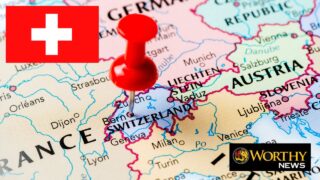
BERN (Worthy News) – Switzerland’s government has rejected a campaign to enshrine a stricter interpretation of the Alpine nation’s centuries-old neutrality in the constitution, ahead of a nationwide referendum next month.
Supporters of the initiative say Swiss neutrality, dating to the end of the Napoleonic Wars, has been “stretched” since Bern imposed economic sanctions on Russia following Moscow’s invasion of Ukraine.
Switzerland has also strengthened cooperation with the NATO military alliance in areas including training, raising concerns among campaigners that closer ties could eventually force the traditionally neutral nation to choose sides in international conflicts.
The Swiss constitution currently contains no fixed definition of neutrality, but campaigners want it to state that Swiss neutrality is perpetual and armed and that the country cannot join military alliances.
SWISS NEUTRALITY REFERENDUM
The proposal would also prevent Switzerland from participating in conflicts between third countries or imposing sanctions against warring nations unless the United Nations approved those measures.
Campaigners gathered more than 100,000 signatures to trigger the September 27 referendum under Switzerland’s system of direct democracy. If voters approve the initiative, the constitution would have to be amended.
The proposal is backed by the right-wing Swiss People’s Party (SVP), but a Tamedia opinion poll in June suggested it faces an uphill battle, with 34 percent supporting the initiative and 54 percent opposing it.
Launching the government’s campaign against the proposal Tuesday, Swiss Foreign Minister Ignazio Cassis said there was no need to replace the country’s current approach with a more restrictive interpretation of neutrality.
GOVERNMENT WARNS OF SECURITY RISKS
“Switzerland has been and is neutral, and it will remain neutral,” Cassis said.
He argued that many of the campaigners’ objectives were already being met because Swiss neutrality is internationally recognized and the country does not belong to a military or defense alliance.
However, Cassis warned that the proposed constitutional restrictions would reduce Switzerland’s ability to respond to emerging security threats by limiting cooperation with foreign partners until the country faced an attack or preparations for one.
“The initiative considerably restricts security policy cooperation,” Cassis said. “Anyone who waits until the crisis is already here before they are willing to cooperate is too late.”
Copyright 1999-2026 Worthy News. This article was originally published on Worthy News and was reproduced with permission.
Latest News from Worthy News
Russian attacks across Ukraine killed at least 12 people and wounded dozens more, Ukrainian officials said Wednesday, as Kyiv accused Moscow of using North Korean ballistic missiles in its escalating air campaign.

Switzerland’s government has rejected a campaign to enshrine a stricter interpretation of the Alpine nation’s centuries-old neutrality in the constitution, ahead of a nationwide referendum next month.
An Indonesian and three Pakistani crew members were among six people killed in an attack by Iran-backed Houthi forces on a cargo ship in the strategic Bab el-Mandeb Strait near Yemen, officials said Wednesday.

Wim de Goeij, a former Jehovah’s Witness who became a prominent Dutch publisher of Bible-teaching materials and outspoken critic of the Watch Tower Society, has died. He was 64.

Hungary’s Parliament elected former Supreme Court President András Baka as the nation’s new president Tuesday, marking a dramatic political comeback for a judge removed from office under former Prime Minister Viktor Orbán.

Massachusetts Gov. Maura Healey has signed legislation removing the state’s previous statutory restrictions governing abortions after 24 weeks of pregnancy, prompting pro-life leaders to warn that the new standard effectively permits abortions throughout pregnancy based on a physician’s professional judgment.

The United States has successfully conducted two closely guarded tests of President Donald Trump’s ambitious Golden Dome missile defense system, marking significant progress toward building a nationwide shield capable of defending the American homeland against ballistic, hypersonic, cruise missile and other advanced aerial threats.