
by Emmitt Barry, with reporting from Worthy News Jerusalem Bureau Staff
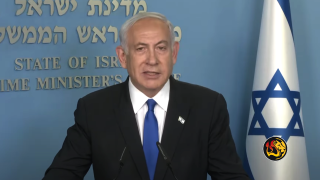
(Worthy News) – Prime Minister Benjamin Netanyahu has clarified Israel’s long-term strategy for the Gaza Strip, stating in two separate interviews that while Israel will take temporary military control of the territory, it has no intention of annexing or permanently governing it.
Speaking to CNN-News18, an Indian English-language outlet, Netanyahu emphasized that Israel’s war goals remain the same: the full dismantling of Hamas and the unconditional return of all hostages. He insisted that the war could end immediately if Hamas surrendered and released those still in captivity.
“Israel will not annex Gaza,” Netanyahu stated. “Once Hamas is defeated, we will hand over control to a transitional governing body—Arab forces that will govern it properly, without threatening us, and give Gazans a good life.”
His remarks were echoed in a separate interview with Fox News, in which the prime minister confirmed that Israel intends to “take military control of all of Gaza” for the sake of national security, but with a clear plan to transfer power to outside actors.
“We don’t want to keep it. We want to have a security perimeter,” Netanyahu said. “We don’t want to govern it. We want to hand it over to Arab forces.”
The comments come hours before Israel’s Security Cabinet is set to convene to debate a proposal for a full military occupation of Gaza—a plan expected to last up to five months and involve five IDF divisions. The move has sparked internal dissent within Israel’s military leadership.
IDF Warns Against Occupation
IDF Chief of Staff Lt.-Gen. Eyal Zamir has voiced strong opposition to the proposed occupation. “We are dealing with matters of life and death,” he said ahead of the cabinet meeting. “Our responsibility is to the soldiers and civilians of Israel. We will act with integrity and determination, but our position is clear.”
Zamir confirmed the completion of Operation Gideon’s Chariots, a large-scale campaign aimed at establishing a new security reality along the border. He said the military now has the capability to neutralize threats early and maintain constant pressure on hostile actors.
“Our goal is the defeat of Hamas,” Zamir stated. “And we continue to operate with the hostages at the forefront of our minds. We will do everything in our power to bring them home.”
With Israel’s next steps in Gaza drawing global attention, Netanyahu’s dual message is clear: Israel will finish the war it was forced into—but has no desire to remain as Gaza’s permanent overseer.
The international community now watches closely as Israel weighs its options, while the fate of Gaza—and its future governance—hangs in the balance.
Copyright 1999-2026 Worthy News. This article was originally published on Worthy News and was reproduced with permission.
Latest News from Worthy News

Romania and neighboring Hungary are facing an energy crisis linked to a record heat wave and the related low level of the Danube River, with Romania forced to shut down its last operating nuclear reactor while Hungary struggles to keep the only one of its four Paks reactors still operating online.

An elderly Christian leader has been detained in India for allegedly offending the religious sentiments of the Asian nation’s Hindu majority on social media.

Members of Pakistan’s Christian minority were reeling Friday after numerous violent incidents over faith and what they say were false allegations of blasphemy against Islam, the majority religion in the Asian nation.

The number of Americans filing for unemployment benefits remained relatively low in early August, offering another sign that widespread layoffs have yet to take hold even as hiring across the U.S. economy remains subdued.

The Israel Defense Forces (IDF) carried out a second preemptive airstrike in Gaza in two days Thursday, targeting a Hamas terror cell in Khan Yunis that Israeli military officials said was preparing an attack against Israeli forces.

The Trump administration has announced nearly $2 billion in health and humanitarian assistance for faith-based organizations, placing several major Christian ministries at the center of a reshaped U.S. foreign-aid strategy following sweeping cuts to USAID programs.

Hungarian Prime Minister Péter Magyar has cast doubt on a controversial Russian-led expansion of Hungary’s only nuclear power plant after record-low levels of the Danube River nearly forced its existing reactors into a complete shutdown.