
by Worthy News Jerusalem Bureau Staff
(Worthy News) – The Israel Defense Forces (IDF) announced Sunday it will begin implementing daily “tactical pauses” in select areas of the Gaza Strip to facilitate the delivery and distribution of humanitarian aid, following mounting international pressure over the growing humanitarian crisis.
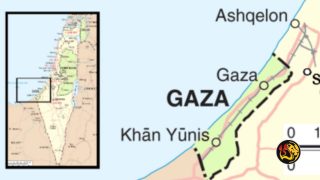
According to the IDF, the pauses will take place daily from 10 a.m. to 8 p.m. in regions where Israeli ground forces are not currently operating, specifically in Al-Mawasi, Deir al-Balah, and Gaza City. The military emphasized that the initiative was launched “in accordance with directives from the political echelon” and coordinated with the United Nations and other international humanitarian agencies.
To further enable humanitarian access, designated secure corridors will remain open from 6 a.m. to 11 p.m., allowing aid convoys to move freely throughout Gaza. The IDF said it would expand the scale of these measures as needed, though it stressed that combat operations against Hamas and other terror groups would continue in parallel.
The announcement comes as several Arab nations, including Egypt, Jordan, and the United Arab Emirates, resumed food and medical aid shipments into Gaza–some by truck, others by air. On Sunday, the Egyptian Red Crescent dispatched over 100 trucks carrying 1,200 metric tons of supplies via the Kerem Shalom crossing. This marked the first Egyptian aid delivery during active fighting since Israel seized control of the Rafah crossing in May 2024.
Israel also carried out its first direct airdrop of humanitarian aid early Sunday morning, delivering seven pallets of food, including flour, sugar, and canned goods, provided by international organizations. While Israel had previously allowed other countries to perform airdrops, this was the first IDF-led operation of its kind in the current war.
In parallel, the United Arab Emirates has begun constructing a water pipeline from Egypt’s desalination plant to Al-Mawasi, aiming to provide clean water to some 600,000 displaced Palestinians. The project, approved by Israel’s Coordinator of Government Activities in the Territories (COGAT), is expected to take several weeks to complete and will operate independently of Israel’s water infrastructure.
Prime Minister Benjamin Netanyahu defended the initiative during a visit to Ramon Air Force Base, stating, “We have allowed humanitarian aid to enter all along, and now it is official. There will be no more excuses. We will continue to fight until we achieve total victory.”
Netanyahu also accused the United Nations of misrepresenting the situation on the ground, saying the UN’s claim that Israel was blocking humanitarian access was false. “There are secured convoys. There have been all along,” he said.
Still, not all members of Netanyahu’s coalition welcomed the move. National Security Minister Itamar Ben Gvir criticized the decision, calling it a “capitulation to Hamas’s deceitful campaign.” He reiterated his call for a full military conquest of Gaza and a halt to all aid, but stopped short of threatening to resign.
UN aid chief Tom Fletcher responded by vowing to ramp up operations during the newly established pauses. “We will do all we can to reach as many starving people as we can in this window,” he said on X.
Meanwhile, President Isaac Herzog called on the UN and its affiliates to step up their role in distributing aid, stating, “Israel is doing its utmost… It is unacceptable that aid remains undistributed or is hijacked by Hamas.”
Despite Sunday’s developments, the humanitarian toll continues to climb. Gaza’s Hamas-run health ministry reported that 56 people, including 22 children, have died from malnutrition-related causes in the past three weeks alone. The IDF has denied accusations of famine, instead blaming the UN and NGOs for failing to efficiently distribute aid.
Many residents in Gaza cautiously welcomed the announcement, hoping it signals a turning point. “People are happy that large amounts of food aid will come into Gaza,” said Tamer Al-Burai, a local business owner. “We hope today marks a first step in ending this war that burned everything up.”
However, concerns remain. The charity Oxfam warned that the daily pauses, while helpful, fall far short of addressing the crisis. “Starvation won’t be solved by a few trucks or airdrops,” said regional policy lead Bushra Khalidi. “What’s needed is a real humanitarian response: ceasefire, full access, all crossings open, and a steady, large-scale flow of aid.”
As the humanitarian window opens amid the fog of war, questions persist over whether tactical pauses are a stepping stone toward de-escalation–or merely a temporary reprieve in a grinding conflict with no clear end in sight.
Copyright 1999-2026 Worthy News. This article was originally published on Worthy News and was reproduced with permission.
Latest News from Worthy News

Romania and neighboring Hungary are facing an energy crisis linked to a record heat wave and the related low level of the Danube River, with Romania forced to shut down its last operating nuclear reactor while Hungary struggles to keep the only one of its four Paks reactors still operating online.

An elderly Christian leader has been detained in India for allegedly offending the religious sentiments of the Asian nation’s Hindu majority on social media.

Members of Pakistan’s Christian minority were reeling Friday after numerous violent incidents over faith and what they say were false allegations of blasphemy against Islam, the majority religion in the Asian nation.

The number of Americans filing for unemployment benefits remained relatively low in early August, offering another sign that widespread layoffs have yet to take hold even as hiring across the U.S. economy remains subdued.

The Israel Defense Forces (IDF) carried out a second preemptive airstrike in Gaza in two days Thursday, targeting a Hamas terror cell in Khan Yunis that Israeli military officials said was preparing an attack against Israeli forces.

The Trump administration has announced nearly $2 billion in health and humanitarian assistance for faith-based organizations, placing several major Christian ministries at the center of a reshaped U.S. foreign-aid strategy following sweeping cuts to USAID programs.

Hungarian Prime Minister Péter Magyar has cast doubt on a controversial Russian-led expansion of Hungary’s only nuclear power plant after record-low levels of the Danube River nearly forced its existing reactors into a complete shutdown.