
by Stefan J. Bos, Worthy News Chief International Correspondent
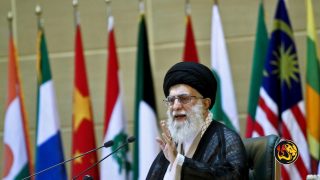
TEHRAN (Worthy News) – Iran declared 40 days of public mourning after confirming that 86-year-old Supreme Leader Ayatollah Ali Khamenei was killed during Israeli and U.S. strikes on his compound in downtown Tehran.
Satellite imagery circulating online showed extensive damage to the site, though independent verification of the circumstances surrounding his death remained limited.
State television said his death at his office “showed that he consistently stood among the people and at the forefront of his responsibilities, confronting what officials call global arrogance.”
Iran’s state media said 40 days of public mourning were declared in line with Shiite tradition. Flags were lowered to half-mast, seven days of public holidays were announced, and nationwide commemorations are expected.
Reports of his death prompted pro-Iran protests in several cities, with demonstrators condemning the strikes and chanting slogans against the United States and Israel. Others posted videos appearing to celebrate the U.S. and Israeli attacks.
It was unclear whether pro-government gatherings were held voluntarily, as they took place despite warnings by U.S. President Donald J. Trump urging civilians to remain indoors amid ongoing bombardment.
UNCONFIRMED REPORTS ON FORMER PRESIDENT
Israeli sources also claimed former Iranian President Mahmoud Ahmadinejad was killed in the strikes. However, those reports were not independently confirmed, and Iranian authorities did not officially verify them as of early Monday.
Khamenei’s death marks the end of an era for generations of Iranians. Born in 1939 in Mashhad, he rose through the ranks during the 1979 Islamic Revolution led by Ruhollah Khomeini.
Experts and biographers describe him as intellectually engaged with poetry and literature in his earlier years, maintaining contact with writers and artists. Some accounts note that he reportedly smoked cigarettes and occasionally a pipe — personal details cited in biographical writings, though rarely reflected in official imagery.
After surviving a 1981 assassination attempt that left his right arm partially paralyzed, he became president later that year and served until 1989. Following Khomeini’s death, he was elevated to Supreme Leader despite not being the most senior cleric at the time.
Over time, that more culturally inclined cleric evolved into a stern and increasingly authoritarian Islamic ruler who centralized power, empowered security forces, and presided over a tightly controlled political and religious system.
Under his leadership, the Islamic Revolutionary Guard Corps expanded significantly in political, military, and economic influence.
PROTESTS, SANCTIONS, AND CRACKDOWNS
The security apparatus played a central role in suppressing dissent. One of the most significant waves of recent unrest followed the 2022 death of Mahsa Amini, a 22-year-old Kurdish Iranian woman who died after being detained by morality police for allegedly violating hijab rules.
With U.S.-led sanctions straining the economy and growing discontent over strict Islamic regulations, protests intensified in recent years.
In January, human rights organizations reported large-scale casualties during crackdowns on demonstrations, warning that the death toll could be in the tens of thousands, though exact figures remain disputed.
Iranian authorities have acknowledged thousands of fatalities while rejecting higher estimates published by rights groups. Officials in Tehran said security forces targeted foreign-backed agitators and “terrorists,” not genuine protesters.
The protests also came amid concern over the treatment of minorities, including Christians.
During Khamenei’s tenure, authorities maintained that Iran’s constitution recognized historic Christian communities — including Armenian and Assyrian Christians — as protected minorities with limited parliamentary representation in the 290-seat legislature.
Experts note that under Article 13 of Iran’s Constitution, Christians, along with Jews and Zoroastrians, are officially recognized as religious minorities “within the limits of the law.”
NO PROTECTION IN PRACTICE
However, observers and advocacy groups say that in practice these protections have often been restricted, particularly for evangelical Christians and Muslim-background converts.
Worthy News has documented cases in which house churches were raided and converts faced prosecution on controversial national security-related charges.
Advocacy groups such as Open Doors have repeatedly ranked Iran among the most difficult places in the world to be a Christian, particularly for former Muslims who adopt Christianity. Pastors and church leaders have faced lengthy prison sentences, and some have previously received death sentences on religiously related charges.
Besides Christians, religious Jews have also faced difficulties. While Judaism remains officially recognized and represented in parliament, Jewish communities have also reported periods of heightened scrutiny, particularly during regional tensions involving Israel.
With Khaneini’s death, uncertainty remains for these minorities and others in the Islamic Republic.
The world now closely watches what remains of Iran’s leadership and the succession process overseen by the Assembly of Experts amiddomestic and international turmoil.
Copyright 1999-2026 Worthy News. This article was originally published on Worthy News and was reproduced with permission.
Latest News from Worthy News

Americans added another $21 billion in credit card debt during the second quarter of 2026, pushing outstanding balances to roughly $1.26 trillion and bringing consumer borrowing close to its record high.

Israel is moving to expand the use of autonomous strike systems across its frontline forces, awarding a new Defense Ministry contract to develop a next generation of low-cost tactical attack drones for the Israel Defense Forces.
The United States has publicly rejected Israeli Defense Minister Israel Katz’s declaration that Israeli troops will remain in southern Lebanon for the long term, exposing a widening disagreement between Washington and Jerusalem over how to secure Israel’s northern border.

Millions across Europe watched Wednesday as a rare total solar eclipse swept across the northern Atlantic and portions of the continent, an extraordinary celestial event unfolding just hours before the biblical calendar entered Elul — the month traditionally associated with repentance, spiritual preparation and the approach of the King.

The State Department has launched a new task force targeting “birth tourism” networks accused of exploiting U.S. immigration laws to secure American citizenship for children born to foreign nationals visiting the United States.

More details have emerged about an extraordinary secret flight by U.S. President Donald J. Trump, who was reportedly moved between aircraft inside a catering truck amid fears of an Iranian attempt on his life.

Russian attacks across Ukraine killed at least 12 people and wounded dozens more, Ukrainian officials said Wednesday, as Kyiv accused Moscow of using North Korean ballistic missiles in its escalating air campaign.