
by Emmitt Barry, Worthy News Washington D.C. Bureau Chief
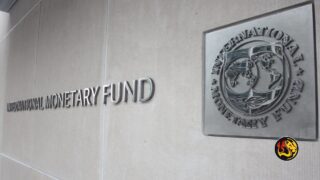
(Worthy News) – The International Monetary Fund (IMF) has downgraded its global growth outlook, warning that the ongoing Iran conflict could push the world economy toward recession if energy disruptions intensify and inflation pressures worsen.
In its latest World Economic Outlook, the IMF said the war in the Middle East—now affecting a significant share of global oil and gas flows—has abruptly halted what had been strengthening economic momentum, replacing it with deep uncertainty for governments, investors, and central banks.
“Downside risks dominate,” IMF analysts stated, cautioning that escalating geopolitical tensions could trigger “the largest energy crisis in modern times.”
Global Growth at Risk
The IMF outlined three potential scenarios based on how the conflict unfolds. In its most severe projection, global growth could fall to around 2 percent—levels historically associated with recession-like conditions and seen only a handful of times since the 1980s.
IMF Managing Director Kristalina Georgieva emphasized the widespread impact of the crisis, noting that up to 13 percent of global oil and 20 percent of gas flows have already been disrupted.
“This shock is large. It is global. Everybody uses energy. Everybody feels the pinch,” she said. “People are hurting.”
Even in the most optimistic outlook, global growth is now expected to slow compared to earlier projections, largely due to infrastructure damage, supply chain disruptions, and declining confidence tied to the conflict.
U.S. Economy Shows Relative Strength
The United States is expected to remain more resilient than many other advanced economies. The IMF projects U.S. growth at 2.3 percent this year, supported by tax cuts, earlier monetary easing, and strong investment in artificial intelligence infrastructure.
Productivity gains since the pandemic have also contributed to stronger-than-expected performance.
However, the IMF warned that the U.S. is not immune. Persistently high energy prices could push inflation higher and force the Federal Reserve to tighten monetary policy again.
IMF Chief Economist Pierre-Olivier Gourinchas described the situation as a “textbook negative supply shock,” with rising energy costs increasing prices, disrupting supply chains, and eroding purchasing power.
Europe Faces Greater Strain
The eurozone is expected to be hit harder due to its reliance on imported energy. The IMF cut its growth forecast for the region to 1.1 percent in 2026 and 1.2 percent in 2027.
Already weakened by the aftermath of the Russia-Ukraine war, Europe now faces compounding energy pressures that could further strain households and industries.
Inflation Pressures Intensify
Under the IMF’s severe scenario, oil prices could average $110 per barrel in 2026 and $125 in 2027, while European gas prices could surge by as much as 200 percent.
Global inflation could exceed 6 percent in 2026, with rising food and energy costs placing additional burdens on consumers worldwide.
In the United States, inflation is projected to remain above target at around 3.2 percent in 2026 before easing slightly the following year.
Gourinchas warned that sustained inflation risks becoming entrenched, forcing central banks to act more aggressively.
“That change in inflation expectations is going to require central banks to step on the brakes,” he said.
Policy Challenges Mount
The IMF cautioned that governments have limited ability to respond due to high debt levels and rising borrowing costs. Measures such as price controls or export restrictions could worsen the crisis.
“Don’t pour gasoline on the fire,” Georgieva urged, warning against policies that distort markets.
Some countries—including China, France, and South Korea—have already introduced temporary fuel price caps, while U.S. states like Indiana have implemented short-term tax relief measures.
Central Banks on Alert
Central banks around the world are now closely monitoring inflation expectations. While many are taking a cautious “wait and see” approach, the IMF stressed that decisive action may be required if inflation accelerates.
Officials at the Federal Reserve have already signaled that interest rate hikes remain possible if inflation stays elevated.
Meanwhile, Bank of England Governor Andrew Bailey said policymakers “stand ready to act” to ensure inflation returns to target levels.
As the conflict enters its seventh week, the IMF concluded that the global economy faces a turbulent road ahead, with energy shocks, inflation, and geopolitical uncertainty converging into one of the most significant economic threats in decades.
Copyright 1999-2026 Worthy News. This article was originally published on Worthy News and was reproduced with permission.
Latest News from Worthy News

Americans added another $21 billion in credit card debt during the second quarter of 2026, pushing outstanding balances to roughly $1.26 trillion and bringing consumer borrowing close to its record high.

Israel is moving to expand the use of autonomous strike systems across its frontline forces, awarding a new Defense Ministry contract to develop a next generation of low-cost tactical attack drones for the Israel Defense Forces.

The United States has publicly rejected Israeli Defense Minister Israel Katz’s declaration that Israeli troops will remain in southern Lebanon for the long term, exposing a widening disagreement between Washington and Jerusalem over how to secure Israel’s northern border.

Millions across Europe watched Wednesday as a rare total solar eclipse swept across the northern Atlantic and portions of the continent, an extraordinary celestial event unfolding just hours before the biblical calendar entered Elul — the month traditionally associated with repentance, spiritual preparation and the approach of the King.

The State Department has launched a new task force targeting “birth tourism” networks accused of exploiting U.S. immigration laws to secure American citizenship for children born to foreign nationals visiting the United States.
More details have emerged about an extraordinary secret flight by U.S. President Donald J. Trump, who was reportedly moved between aircraft inside a catering truck amid fears of an Iranian attempt on his life.
Russian attacks across Ukraine killed at least 12 people and wounded dozens more, Ukrainian officials said Wednesday, as Kyiv accused Moscow of using North Korean ballistic missiles in its escalating air campaign.