
by Stefan J. Bos, Worthy News Chief International Correspondent
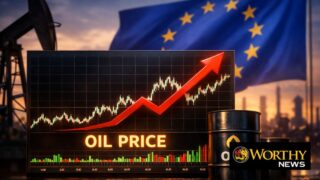
LONDON/DOHA/WASHINGTON/BEIJING (Worthy News) – Oil and natural gas prices jumped sharply Tuesday as global energy markets came under mounting strain after shipping through the strategic Strait of Hormuz stalled amid the ongoing U.S.–Israel conflict with Iran.
The narrow waterway between Iran and Oman — through which roughly 20 percent of the world’s oil and liquefied natural gas (LNG) supplies normally transit — has seen maritime traffic nearly grind to a halt as military tensions escalate and commercial vessels avoid the area.
Energy traders warned that what began as a regional military escalation is rapidly becoming a test of global supply resilience, with tankers rerouting or anchoring outside the Gulf.
Major producers in the region have already felt the impact. QatarEnergy halted operations at key LNG export facilities such as Ras Laffan following Iranian drone threats, disrupting a significant share of global gas exports.
Brent crude, the global benchmark, climbed to its highest level since mid-2024, while European and U.S. energy contracts also surged amid fears the disruption could last.
OIL AND LNG SUPPLY RISKS MOUNT
European natural gas prices spiked sharply, though still below the record highs seen during the 2022 energy crisis triggered by Russia’s invasion of Ukraine.
Shipping insurers increased risk premiums for vessels entering the Gulf, further tightening supply chains and driving up transport costs.
Analysts said oil could approach $100 per barrel if traffic through the strait remains restricted for more than several days.
Financial markets reacted nervously, with major stock indexes falling and bond yields fluctuating as investors reassessed inflation risks.
The Strait of Hormuz has long been considered one of the world’s most vulnerable energy chokepoints, and any sustained closure would reverberate across Asia, Europe, and beyond.
US AND CHINA ISSUE STATEMENTS
U.S. President Donald J. Trump acknowledged rising oil prices but downplayed long-term economic concerns.
“If we have a little high oil prices for a little while, but as soon as this ends, those prices are going to drop, I believe, lower than even before,” Trump said at the White House.
He added that the United States remains committed to protecting maritime freedom and said American military assets are positioned to safeguard global shipping routes.
The White House emphasized that ensuring open sea lanes remains a strategic priority as energy markets monitor developments.
China, the world’s largest crude oil importer, expressed “deep concern” over the disruption and urged restraint from all parties.
GLOBAL POWERS URGE STABILITY
China’s Foreign Ministry said Beijing hopes the Strait of Hormuz remains open and secure, warning that escalation could harm global economic recovery.
Chinese officials also said they would take necessary steps to safeguard energy security while calling for the protection of international shipping routes.
Europe and Asia are considered most exposed to LNG supply disruptions due to their reliance on Gulf exports, particularly given reduced storage levels after winter demand.
While the United States has greater domestic production capacity, gasoline and diesel futures have also climbed on expectations of tighter refining margins.
Energy experts say the longer the disruption persists, the greater the risk of spillover inflation into the food, transport, and manufacturing sectors worldwide.
FEARS OF ENERGY CRISIS
Analysts caution that even if flows resume within days, volatility may persist as traders reassess geopolitical risk premiums.
A prolonged closure of the Strait of Hormuz would strain supply chains, intensify competition for alternative sources, and potentially slow global economic growth.
The episode underscores how quickly geopolitical conflict in the Middle East can destabilize global markets.
With maritime traffic still severely reduced and no immediate resolution in sight, energy markets remain on edge, watching whether the disruption proves temporary — or marks the beginning of a broader global energy shock.
Copyright 1999-2026 Worthy News. This article was originally published on Worthy News and was reproduced with permission.
Latest News from Worthy News

Americans added another $21 billion in credit card debt during the second quarter of 2026, pushing outstanding balances to roughly $1.26 trillion and bringing consumer borrowing close to its record high.

Israel is moving to expand the use of autonomous strike systems across its frontline forces, awarding a new Defense Ministry contract to develop a next generation of low-cost tactical attack drones for the Israel Defense Forces.

The United States has publicly rejected Israeli Defense Minister Israel Katz’s declaration that Israeli troops will remain in southern Lebanon for the long term, exposing a widening disagreement between Washington and Jerusalem over how to secure Israel’s northern border.

Millions across Europe watched Wednesday as a rare total solar eclipse swept across the northern Atlantic and portions of the continent, an extraordinary celestial event unfolding just hours before the biblical calendar entered Elul — the month traditionally associated with repentance, spiritual preparation and the approach of the King.

The State Department has launched a new task force targeting “birth tourism” networks accused of exploiting U.S. immigration laws to secure American citizenship for children born to foreign nationals visiting the United States.

More details have emerged about an extraordinary secret flight by U.S. President Donald J. Trump, who was reportedly moved between aircraft inside a catering truck amid fears of an Iranian attempt on his life.

Russian attacks across Ukraine killed at least 12 people and wounded dozens more, Ukrainian officials said Wednesday, as Kyiv accused Moscow of using North Korean ballistic missiles in its escalating air campaign.