
By Stefan J. Bos, Worthy News Chief International Correspondent
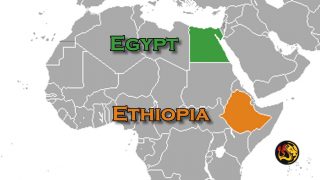
JERUSALEM/CAIRO (Worthy News) – Egypt and Sudan have welcomed an offer by U.S. President Donald J. Trump to resume American mediation efforts with Ethiopia to resolve a long-running dispute over Nile River waters, amid renewed tensions following the completion of Ethiopia’s massive hydroelectric dam.
Egyptian President Abdel Fattah al-Sisi said he valued Trump’s offer to mediate talks between Egypt and Ethiopia, amid concerns over water security linked to Ethiopia’s Grand Ethiopian Renaissance Dam, known as GERD.
Trump said he was prepared to restart U.S.-led negotiations to ease tensions surrounding the dam, which Egypt and Sudan view as a serious threat to their vital water supplies.
President Sisi said Saturday that he had responded to a letter from Trump by reaffirming Egypt’s long-standing position and its worries about Nile water security. His remarks came months after Ethiopia inaugurated Africa’s largest hydroelectric project on the Blue Nile.
The GERD is designed to generate more than 5,000 megawatts of electricity—enough to double Ethiopia’s power generation capacity and expand access to electricity nationwide.
However, Egypt has sharply criticized the project, calling it a “grave violation of international law” and an “existential threat.” Officials in Cairo fear the dam could significantly reduce the flow of the Nile River, on which Egypt depends almost entirely for fresh water.
SUDAN ALSO WORRIED
Sudan, which lies downstream and closer to the dam site, has echoed some of those concerns, though it has taken a more measured stance. Sudanese authorities warn that any structural failure or sudden water release could pose an immediate risk to Sudanese cities, farmland, and existing dams.
Sudan’s military leader and head of the ruling Sovereign Council, Abdel-Fattah Burhan, praised Trump’s initiative, saying it could help find what he described as “sustainable and satisfactory solutions that preserve everyone’s rights.”
Both Egypt and Sudan are calling for a legally binding agreement governing the filling of the GERD’s reservoir and the dam’s operation, particularly during drought. Ethiopia has rejected such demands, insisting on non-binding guidelines and arguing that the project is a sovereign development effort.
Egypt, a largely desert nation with a population of about 110 million, relies on the Nile for agriculture, drinking water, and industry. President Sisi has said Egypt’s share of Nile water is “untouchable,” while stressing that Cairo still favors a negotiated settlement.
Sudan has also demanded closer coordination and real-time data sharing to prevent unexpected water releases that could damage its infrastructure.
Ethiopia maintains that the estimated $5 billion dam is essential to its economic development, noting that a large portion of its population still lacks access to reliable electricity. Friends and foes view renewed U.S. mediation as offering a rare diplomatic opening in one of Africa’s most sensitive and strategically important water disputes.
Copyright 1999-2026 Worthy News. This article was originally published on Worthy News and was reproduced with permission.
Latest News from Worthy News
Israeli Prime Minister Benjamin Netanyahu issued a blunt warning to Turkey on Wednesday after Israel struck a Syrian military airbase that Jerusalem says Ankara was preparing to use for an expanded military presence in Syria.
Democratic socialist Angie Nixon scored a surprise victory Tuesday in Florida’s Democratic U.S. Senate primary, defeating heavily funded establishment favorite Alex Vindman and adding to a growing series of socialist and far-left victories reshaping Democratic politics across the country.

The United States government passed a sobering milestone Wednesday as the national debt topped $40 trillion, up from $39 trillion only five months ago.

The U.S. Department of Justice plans to deploy approximately 1,000 federal election monitors across the country for November’s midterm elections, marking what officials say will be a record-sized monitoring operation.

President Donald Trump announced what he called an “Economic D-Day” against Iran on Wednesday, warning that countries, banks, businesses and governments that continue providing Tehran with economic lifelines could themselves face severe U.S. consequences.

President Donald Trump has paused sweeping 50% tariffs on roughly $20 billion in Canadian imports for three days, giving Washington and Ottawa additional time to finalize what Trump says is a new trade agreement between the neighboring countries.

At least nine people, including five Bangladeshi nationals and a child, were killed Wednesday when fire and thick smoke swept through a building housing several hotels in Kolkata, highlighting broader concerns about lax enforcement of fire-safety regulations in one of the world’s most densely populated cities and across India.