
By Stefan J. Bos, Chief International Correspondent Worthy News
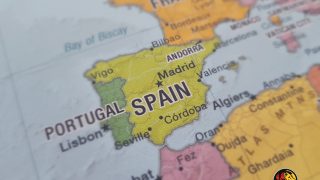
MADRID (Worthy News) – Violence broke out in Spain’s capital after Spain’s parliament voted to make Pedro Sanchez prime minister for another term on Thursday, ending a protracted deadlock after an inconclusive general election in July.
Protesters in Madrid clashed with riot police outside Parliament after he reached a deal with Catalan separatist Junts party, which includes amnesties for people involved with Catalonia’s failed 2017 independence bid.
They agreed that in exchange for the separatists’ freedom, they gave his Spanish Socialist Workers’ Party (PSOE) political support.
He made the deal despite hundreds of thousands protesting on Sunday.
Sanchez’s bid garnered 179 votes in favor and 171 against, with no abstentions. The “nays” stemmed from the conservative People’s Party, the far-right Vox, and the People’s Union of Navarre’s lone lawmaker.
Yet soon after, angry crowds gathered outside the parliament to denounce his re-election, with police trying to end the riots.
The angry crowd accused him of “betraying the nation” to stay in power, something he will be reminded of for some time to come.
Copyright 1999-2026 Worthy News. This article was originally published on Worthy News and was reproduced with permission.
Latest News from Worthy News

A Dutch community remained in shock Saturday after a 13-year-old girl was detained following the discovery of her parents’ bodies in their home in the northern Netherlands.
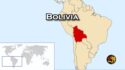
Bolivian President Rodrigo Paz declared a 90-day state of emergency Saturday, empowering the military to clear road blockades after nearly 50 days of anti-government protests that have included widespread road blockades, leaving at least 14 people dead and crippling the nation’s economy.
A powerful thunderstorm system sweeping across Western Europe killed at least one person in the Netherlands, injured several others in Belgium and Germany, and caused widespread damage as nearly 190,000 lightning flashes illuminated the skies, authorities said Saturday.
Israeli strikes killed at least 10 people in Lebanon on Saturday despite a ceasefire that took effect hours earlier, officials said, with Israel claiming it was responding to attacks by the Iran-backed Hezbollah group.
Israel and Iran-backed Hezbollah have agreed to a ceasefire that was to begin Friday afternoon, Worthy News learned.
At least 10 people, including four children, were injured in a Russian strike on Ukraine’s northeastern Kharkiv region, Ukrainian authorities said Friday. In southern Ukraine, the State Emergency Service reported that one person was killed and four others were injured in a separate Russian attack on the Odesa region.

President Donald Trump signed the temporary peace deal with Iran ahead of schedule Wednesday at the Palace of Versailles in France, kicking off negotiations over a final nuclear deal.