

by Stefan J. Bos, Worthy News Europe Bureau Chief
MUNICH, GERMANY (Worthy News) – Western leaders sought to project unity at the 2026 Munich Security Conference despite tensions over U.S. interest in acquiring Greenland, differences on ending the war in Ukraine, and questions surrounding the future of transatlantic cooperation.
U.S. Secretary of State Marco Rubio told the gathering that “the United States and Europe belong together,” signaling that Washington still sees Europe as a key partner.
Observers in Munich described “a visible sense of relief” among European delegates following Rubio’s affirmation that the United States wants to remain Europe’s ally.
German Chancellor Friedrich Merz warned that the post–World War II international order “no longer exists in that form,” while stressing that the United States is “not powerful enough to go it alone” in today’s geopolitical climate.
He called for renewed transatlantic trust and said Europe must assume greater responsibility for its own defense within NATO.
EUROPE PRESSED TO STEP UP DEFENSE ROLE
Merz emphasized strengthening Europe’s defense capabilities while preserving the transatlantic alliance.
German officials indicated Berlin supports deeper NATO cooperation and a stronger European pillar within the alliance structure.
NATO Secretary-General Mark Rutte urged European allies to increase defense spending and ensure the alliance remains “ready and able” to defend its territory, warning that growing global instability requires stronger collective preparedness.
French President Emmanuel Macron said Europe must strengthen its strategic autonomy while maintaining transatlantic ties, arguing that European security cannot rely solely on the United States.
Ukrainian President Volodymyr Zelensky told participants that European unity is the “best interceptor” against Russian aggression.
UKRAINE WAR MARKS FOURTH YEAR
However, Zelensky accused the United States of placing greater emphasis on potential Ukrainian concessions than on Russian ones in diplomatic discussions.
He spoke as Ukraine marks the fourth anniversary this month of Russia’s full-scale invasion — a war that has now lasted longer than the Soviet Union’s campaign against Nazi Germany during World War II.
Beyond Ukraine, Greenland emerged as another sensitive issue. British Prime Minister Keir Starmer announced that the United Kingdom will deploy warships and fighter jets to the Arctic in 2026, reinforcing NATO’s northern flank amid rising strategic competition.
Danish Prime Minister Mette Frederiksen said U.S. interest in acquiring Greenland remains “very serious,” referring to remarks by President Donald J. Trump.
She stressed that national sovereignty must be respected and noted that Greenland’s people have said they “do not want to become Americans.”
ARCTIC SECURITY ADDS NEW STRAIN
As the conference concluded, leaders publicly reaffirmed their commitment to NATO cooperation, even as differences persisted over Ukraine strategy, Arctic security, and Europe’s efforts to assert greater strategic autonomy amid strained relations with Washington.
Copyright 1999-2026 Worthy News. This article was originally published on Worthy News and was reproduced with permission.
Latest News from Worthy News

The Israel Defense Forces (IDF) is preparing for the possibility that an emerging U.S.-Iran agreement could pressure Jerusalem to limit its military campaign against Hezbollah in Lebanon, even as Israeli leaders insist the country must retain freedom of action against threats along its northern border.

Ukraine’s Pentecost Sunday was overshadowed by mourning after Russia used its hypersonic Oreshnik ballistic missile in one of the heaviest assaults on Kyiv and surrounding regions since Russia’s full-scale invasion began, killing at least four people and injuring about 100 others, officials said Sunday.

Israeli Prime Minister Benjamin Netanyahu said Sunday that President Donald Trump agreed any final agreement with Iran must dismantle Tehran’s nuclear enrichment sites and remove enriched nuclear material from Iranian territory, as Israeli defense officials voiced growing alarm over the emerging U.S.-backed diplomatic framework.
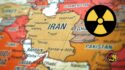
Iran has denied agreeing to surrender any of its enriched uranium stockpile under a proposed U.S.-brokered ceasefire framework, raising fresh questions over whether a broader peace deal can survive its most difficult issues: Tehran’s nuclear program, the reopening of the Strait of Hormuz, and Iran’s continued support for Hezbollah.

President Donald Trump said Sunday that his administration is in “no hurry” to finalize an end-of-war agreement with Iran, signaling caution after earlier indications that Washington and Tehran were nearing a framework deal to reopen the Strait of Hormuz and preserve a fragile cease-fire.

More than half of the federal budget will go toward benefits for Americans 65 years and older by 2036, and that percentage is set to only grow, a recent congressional report finds.

Two people were shot, including the suspected gunman, in a shooting outside the White House Saturday night.