
by Emmitt Barry, Worthy News Correspondent
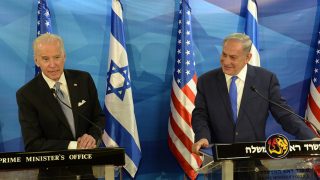
(Worthy News) – President Biden reportedly urged Israeli Prime Minister Benjamin Netanyahu to cancel a preemptive strike against Hezbollah, citing concerns about the possibility of a broader regional conflict, according to the Wall Street Journal (WSJ).
Israeli officials possessed intelligence, which the U.S. considered unreliable, indicating that Hezbollah terrorists were preparing to infiltrate the border for a multi-pronged assault.
Israeli fighter jets were already airborne, awaiting instructions, when President Biden communicated with Prime Minister Netanyahu on October 11. During their conversation, Biden advised Netanyahu to stand down and carefully consider the potential consequences of proceeding with the operation, according to individuals familiar with the call told the WSJ.
The Israeli assault was ultimately canceled. The discussion between President Biden, other U.S. officials, Prime Minister Netanyahu, and his war cabinet, details of which have not been disclosed before, established a precedent for the White House’s efforts to prevent any escalation of the conflict that might involve the United States.
Upon receiving a briefing, Biden engaged in a call with Netanyahu and his war cabinet, emphasizing the importance of Israel standing down. Netanyahu remained unconvinced, but key members of his war cabinet, especially Defense Minister Yoav Gallant, argued that a larger-scale conflict was inevitable and that they needed to take preemptive action. The U.S. countered, maintaining that a more significant war could still be prevented.
During that period, northern Israel heightened its state of readiness. Israeli troops stationed along the northern border received urgent directives from their superiors, instructing them to ready themselves for potential confrontations with Hezbollah terrorists attempting to infiltrate the country from southern Lebanon, including paragliding and ground incursions. An alert was issued to all residents in northern Israel, urging them to seek immediate shelter in bomb shelters.
These warnings, which were ultimately determined to be false alarms, contributed to heightened concerns of another attack, according to both U.S. and Israeli officials.
It required approximately six hours of continuous discussions and negotiations before Israeli authorities eventually decided to stand down, as the U.S. maintained that the intelligence did not indicate an imminent Hezbollah assault.
According to statements from U.S. and former Israeli officials, Netanyahu and his war cabinet ultimately opted against proceeding with the significant pre-emptive strike.
The Biden Administration has been trying to negate any escalation of a wider regional war since the terrorist attack committed by Hamas on October 7.
Following the massacre by Hamas on October 7, the U.S. deployed two aircraft carrier strike groups to the Mediterranean Sea to enhance deterrence against the possibility of a more significant regional conflict.
Copyright 1999-2026 Worthy News. This article was originally published on Worthy News and was reproduced with permission.
Latest News from Worthy News

More than 1,300 people died as an extreme heatwave gripped Europe, shattering temperature records across several countries on Sunday, officials said.

Billionaire Democratic donor George Soros and his son Alex Soros have poured $102.8 million into the 2026 midterm election cycle, according to a New York Post review of federal campaign finance filings, placing the family among the most powerful financial forces shaping Democratic politics.

California Gov. Gavin Newsom is calling for a national tax on billionaires and a federal stake in artificial intelligence companies, positioning himself closer to the Democratic Party’s populist wing as he weighs a possible 2028 presidential bid.
The White House Religious Liberty Commission has issued a sweeping set of recommendations aimed at strengthening religious freedom in schools, workplaces, the military, health care and other public institutions, calling for clearer protections for Americans who face discrimination or pressure over expressions of faith.

Federal authorities have rescued 7,200 children from traffickers and predators under the Trump administration, marking a 42 percent increase from the previous administration, FBI Director Kash Patel said in a June 25 update.

Israeli Prime Minister Benjamin Netanyahu called a new U.S.-brokered framework agreement between Israel and Lebanon a “historic accomplishment,” saying the understandings could move the two countries toward ending hostilities and eventually reaching a peace agreement while dealing a major setback to Iran and its proxy Hezbollah.

A newly released report in the United Kingdom alleges that predominantly Muslim grooming gangs exploited vulnerable children across Britain for decades while police, social services, schools, health officials, licensing authorities, and political leaders repeatedly failed to intervene.