
By Stefan J. Bos, Chief International Correspondent Worthy News
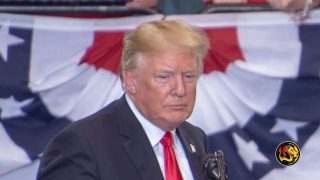
WASHINGTON (Worthy News) – U.S. President Donald J. Trump wants to pressure America’s neighbors to renegotiate a continental trade deal by threatening to impose massive tariffs on goods from Canada and Mexico as soon as next week, U.S. sources said Tuesday.
Trump earlier told reporters “We’re thinking in terms of 25 percent on Mexico and Canada because they’re allowing vast numbers of people” across the border.
He also said, in response to reporters in the Oval Office on Monday night, “I think we’ll do it on February 1.”
Yet officials now suggest that even if they agree on how to tackle migration and drugs, the president still seeks leverage on the U.S.-Mexico-Canada (USMCA) trade agreement.
The USMCA was crafted during Trump’s first term in office to replace the North American Free Trade Agreement. It is up for statutory review in 2026—but Trump hopes to renegotiate it sooner, according to people familiar with his thinking cited by The Wall Street Journal (WSJ) newspaper.
Trump is reportedly focused on using the threat of tariffs to change automotive rules under the continental trade pact, forcing car plants to move from Canada and Mexico back to the U.S.
That has sent major automakers rushing to find ways to satisfy Trump without “blowing up the North American auto supply chain” that extends throughout the three nations, according to one auto-industry executive cited by the WSJ.
According to people briefed on the matter, Trump will turn to Howard Lutnick, his pick for Commerce secretary, and Jamieson Greer, his nominee for U.S. Trade Representative, to handle the renegotiation of the USMCA.
Automakers ship billions of dollars worth of vehicles and parts daily across the U.S. borders with Canada and Mexico. Critics say Trump’s plan for 25 percent tariffs on imports from those countries could severely disrupt those operations.
“Most people in the industry are waiting to see what happens and to see what the administration is looking for from Canada and Mexico,” Mark Wakefield, global automotive market lead at AlixPartners, a consulting firm, said on Tuesday.
“For now, they assume this is more a negotiating chip than it is something that’s really going to happen, more of an exercise to bring people to the table.”
Whether Trump, the deal-maker-in-chief, will compromise remains to be seen.
Copyright 1999-2026 Worthy News. This article was originally published on Worthy News and was reproduced with permission.
Latest News from Worthy News

President Donald Trump abruptly canceled planned U.S. strikes against Iran on Thursday, saying a multinational agreement to end the conflict had been approved by top Iranian leadership and was awaiting final documents and a formal signing.

Federal authorities said Thursday they have accounted for 146,000 unaccompanied migrant children who entered the United States during former President Joe Biden’s administration, while roughly 300,000 minors remain unaccounted for, amid allegations that many vulnerable children were placed with fraudulent sponsors and exposed to abuse, labor exploitation, and sex trafficking.

Congress left Washington without renewing Section 702 of the Foreign Intelligence Surveillance Act, allowing a key foreign surveillance authority used to track foreign terrorists and national security threats to expire Friday.

The U.S. Court of Appeals for the Federal Circuit on June 11 temporarily allowed President Donald Trump’s 10 percent global tariffs to remain in effect, extending a pause on a lower court ruling that had struck down the duties as unlawful.

Dutch police detained a young man l man after four people, including three children, were killed when a car struck a group of cyclists during a school outing near the Belgian border on Thursday, officials said.

The leaders of Hungary, Poland, the Czech Republic, and Slovakia are expected to meet this month amid growing debate within the European Union over how future member states should be admitted and monitored.

China has condemned the European Union’s ban on public funding for Chinese-made solar inverters, a move that analysts say could affect more than a fifth of new solar capacity and complicate efforts to meet the bloc’s self-imposed “climate targets.”