
By Stefan J. Bos, Worthy News Europe Bureau Chief
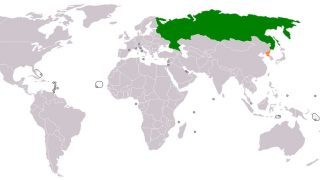
PYONGYANG/MOSCOW/KYIV (Worthy News) – Russia and North Korea have agreed to “strengthen” their strategic relationship amid indications that Moscow will use more North Korean forces and weapons in its war against Ukraine.
Foreign Minister Sergey Lavrov discussed the partnership with North Korean autocratic leader Kim Jong-un during an official state visit on Saturday, officials said.
Lavrov also held talks with his North Korean counterpart, Choe Son-hui, as North Korea’s military is increasingly involved in Russia’s war against Ukraine.
Lavrov was asked whether North Korean troops might be deployed beyond the Russian border region of Kursk, which Moscow claims to have “liberated” from Ukrainian forces.
Lavrov told Russian media that such decisions are entirely up to Pyongyang.
“The Democratic People’s Republic of Korea independently determines how we implement our strategic partnership,” Lavrov stated. He had earlier praised North Korean soldiers for their “heroic efforts” in driving out Ukrainian forces from the Kursk region.
While Lavrov declined to provide more details, North Korea is set to triple the number of its troops fighting for Russia along the front lines with Ukraine, sending an additional 25,000 to 30,000 soldiers to assist Moscow, according to an intelligence assessment from Ukrainian officials.
SOON ARRIVING
The troops may arrive in Russia in the coming months, adding to the 11,000 sent in November who helped repel Ukraine’s incursion into Russia’s Kursk region, they said.
Around 4,000 of those North Korean soldiers were killed or injured in the deployment, according to Western officials.
The Russian Foreign Ministry described Lavrov’s meeting with North Korea’s leadership as part of an “unbreakable bond of combat solidarity” between the two countries.
He added the “invincible fighting brotherhood,” underscoring the “strengthening strategic alliance” between Moscow and Pyongyang.
Lavrov pointed to North Korea’s support as evidence of the growing military cooperation.
The meeting reportedly occurred in Wonsan, a military-focused coastal city on North Korea’s eastern shore, also home to a newly opened megaresort.
Lavrov said Russia would encourage an influx of Russian tourists to the resort, framing it as part of expanding bilateral ties. Lavrov’s state visit will continue through Sunday.
RAISING CONCERNS
Yet their talks were due to raise concerns in Kyiv that Russia would receive more military support after Ukrainian President Volodymyr Zelenskyy said overnight that Russian strikes killed at least two people and wounded about 20 others.
He stressed that Russia launched 597 drones and 26 missiles, most of which were intercepted. However, several residential buildings were hit, and casualties were reported in the city of Chernivtsi in southwestern Ukraine.
The Ukrainian Air Force confirmed the downing of 319 drones and 25 missiles. One missile and around 20 drones reportedly struck five different locations.
The series of large-scale Russian airstrikes overnight Friday into Saturday struck multiple cities in western Ukraine, Ukrainian authorities reported, with significant damage in areas near the Polish and Romanian borders.
Targets included the city of Lviv, close to Poland, and Chernivtsi, located near Romania. Russian drones and ballistic missiles were launched toward these western regions.
Regional officials said a major fire broke out in Lviv following the attack, and natural gas infrastructure in the area was reportedly damaged.
Observers said the strikes highlight Moscow’s increasing reach into areas once considered relatively safe in the ongoing war, which began with Russia’s full-scale invasion of Ukraine in February 2022.
WESTERN SANCTIONS
President Zelenskyy suggested that the latest attacks underscored the need to increase Western sanctions against Moscow, including targeting its energy sector, and provide additional military aid.
Slovakia said it aims to reach a final agreement with the European Union by Tuesday on halting imports of Russian gas and approving a new sanctions package against Moscow.
Prime Minister Robert Fico made the pledge Saturday despite his country still relying on Russian natural gas, which the EU’s executive European Commission wants to phase out, proposing a ban starting in 2028.
However, Slovakia is blocking the sanctions package due to fears of natural gas shortages and soaring energy prices. The country is demanding firm guarantees before signing off.
The package must pass with unanimous approval by all 27 EU member states.
Hungary, another Russian natural gas recipient, has also threatened to veto the proposal, as it has one of the lowest utility prices in Europe.
Hungarian Prime Minister Viktor Orbán’s Fidesz party is trying to limit social unrest as opinion polls already show it facing an uphill battle ahead of next year’s elections.
Copyright 1999-2026 Worthy News. This article was originally published on Worthy News and was reproduced with permission.
Latest News from Worthy News

The United States launched a new wave of strikes against Iran on Wednesday, targeting air defense and radar sites near the Strait of Hormuz as President Donald Trump increased military pressure on Tehran following days of escalating attacks and stalled nuclear negotiations.

Tehran warned Wednesday it would “reassess” its participation in peace talks with the United States after President Donald J. Trump said Iran would have to “pay the price” as the two nations traded fire overnight.

The killing of a 22-year-old Christian man in Pakistan’s Punjab province has sparked grief and renewed concerns about the safety of religious minorities, Christian leaders told Worthy News on Wednesday.
Turkish President Recep Tayyip Erdogan warned Wednesday that Israel’s military operations in Syria and Lebanon have reached the point of threatening Turkey itself, escalating a bitter war of words with Israeli Prime Minister Benjamin Netanyahu as tensions widen across the Middle East.

U.S. inflation rose by 0.5% in May, coming up to 4.2% over the last 12 months, according to data from the U.S. Bureau of Labor Statistics released on Wednesday.
North Korea’s uranium-enrichment capacity could soon rise by roughly 75% once a new facility at its Yongbyon nuclear complex reaches full production, according to a Wall Street Journal exclusive citing analysis from Vertic, a London-based arms-control verification group.
Israel’s Knesset on Wednesday approved in a preliminary reading a controversial Basic Law proposal that would declare Torah study a foundational value of the State of Israel and effectively recognize long-term yeshivah study as a form of meaningful service comparable to serving in the Israel Defense Forces.