
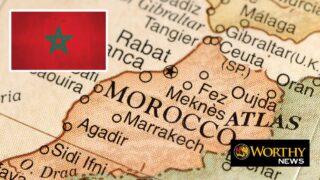
The 655-mile Atlantic corridor is expected to strengthen Morocco’s control of its southern territories while expanding trade and security cooperation across North Africa
by Emmitt Barry, Worthy News Washington D.C. Bureau Chief
RABAT, MOROCCO (Worthy News) – President Donald Trump announced Sunday that Morocco was naming a major Atlantic expressway in his honor, drawing renewed attention to a sweeping infrastructure project linking the kingdom’s southern regions with the disputed territory of Western Sahara.
Trump thanked Morocco’s King Mohammed VI for what he described as the “great honor” of naming the route the President Donald J. Trump Highway. The Moroccan government had not issued a separate formal announcement confirming the new name as of Monday, although Moroccan and international news outlets reported Trump’s statement.
Previously known as the Tiznit-Dakhla Expressway, the four-lane road extends approximately 1,055 kilometers, or 655 miles, along Morocco’s Atlantic coast. The approximately 10 billion-dirham project connects Tiznit with Dakhla through Guelmim, Tan-Tan, Laayoune and Boujdour. Moroccan investment authorities say the road is intended to accelerate the movement of goods between the southern provinces and the kingdom’s principal production and distribution centers.
The highway is a major component of Morocco’s effort to integrate its southern territories economically and administratively with the rest of the country. Rabat has invested heavily in roads, ports, renewable energy projects and urban development throughout the region, including the planned Dakhla Atlantic Port, which is intended to establish the area as a commercial gateway to West Africa.
The route also carries considerable diplomatic significance. During Trump’s first administration, the United States recognized Moroccan sovereignty over Western Sahara as part of a December 2020 agreement under which Morocco restored diplomatic relations with Israel. The agreement brought Morocco into the U.S.-brokered Abraham Accords and expanded commercial, diplomatic and security cooperation between Rabat and Jerusalem.
Israel formally recognized Moroccan sovereignty over Western Sahara in July 2023. Prime Minister Benjamin Netanyahu informed King Mohammed VI of the decision, placing Israel alongside the United States in supporting Rabat’s claim over the disputed territory.
Western Sahara remains contested by Morocco and the Algeria-backed Polisario Front, which seeks an independent Sahrawi state. The United Nations has pursued a negotiated settlement for decades, while several Western governments have increasingly backed Morocco’s proposal to give the territory autonomy under Moroccan sovereignty. The Trump administration said in 2025 that the autonomy proposal should serve as the sole basis for negotiations.
Moroccan officials have also portrayed control of the territory as a national security issue. Rabat severed diplomatic relations with Iran in 2018 after accusing Tehran and the Iranian-backed Hezbollah terrorist organization of arming and training Polisario fighters through Algeria. Iran and Hezbollah denied the accusations.
Supporters of the highway say improved transportation, government access and commercial development will make it more difficult for armed groups or foreign-backed networks to operate in isolated areas. The road could allow Moroccan authorities to deploy security forces more rapidly while tying previously remote communities to the country’s economic centers.
For Israel, Morocco’s growing control of its Atlantic and southern territories could strengthen a friendly government on North Africa’s western flank. Israel and Morocco have expanded defense and intelligence cooperation since normalization, including military exercises, cybersecurity coordination and defense technology agreements.
The highway’s naming also highlights the broader strategic alignment that emerged from the Abraham Accords. What began as a diplomatic exchange involving U.S. recognition of Morocco’s Western Sahara claim and Moroccan normalization with Israel is now being reinforced through infrastructure, investment and security cooperation stretching from the Mediterranean to the edge of West Africa.
Copyright 1999-2026 Worthy News. This article was originally published on Worthy News and was reproduced with permission.
Latest News from Worthy News
North Korean leader Kim Jong Un marked the 73rd anniversary of the Korean War armistice by paying tribute at war memorials and cemeteries, accompanied for the first time by his daughter, Ju Ae, in a move that analysts say further underscores her increasingly prominent public role.
President Donald Trump and three Republican senators are pressing Senate Majority Leader John Thune to keep the chamber in session through August until lawmakers pass the SAVE America Act, escalating a growing dispute over one of the president’s top election-integrity priorities.
President Donald Trump announced Sunday that Morocco was naming a major Atlantic expressway in his honor, drawing renewed attention to a sweeping infrastructure project linking the kingdom’s southern regions with the disputed territory of Western Sahara.
Israeli Prime Minister Benjamin Netanyahu departed for Washington on Monday ahead of a closely watched meeting with U.S. President Donald Trump, saying Iran and efforts to expand regional peace agreements would be at the center of the discussions. Netanyahu left Israel from Nevatim Airbase after an unexplained delay under heightened security precautions.
Syrian President Ahmed al-Sharaa said Damascus is seeking a security agreement with Israel that could eventually open the door to broader peace talks, declaring that his government has no interest in entering another military confrontation with the Jewish state.
Iranian Supreme Leader Mojtaba Khamenei has openly called for continued “jihad and resistance” against Israel and the United States while declaring the defense of Hezbollah a strategic obligation of the Islamic Republic.
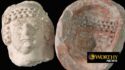
Archaeologists excavating near Jerusalem’s Tower of David have uncovered a rare clay mold used to produce female figurines during the First Temple period, offering a striking glimpse into the religious struggle that unfolded in the Biblical city during the age of the prophets.