
By Stefan J. Bos, Chief International Correspondent Worthy News
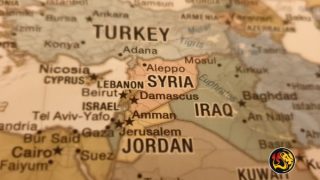
AMMAN (Worthy News) – Jordan’s King Abdullah II has dissolved the Middle East nation’s lower house of parliament ahead of new legislative elections scheduled for September at a time of growing concerns that neighboring Israel’s war against Hamas will turn into a broader regional armed conflict.
Under the Jordanian Constitution, parliamentary elections must be held within four months before the current parliament’s term ends, which concludes in November. The new elections are set for September 10 and will be conducted under a revised election law which allocates 41 of the 138 seats in the assembly to political parties, officials said.
Jordan’s bicameral parliament consists of the Senate, whose members are appointed by the king, and an elected lower chamber known as the House of Representatives. The House of Representatives was dissolved on Thursday by royal decree, the Royal Hashemite Court announced.
According to official figures, turnout in the last parliamentary election in 2020 was 30 percent, compared with 36 percent in 2016.
The 130-member parliament consisted mainly of deputies who belonged to tribes in what became the British Protectorate of Transjordan in 1921.
The population of Jordan has since been increased by the arrival of refugees and migrants, mainly from Palestine but also from Iraq, Syria, and other countries.
For decades, the central role of the Hashemite monarchy has been maintaining the balance between the various ethnic and tribal groups in the country of some 11 million people.
SENSITIVE TIME
Yet the September elections come at a sensitive time for Jordan’s king. Most of Jordan’s people are of Palestinian origin after the nation took in millions of what it called “Palestinian refugees fleeing their homeland” following the founding of Israel.
The Gaza crisis has put King Abdullah II in a challenging position as he struggles to reconcile support for an independent Palestinian state with a long-standing U.S. alliance and decades-old recognition of Israel.
The war has sparked widespread public anger, with calls by protesters to cut ties with Israel. With the growing influence of parties expected after the elections, the issue of future relations with Israel was due to be high on the political agenda.
Jordan also faces pressure from Iran, which seeks Israel’s destruction. In May, Jordan foiled a suspected Iranian-led plot to smuggle weapons into the U.S.-allied kingdom to help opponents of the ruling monarchy carry out acts of sabotage, sources said.
The weapons were reportedly sent by Iranian-backed militias in Syria to a cell of the Muslim Brotherhood in Jordan that has links to the military wing of the Palestinian group Hamas. The cache was seized when members of the cell, Jordanians of Palestinian descent, were arrested in late March, officials said.
The alleged plot and arrests came amid the raging American-backed Israel war in Gaza with Hamas, which is part of Iran’s “Axis of Resistance” network of proxy groups built up over decades to oppose Hamas said it had “no ties to any acts targeting Jordan” and that it only sought to target the Jewish nation.
However, the arrests underscored broader concerns about the security challenges faced by Jordan’s king and legislators.
Copyright 1999-2026 Worthy News. This article was originally published on Worthy News and was reproduced with permission.
Latest News from Worthy News

President Donald Trump signed the temporary peace deal with Iran ahead of schedule Wednesday at the Palace of Versailles in France, kicking off negotiations over a final nuclear deal.
Iran’s Supreme Leader Mojtaba Khamenei’s statement following the signing of a memorandum of understanding with the United States is being viewed by analysts not as an embrace of peace, but as a carefully crafted declaration that preserves Tehran’s revolutionary posture while allowing the regime to regroup.

The United States imposed new sanctions Thursday on individuals and entities linked to Hezbollah, accusing them of using political and financial influence to obstruct Lebanon’s peace process and delay the Iran-backed group’s disarmament.

Ukraine launched one of its largest drone attacks on Moscow since the war began, hitting a key oil refinery and other targets around the Russian capital, leaving at least one person dead and numerous others injured, Russian officials said.

Russian President Vladimir Putin hosted Southeast Asian leaders in Kazan this week as Moscow moved to deepen ties with the Association of Southeast Asian Nations and promote its vision of a “multipolar world order” aimed at countering U.S. global dominance.

Israeli Prime Minister Benjamin Netanyahu said Thursday that Israeli troops will not withdraw from southern Lebanon and will maintain a security zone there for as long as Israel’s defense needs require, placing Jerusalem at odds with both Tehran and the terms of a U.S.-Iran memorandum that calls for an end to hostilities in Lebanon.

U.S. Defense Secretary Pete Hegseth told NATO leaders Thursday that the Pentagon is launching a six-month review of U.S. force posture and basing in Europe, signaling a major push by the Trump administration to ensure European allies assume primary responsibility for defending the continent.