
by Emmitt Barry, Worthy News Washington D.C. Bureau Chief
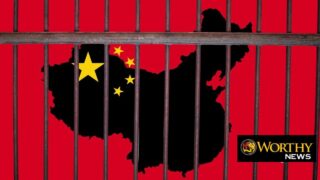
(Worthy News) – A Wall Street Journal exclusive is drawing renewed attention to the imprisonment of Pastor Ezra Jin, the founder of Beijing’s Zion Church, whose arrest has become a flashpoint in China’s intensifying campaign against unregistered Christian congregations.
According to the Journal, Jin was finishing dinner with his elderly mother-in-law in Beihai, a city in southern China, when more than a dozen police officers appeared at the apartment door last October. Authorities stormed the residence, seized his phones and computer, and took him into custody. He has since been held at Beihai’s No. 2 Detention Center, separated from his congregation and from family members living in the United States.
The Journal reported that Jin is being held on suspicion of “illegal use of information networks,” a charge connected to Zion Church’s online ministry. Seventeen others associated with the church have also reportedly been detained, making the case one of the largest crackdowns on Chinese Christianity in decades.
Jin’s conflict with Chinese authorities stretches back years. He built Zion Church into one of Beijing’s largest unsanctioned Protestant congregations, operating outside China’s state-controlled religious system. For a season, churches like Zion were tolerated as China opened economically and some local authorities looked the other way. That changed under Chinese leader Xi Jinping, who has sought to bring religious activity more directly under Communist Party oversight.
The pressure on Zion escalated in 2018, when authorities demanded that surveillance cameras be installed inside the church. Jin and other leaders resisted, saying government officials were welcome to attend services but that cameras would intimidate worshipers. Soon afterward, police raided Zion, shut down its meeting place, scratched the church logo from the wall, seized instruments, and banned its activities.
Rather than disappear, Zion adapted. Jin and other pastors moved the church online, distributing sermons digitally and later using Zoom and other tools to continue worship, teaching, prayer, and pastoral training. What began as a survival strategy soon expanded Zion’s reach far beyond Beijing, connecting believers in homes and cities across China.
That online expansion appears to have placed Jin on a collision course with Beijing. The Journal described Zion’s digital model as “Church 3.0,” a decentralized network that made it far harder for authorities to crush the congregation by shutting down a single building. Daily prayer gatherings reportedly reached thousands of devices, while small groups met in homes to worship and take communion.
Jin’s daughter, Grace Jin Drexel, now an American citizen, has been pressing U.S. officials to keep her father’s imprisonment in the public eye. President Donald Trump said after his recent China visit that Xi was giving serious consideration to releasing the pastor. A White House official told the Journal that Trump cares deeply about Christians around the world, while China’s Foreign Ministry rejected foreign criticism and said Beijing handles religious and judicial matters according to its own laws.
History and Persecution
Christianity has endured repeated waves of pressure in China, from the expulsion of missionaries after the Communist takeover in 1949 to the suppression of unregistered churches, pastors, and house-church networks in later decades. The Chinese government officially permits religious practice only through state-approved bodies, but many Christians refuse to place the Church under Communist Party control, choosing instead to worship in underground or unregistered congregations.
Over the past generation, China’s house-church movement has grown despite surveillance, harassment, arrests, and forced closures. Under Xi Jinping, the pressure has intensified through digital monitoring, restrictions on online preaching, ideological campaigns, and demands that religious groups conform to socialist and party doctrine. Yet the testimony of pastors like Ezra Jin reflects an old truth of Church history: persecution may scatter believers, but it often strengthens the witness of those who refuse to bow to earthly powers over the Lordship of Jesus Christ.
Copyright 1999-2026 Worthy News. This article was originally published on Worthy News and was reproduced with permission.
Latest News from Worthy News

A growing group of relatives of those murdered in the Sept. 11, 2001, terrorist attacks is urging organizers to prevent New York City Mayor Zohran Mamdani from attending the 25th anniversary commemoration at Ground Zero.

Israeli Prime Minister Benjamin Netanyahu is scheduled to meet President Donald Trump at the White House on Tuesday as the two leaders confront critical decisions over Iran, Gaza and the broader security landscape across the Middle East.
President Donald Trump firmly rejected reports Sunday suggesting that the United States is running dangerously low on military munitions as the administration weighs its next steps in the escalating conflict with Iran.

Typhoon Noul struck China’s southern coast early Sunday, forcing more than 800,000 people from their homes, disrupting hundreds of flights, and prompting the nation’s highest-level warning for potentially deadly flash floods.
President Donald Trump is urging Senate Republicans to approve the House’s $95 billion budget resolution before Congress leaves for the month of August.
Israel’s Security Cabinet approved in principle Sunday the deployment of an international stabilization force in parts of the Gaza Strip, clearing the way for an initial reconstruction and humanitarian project in Rafah.
Turkey has not met the conditions required to purchase American F-35 fighter jets, the U.S. State Department said, despite President Donald Trump recently signaling that he would support reviving the long-stalled sale.