
by Emmitt Barry, Worthy News Washington D.C. Bureau Chief
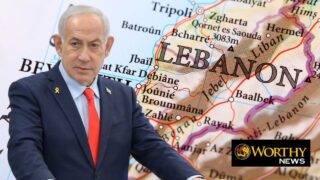
(Worthy News) – Israel signaled a major strategic shift on its northern front Tuesday, as Defense Minister Israel Katz announced that the Israel Defense Forces (IDF) intends to establish a permanent security zone inside southern Lebanon extending to the Litani River.
Speaking after a high-level military assessment, Katz said Israeli forces would remain positioned inside Lebanese territory at the conclusion of current operations, forming a defensive line designed to prevent cross-border attacks and protect northern Israeli communities.
“At the end of the operation, the IDF will be positioned in a security area inside Lebanon… and will have security control over the entire area up to the Litani,” Katz said.
The Litani River lies roughly 20 miles north of the current boundary between Israel and Lebanon, marking a significant expansion beyond the existing buffer zone. Israeli officials view the area as strategically critical to neutralizing threats from Hezbollah, particularly anti-tank missile positions and rocket launch sites.
Katz emphasized that more than 600,000 displaced Lebanese residents would not be allowed to return to areas south of the Litani until Israel determines that northern communities are fully secure. He also indicated that homes in border villages would be demolished to eliminate militant infrastructure, citing operational models used in Gaza areas such as Rafah and Beit Hanoun.
Israeli ground forces, he said, are continuing to push into Lebanese villages “with great force,” targeting Hezbollah operatives, dismantling weapons networks, and destroying fortified positions used for attacks against Israel.
The defense minister framed the campaign as part of a broader regional effort to counter Iranian influence, stating that Israel is determined to “separate Lebanon from the Iranian arena” and dismantle Hezbollah’s operational capabilities.
The escalation follows renewed hostilities that began after Hezbollah launched rockets and drones into Israel on March 2, in response to the killing of Iran’s Supreme Leader Ali Khamenei during the opening phase of the ongoing U.S.-Israel campaign against Iran.
Israel responded with extensive airstrikes and ground operations, citing violations of a prior ceasefire agreement and the need to eliminate persistent threats along its northern border.
The push toward the Litani River has also gained political backing within Israel. Finance Minister Bezalel Smotrich recently called for the river to serve as Israel’s new de facto northern boundary, arguing that a deeper security buffer is necessary to prevent future attacks.
“The Litani must be our new border,” Smotrich said, warning against a return to conditions that allowed militant forces to operate near Israeli communities prior to recent conflicts.
Israeli leaders maintain that the objective of the campaign is not territorial expansion but long-term security. “We promised to protect the communities of the north, and that is exactly what we will do,” Katz said.
As operations continue, the proposed security zone marks one of the most significant potential changes to Israel’s northern posture in decades, underscoring the growing scope of the regional conflict and its far-reaching implications.
Prophetic Perspective: Could Developments in Lebanon Signal the “Latter Rain” Season?
As Israel signals the possibility of expanding its control into southern Lebanon, some prophecy watchers are carefully observing what such a move could represent—not only geopolitically, but spiritually.
Scripture speaks of a future season of outpouring, often referred to as the “latter rain” or malkosh. In Zechariah 10:1, the prophet calls on God’s people to ask the Lord for rain in the time of the latter rain, pointing to a divinely appointed moment when God would pour out His Spirit in preparation for a great harvest.
In the same prophetic context, Zechariah describes a regathering of the Jewish people:
“I will whistle for them and gather them… I will bring them into the land of Gilead and Lebanon, until no more room is found for them” (Zechariah 10:8–10).
This passage is striking, as it specifically mentions not only Israel proper, but also Lebanon and Gilead as part of the overflow of restoration. The imagery is one of abundance—so many returning that the land itself struggles to contain them.
Another prophetic reference appears in Obadiah 1:20, which declares:
“The captives of this host of the children of Israel shall possess the land of the Canaanites as far as Zarephath.”
Zarephath is historically identified along the Lebanese coast, between Sidon and Tyre—modern-day Lebanon. This suggests a future expansion of habitation or influence tied to Israel’s restoration.
Taken together, these passages point to a sequence: regathering, expansion, and ultimately the establishment of the Kingdom under the Lord’s authority.
Whether current military developments directly align with these prophecies remains to be seen. However, the convergence of Israel, Lebanon, and increasing global tension is drawing renewed attention from those who study the prophetic Scriptures.
For many, the key takeaway is not merely territorial—but spiritual. The same passages that speak of regathering also point to an outpouring of God’s Spirit. If the malkosh season is indeed approaching, it would signify not just conflict in the region, but the beginning of a global harvest unlike anything seen before.
In that light, events unfolding in the Middle East may serve as both a warning and an invitation—calling hearts to readiness in what many believe could be a pivotal moment in redemptive history.
Copyright 1999-2026 Worthy News. This article was originally published on Worthy News and was reproduced with permission.
Latest News from Worthy News

More than 1,300 people died as an extreme heatwave gripped Europe, shattering temperature records across several countries on Sunday, officials said.

Billionaire Democratic donor George Soros and his son Alex Soros have poured $102.8 million into the 2026 midterm election cycle, according to a New York Post review of federal campaign finance filings, placing the family among the most powerful financial forces shaping Democratic politics.

California Gov. Gavin Newsom is calling for a national tax on billionaires and a federal stake in artificial intelligence companies, positioning himself closer to the Democratic Party’s populist wing as he weighs a possible 2028 presidential bid.

The White House Religious Liberty Commission has issued a sweeping set of recommendations aimed at strengthening religious freedom in schools, workplaces, the military, health care and other public institutions, calling for clearer protections for Americans who face discrimination or pressure over expressions of faith.

Federal authorities have rescued 7,200 children from traffickers and predators under the Trump administration, marking a 42 percent increase from the previous administration, FBI Director Kash Patel said in a June 25 update.

Israeli Prime Minister Benjamin Netanyahu called a new U.S.-brokered framework agreement between Israel and Lebanon a “historic accomplishment,” saying the understandings could move the two countries toward ending hostilities and eventually reaching a peace agreement while dealing a major setback to Iran and its proxy Hezbollah.

A newly released report in the United Kingdom alleges that predominantly Muslim grooming gangs exploited vulnerable children across Britain for decades while police, social services, schools, health officials, licensing authorities, and political leaders repeatedly failed to intervene.