
By Stefan J. Bos, Chief International Correspondent Worthy News
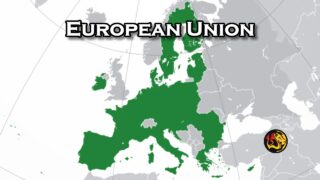
BRUSSELS (Worthy News) – The European Union held its first summit with the Gulf states on Wednesday amid mounting Middle East tensions and as the bloc struggles to receive global support in efforts to isolate Russia over its invasion of Ukraine.
The summit, which lasted just a few hours, included issues ranging from visas and trade to the situation in the Middle East, where Israel says it fights at some seven fronts for its existence.
Benjamin Netanyahu, the Israeli prime minister, listed the battlegrounds as Iran, Hamas in Gaza, Hezbollah in Lebanon, the Houthis in Yemen, Shia militants in Iraq, militant groups in Syria as well as Palestinian fighters in the West Bank.
Officials said the EU also raised human rights issues with their visitors, who included Saudi Arabia’s Crown Prince Mohammed bin Salman.
The United States, United Nationa, and others say aides of Prince Mohammed and other Saudi officials killed U.S.-based journalist Jamal Khashoggi, whose columns for The Washington Post newspaper criticized the crown prince.
The prince has denied that he ordered the killing of Jamal Khashoggi or had prior knowledge about it but says he bears all responsibility for the killing.
‘LONG OVERDUE’
Belgian Prime Minister Alexander De Croo said the summit was “long overdue” and added that “the economic ties between the European Union and the Gulf countries need to be strengthened.”
“They are there, but they have the potential to be developed much, much further,” he said.
The EU also attempted to convince the Gulf States to help it isolate Russia, as its war with Ukraine is believed to have killed and injured hundreds of thousands of people.
To pressure Iran, support from Bahrain, Kuwait, Oman, Qatar, Saudi Arabia, and the United Arab Emirates is also needed.
This week, the EU imposed sanctions on Iran’s deputy defense minister, senior members of its feared Islamic Revolutionary Guard Corps, and three airlines over allegations that they supplied drones, missiles, and other equipment to Russia for use in its war against Ukraine.
Since Moscow invaded Ukraine in February 2022, the 27-member EU has also reached out to other regional blocs, holding its first summit with the Association of Southeast Asian Nations (ASEAN) and its first in eight years with the Community of Caribbean and Latin American Countries (CELAC).
Copyright 1999-2026 Worthy News. This article was originally published on Worthy News and was reproduced with permission.
Latest News from Worthy News
President Donald Trump warned Friday that the United States may soon strike Iran’s Pickaxe Mountain, a deeply fortified underground site near the Natanz uranium enrichment complex, as tensions over Tehran’s nuclear program continue to sharpen.
The United States, Britain, France, and Germany are pressing the International Atomic Energy Agency’s Board of Governors to report Iran to the U.N. Security Council, accusing Tehran of violating its nuclear obligations and refusing to fully account for its enriched uranium stockpile.
Israeli Prime Minister Benjamin Netanyahu declared that removing Iran’s ruling regime has become Israel’s “central mission,” telling senior military officials that the goal is now “within reach” as Tehran faces mounting pressure from Israel, the United States, and regional fallout from its terror network.
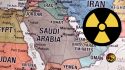
A new U.S.-Saudi civilian nuclear agreement could eventually give Riyadh a pathway to enrich uranium up to 20%, raising fresh concerns in Washington over nuclear proliferation in the Middle East, according to a Wall Street Journal exclusive.

The Israel Defense Forces said Thursday it had completed clearing a strategic Hezbollah underground facility beneath the Ali Taher Ridge in southern Lebanon and was preparing the tunnel complex for demolition.

Syria has begun destroying chemical weapons materials left behind by the Assad regime, marking the first known destruction process of its kind in the country in roughly a decade, officials told the U.N. Security Council on Thursday.

U.S. lawmakers are raising fresh concerns that China, Russia and other American adversaries could use electromagnetic pulse weapons to cripple the nation’s electrical grid and critical infrastructure, potentially plunging large portions of the country into darkness.