
by Stefan J. Bos, Worthy News Chief International Correspondent
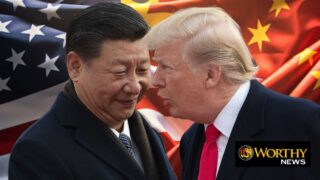
BEIJING (Worthy News) – The world awoke Friday to a new geopolitical reality after U.S. President Donald Trump and his Chinese counterpart, Xi Jinping, concluded high-stakes talks in Beijing that highlighted China’s emergence as a near-equal superpower to the United States amid tensions over Taiwan, Iran, trade, technology, and military rivalry.
Though the summit ended without sweeping breakthroughs, both leaders portrayed their talks as crucial for stabilizing relations between the world’s two largest powers, whose decisions impact billions of people.
Taiwan emerged as the most sensitive issue during the talks, with Xi warning Trump that mishandling the self-governed island could lead to “clashes and even conflicts,” according to Chinese accounts of the meeting.
Beijing considers democratic Taiwan part of China, while the United States maintains unofficial ties with Taipei and remains its most important military supporter.
Trump later told reporters he discussed a delayed $14 billion arms package for Taiwan “in great detail” with Xi but had not yet decided whether to proceed.
TAIWAN TENSIONS RISE
The U.S. president also declined to clarify whether Washington would militarily defend Taiwan in the event of a Chinese attack, maintaining America’s longstanding policy of “strategic ambiguity.”
“The last thing we need right now is war 9,500 miles away,” Trump told reporters.
Analysts said even subtle changes in Washington’s Taiwan policy could alarm U.S. allies across Asia and significantly alter the regional balance of power.
The ongoing conflict involving Iran also overshadowed much of the summit.
Trump said Xi agreed that the Strait of Hormuz — one of the world’s most important oil shipping lanes — must remain open and pledged that China would not provide military equipment to Tehran.
IRAN OVERSHADOWS TALKS
China is Iran’s biggest oil customer and one of Tehran’s most important economic partners, giving Beijing potentially significant leverage in future negotiations over Iran’s nuclear ambitions and regional role.
Trump suggested China could help pressure Iran toward a settlement, while U.S. officials said Washington hoped Beijing would take a more active role in reducing tensions in the Middle East.
“We don’t want them to have a nuclear weapon,” Trump said of Iran.
Yet China’s official summary of the talks made only limited mention of the Iran conflict, underscoring lingering differences between the two powers.
Although no major trade breakthrough was announced, Trump said China committed to purchasing 200 Boeing aircraft and billions of dollars worth of American soybeans. Still, Boeing’s share price fell several percentage points as investors had anticipated a far larger mega-order of roughly 500 aircraft during the summit.
TRADE DEALS ANNOUNCED
Chinese Foreign Minister Wang Yi said both sides also agreed to establish new trade and investment boards to improvecommunication and market access.
The leaders additionally discussed extending a fragile trade truce reached last year after tariffs between the two countries soared during a bitter economic confrontation.
Rare-earth minerals — crucial for electronics, electric vehicles, batteries, and advanced military systems — remained among the most strategically important topics during the summit.
China dominates much of the global rare-earth supply chain, giving Beijing major leverage over industries critical to the U.S. economy and defense sector.
Analysts said maintaining Chinese access to those materials could represent a major strategic objective for Washington.
BUSINESS TITANS JOIN TALKS
The summit also underscored the growing role of major corporations in global diplomacy.
More than a dozen top U.S. business leaders joined Trump on the China trip, including Tesla and SpaceX chief Elon Musk, Apple chief Tim Cook, BlackRock chief Larry Fink, Nvidia chief Jensen Huang, Boeing chief Kelly Ortberg, and Goldman Sachs chief David Solomon.
The executives hope for improved access to Chinese markets and fewer restrictions involving technology exports, artificial intelligence, manufacturing, and rare-earth supplies.
Trump introduced the delegation to Xi as “distinguished representatives from the American business community” who “all respect and value China,” according to Chinese state media.
They met while ethics filings released back in Washington by the U.S. Office of Government Ethics showed Trump disclosed between roughly $220 million and $750 million in securities transactions during the first quarter of 2026, including trades involving several corporations represented on the China trip — such as Nvidia, Apple, and Boeing — as well as Microsoft, Amazon, Meta, and other major companies.
ETHICS FILINGS SCRUTINIZED
The filings renewed scrutiny of potential conflicts of interest, as several companies tied to Trump’s disclosed transactions could benefit from agreements or improved relations arising from the China summit.
Despite unresolved disputes, analysts said the summit underscored how dramatically global power dynamics have shifted since Trump first visited Beijing in 2017.
Back then, China was still widely viewed as lagging behind the United States economically and militarily.
Now, both governments increasingly speak and negotiate as leaders of rival superpowers whose decisions could reshape global trade, military strategy, energy supplies, and diplomacy for years to come.
Trump himself referred to the relationship as a “G2,” suggesting the United States, with roughly 350 million people, and China, with about 1.4 billion people, form the dominant pillars of the global order.
COLD WAR IMAGERY RETURNS
Some analysts say the summit underscored how Washington and Beijing increasingly dominate global decision-making far beyond other major powers, including India and China’s ally Russia.
Xi appeared to reinforce that new reality by invoking the “Thucydides Trap,” a theory that warns of conflict when a rising power challenges an established one.
The carefully choreographed summit also featured symbolic moments intended to project stability between the rival powers. Trump and Xi were seen walking together near Beijing’s historic Forbidden City complex and within the Zhongnanhai leadership compound, exchanging praise and smiling before state media cameras. The images resembled the visual diplomacy often associated with U.S.-Soviet summits during the Cold War.
Trump also said he raised the case of jailed Hong Kong pro-democracy publisher Jimmy Lai during meetings with Xi, though he acknowledged no breakthrough was achieved.
JIMMY LAI RAISED
Lai, 78, a British citizen and devout Roman Catholic, founded the now-shuttered Apple Daily newspaper and became one of Beijing’s most outspoken critics in Hong Kong.
Critics say his imprisonment symbolizes China’s widening crackdown on dissent, press freedom, and religious liberty following mass pro-democracy protests in Hong Kong in 2019.
U.S. Secretary of State Marco Rubio said Washington hoped China would respond positively to appeals for Lai’s release.
Yet the warm rhetoric did little to ease the global rivalry between the world’s two most powerful nations.
Copyright 1999-2026 Worthy News. This article was originally published on Worthy News and was reproduced with permission.
Latest News from Worthy News

The number of Americans filing for unemployment benefits remained relatively low in early August, offering another sign that widespread layoffs have yet to take hold even as hiring across the U.S. economy remains subdued.

The Israel Defense Forces (IDF) carried out a second preemptive airstrike in Gaza in two days Thursday, targeting a Hamas terror cell in Khan Yunis that Israeli military officials said was preparing an attack against Israeli forces.
The Trump administration has announced nearly $2 billion in health and humanitarian assistance for faith-based organizations, placing several major Christian ministries at the center of a reshaped U.S. foreign-aid strategy following sweeping cuts to USAID programs.

Hungarian Prime Minister Péter Magyar has cast doubt on a controversial Russian-led expansion of Hungary’s only nuclear power plant after record-low levels of the Danube River nearly forced its existing reactors into a complete shutdown.
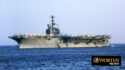
The United States is preparing to send the USS George Washington aircraft carrier to the Middle East, replacing the USS Abraham Lincoln after an exceptionally long deployment supporting American military operations against Iran, according to an exclusive report by The Wall Street Journal.
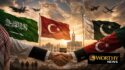
Saudi Arabia, Turkey and Pakistan are moving to deepen military cooperation under a new mutual-defense pact that Israeli analysts say could reshape the Middle East’s security architecture while reducing dependence on the United States and bypassing Israel.

Americans added another $21 billion in credit card debt during the second quarter of 2026, pushing outstanding balances to roughly $1.26 trillion and bringing consumer borrowing close to its record high.