
by Stefan J. Bos, Worthy News Chief International Correspondent
JERUSALEM (Worthy News) – Israeli Prime Minister Benjamin Netanyahu has accepted “full responsibility” for an airstrike in Qatar that killed Hamas operatives, while the United States reaffirmed support for his campaign to dismantle the designated terror group, despite Washington’s reservations over the recent attack.
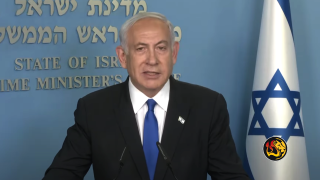
Speaking alongside visiting U.S. Secretary of State Marco Rubio at a news conference in Jerusalem on Monday, Netanyahu defended the September 9 strike that hit a residential compound in Doha’s Leqtaifiya district. Qatari and Hamas officials said the attack killed at least six people, including five Hamas members and a Qatari security officer. Among the dead was Humam al-Hayya, the son of senior Hamas leader Khalil al-Hayya. Several others were injured, but top Hamas officials reportedly survived.
The strike occurred as Hamas representatives were reportedly discussing a U.S.-backed ceasefire proposal, fueling anger in Qatar and across the Arab and Islamic world. In July and August, Hamas negotiators in Doha had taken part in American-sponsored talks on a possible Gaza truce, but those discussions produced no breakthrough.
The airstrike also followed a September 8 shooting in Jerusalem, blamed on Hamas, that left six Israelis dead and heightened security concerns in the Jewish state.
“You can run but you can’t hide,” Netanyahu said, vowing Israel would strike Hamas “wherever they are.” He told Rubio: “Your presence here in Israel today is a clear message that America stands with Israel. You stand with us in the face of terror.”
RUBIO BACKS ISRAELI CAMPAIGN
Rubio echoed that message, declaring: “Hamas needs to cease to exist as an armed element that can threaten peace and security in the region.” When asked about the Doha strike, Rubio replied: “We are focused on what happens next.” Both leaders insisted that the only way to peace is the destruction of Hamas and the return of all hostages, living and dead.
Hamas has so far refused to surrender or release the 48 hostages still held in Gaza, of whom about 20 are believed to be alive, according to Israeli officials. The rest are thought to be dead, but their bodies have not been returned. The group is officially designated as a terrorist organization by the United States, the European Union, and Israel.
On the sensitive issue of international recognition of a Palestinian state, Rubio warned such moves “make Hamas feel more emboldened” and “serve as an impediment to peace.”
The airstrike sparked outrage in Qatar, which accused Israel of violating its sovereignty and called the attack “state terrorism.” A hastily convened Arab-Islamic summit in Doha denounced the strike, warning that such actions could destabilize efforts to normalize ties across the region.
President Donald Trump, asked about the incident shortly after it happened, said he was “very unhappy about every aspect” of the strike on Qatari soil, a close U.S. ally and mediator in Gaza. He added, “We had no part in it. We were informed shortly before it happened, but we did not approve it.”
U.N. AND REGIONAL RESPONSES
On September 10 and 11, Qatar issued sharp condemnations, Arab and Islamic nations coordinated a regional response, and the United Nations Security Council passed a resolution censuring the strike with 14 votes in favor and one abstention. The United States abstained — allowing the measure to pass but declining to endorse it — saying the text failed to address Hamas’s role in the conflict.
Netanyahu brushed aside the criticism, accusing Israel’s detractors of “immense hypocrisy.” He insisted Israel would continue to act together with the United States to confront Hamas and protect its citizens. Yet even as Netanyahu pledged further military action, Qatar vowed to press on with mediation, with its foreign minister stressing that nothing would deter Doha from seeking dialogue. The defiant tone from Jerusalem and the conciliatory stance from Doha underscored the deep divide over how to end the Gaza war.
The conflict began after Hamas launched a surprise assault on Israel on October 7, 2023, killing around 1,200 people, mostly civilians, and taking 251 hostages into Gaza.
Since then, Israel has waged a devastating campaign in the territory. The Hamas-run Gaza Health Ministry says more than 64,000 Palestinians have been killed, though it does not distinguish between civilians and fighters. Israel disputes those figures and maintains that close to half of the dead were Hamas combatants.
The unresolved fate of the remaining hostages and the mounting death toll underline the grinding nature of an armed conflict that neither military strikes nor diplomacy has been able to end, as the war soon enters its third year.
Copyright 1999-2026 Worthy News. This article was originally published on Worthy News and was reproduced with permission.
Latest News from Worthy News

The number of Americans filing for unemployment benefits remained relatively low in early August, offering another sign that widespread layoffs have yet to take hold even as hiring across the U.S. economy remains subdued.
The Israel Defense Forces (IDF) carried out a second preemptive airstrike in Gaza in two days Thursday, targeting a Hamas terror cell in Khan Yunis that Israeli military officials said was preparing an attack against Israeli forces.

The Trump administration has announced nearly $2 billion in health and humanitarian assistance for faith-based organizations, placing several major Christian ministries at the center of a reshaped U.S. foreign-aid strategy following sweeping cuts to USAID programs.

Hungarian Prime Minister Péter Magyar has cast doubt on a controversial Russian-led expansion of Hungary’s only nuclear power plant after record-low levels of the Danube River nearly forced its existing reactors into a complete shutdown.

The United States is preparing to send the USS George Washington aircraft carrier to the Middle East, replacing the USS Abraham Lincoln after an exceptionally long deployment supporting American military operations against Iran, according to an exclusive report by The Wall Street Journal.

Saudi Arabia, Turkey and Pakistan are moving to deepen military cooperation under a new mutual-defense pact that Israeli analysts say could reshape the Middle East’s security architecture while reducing dependence on the United States and bypassing Israel.

Americans added another $21 billion in credit card debt during the second quarter of 2026, pushing outstanding balances to roughly $1.26 trillion and bringing consumer borrowing close to its record high.