
by Emmitt Barry, Worthy News Washington D.C. Bureau Chief
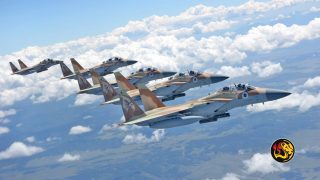
(Worthy News) – The Israeli Air Force was prepared to launch a major strike deep inside Iran last week but was ordered to stand down just one hour before takeoff, according to a letter sent by Israeli Air Force Commander Maj. Gen. Omer Tischler to air force personnel.
The disclosure sheds new light on a tense 17-hour confrontation that began after Israel struck targets in Beirut’s Dahiyeh district, a Hezbollah stronghold long used by the Iranian-backed terror group. Iran responded by firing at Israeli territory, prompting Israel to carry out an initial limited strike while preparing a much broader wave of attacks against targets inside Iran.
According to Tischler, the Israeli Air Force had already shortened alert times, armed aircraft, completed operational planning, and prepared squadrons for takeoff. The mission, he said, was halted while aircrews were being briefed — “only one hour before departure for the sortie.”
Israeli reports said the decision came after U.S. President Donald Trump spoke with Prime Minister Benjamin Netanyahu and pressed him not to escalate the confrontation with Iran. According to Ynet, Trump made clear that if Israel launched a broad strike, it could be left to face the consequences alone.
Tischler’s letter described the canceled operation as part of Israel’s wider campaign against Iran, which he said had already dealt severe blows to Tehran’s leadership, defensive and offensive systems, nuclear components, military industry, economy, and chain of command. He said Israel had significantly reduced the threat, extended Iran’s recovery time, and preserved the ability to return and strike again if required.
The revelation reportedly angered Netanyahu, who rebuked IDF Chief of Staff Lt. Gen. Eyal Zamir over the disclosure. According to The Jerusalem Post, Netanyahu said the letter should not have been written and called it damaging to national unity and embarrassing in front of Trump.
The incident highlights the increasingly delicate balance between Jerusalem and Washington as Israel seeks to deter Iran while the Trump administration works to prevent the region from sliding into a wider war. For Israeli commanders, the message remains clear: Iran’s capabilities have been damaged, but the threat has not disappeared.
Israel’s defense establishment continues to view Iran’s nuclear program, ballistic missile arsenal, and regional proxy network — including Hezbollah in Lebanon — as an existential danger. The canceled strike may have prevented a larger conflict for now, but it also exposed the sharp strategic tension between Israel’s need for deterrence and America’s push for restraint.
Copyright 1999-2026 Worthy News. This article was originally published on Worthy News and was reproduced with permission.
Latest News from Worthy News

The number of Americans filing for unemployment benefits remained relatively low in early August, offering another sign that widespread layoffs have yet to take hold even as hiring across the U.S. economy remains subdued.

The Israel Defense Forces (IDF) carried out a second preemptive airstrike in Gaza in two days Thursday, targeting a Hamas terror cell in Khan Yunis that Israeli military officials said was preparing an attack against Israeli forces.

The Trump administration has announced nearly $2 billion in health and humanitarian assistance for faith-based organizations, placing several major Christian ministries at the center of a reshaped U.S. foreign-aid strategy following sweeping cuts to USAID programs.

Hungarian Prime Minister Péter Magyar has cast doubt on a controversial Russian-led expansion of Hungary’s only nuclear power plant after record-low levels of the Danube River nearly forced its existing reactors into a complete shutdown.

The United States is preparing to send the USS George Washington aircraft carrier to the Middle East, replacing the USS Abraham Lincoln after an exceptionally long deployment supporting American military operations against Iran, according to an exclusive report by The Wall Street Journal.

Saudi Arabia, Turkey and Pakistan are moving to deepen military cooperation under a new mutual-defense pact that Israeli analysts say could reshape the Middle East’s security architecture while reducing dependence on the United States and bypassing Israel.

Americans added another $21 billion in credit card debt during the second quarter of 2026, pushing outstanding balances to roughly $1.26 trillion and bringing consumer borrowing close to its record high.