
by Emmitt Barry, with reporting from Worthy News Jerusalem Bureau Staff
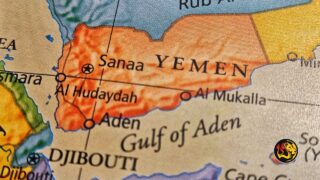
(Worthy News) – The Israeli Air Force (IAF) on Sunday launched extensive airstrikes on Houthi-controlled Sanaa, Yemen, killing at least four people and wounding 67, in response to a ballistic missile attack on Israel two days earlier. The Houthis, an Iran-backed militia, have repeatedly targeted Israel with missiles and drones since late 2023.
According to the Israel Defense Forces (IDF), the strikes targeted four sites: a military compound encompassing Yemen’s presidential palace, a major fuel depot, and the Hizaz and Asar power plants. Israeli officials said these facilities were used for Houthi military operations, including command-and-control and weapons deployment.
“The Houthi terrorist regime is learning the hard way that it will pay and is paying a very heavy price for its aggression against Israel,” Prime Minister Benjamin Netanyahu said while observing the strike from the IAF’s command center in Tel Aviv alongside Defense Minister Israel Katz and IDF Chief of Staff Lt. Gen. Eyal Zamir.
Houthis Introduce Cluster Bomb Warhead
Sunday’s strikes followed an IAF investigation that confirmed the Houthis had, for the first time, launched a ballistic missile armed with a cluster bomb warhead against Israel. The missile broke apart over central Israel Friday night, scattering submunitions. One struck the yard of a home in Ginaton, causing damage but no injuries. The resident, Ilana Hatoumi, was unharmed after sheltering inside her reinforced room.
Cluster munitions, banned under a 2008 international convention signed by 112 countries, scatter dozens of small bombs over a wide area, many of which fail to explode on impact, posing long-term risks to civilians. Neither Israel nor Iran has signed the treaty.
Long-Range Operation
The Sanaa operation involved about a dozen IAF aircraft, including fighter jets and aerial refuelers. The jets flew more than 1,800 kilometers (1,100 miles) each way, with multiple mid-air refueling maneuvers, and dropped some 35 precision munitions on the targets.
The strikes were the 15th Israeli operation against the Houthis in Yemen since January. Most were carried out by the IAF, though two involved the Israeli Navy, including one earlier this month.
Defense Minister Katz said Israel would continue to impose “an air and naval blockade” and vowed that “for every missile they launch at Israel, the Houthis will pay many times over.”
Ongoing Houthi Threat
The Houthis have fired more than 70 ballistic missiles and at least 23 drones toward Israel since March, according to the IDF. The group’s attacks resumed in March after a brief ceasefire, which had halted their operations during Israel’s truce with Hamas earlier this year.
The group’s slogan — “Death to America, Death to Israel, a Curse on the Jews” — underscores its alignment with Iran’s regional strategy. The Houthis also continue to threaten international shipping lanes in the Red Sea.
Netanyahu said Israel’s response sends a clear message: “Whoever attacks us, we will attack him. Whoever plans to attack us — we attack him. I think the entire region is learning Israel’s strength and determination.”
Reporting contributed by Worthy News staff and wire services.
Copyright 1999-2026 Worthy News. This article was originally published on Worthy News and was reproduced with permission.
Latest News from Worthy News

The number of Americans filing for unemployment benefits remained relatively low in early August, offering another sign that widespread layoffs have yet to take hold even as hiring across the U.S. economy remains subdued.

The Israel Defense Forces (IDF) carried out a second preemptive airstrike in Gaza in two days Thursday, targeting a Hamas terror cell in Khan Yunis that Israeli military officials said was preparing an attack against Israeli forces.

The Trump administration has announced nearly $2 billion in health and humanitarian assistance for faith-based organizations, placing several major Christian ministries at the center of a reshaped U.S. foreign-aid strategy following sweeping cuts to USAID programs.

Hungarian Prime Minister Péter Magyar has cast doubt on a controversial Russian-led expansion of Hungary’s only nuclear power plant after record-low levels of the Danube River nearly forced its existing reactors into a complete shutdown.

The United States is preparing to send the USS George Washington aircraft carrier to the Middle East, replacing the USS Abraham Lincoln after an exceptionally long deployment supporting American military operations against Iran, according to an exclusive report by The Wall Street Journal.

Saudi Arabia, Turkey and Pakistan are moving to deepen military cooperation under a new mutual-defense pact that Israeli analysts say could reshape the Middle East’s security architecture while reducing dependence on the United States and bypassing Israel.

Americans added another $21 billion in credit card debt during the second quarter of 2026, pushing outstanding balances to roughly $1.26 trillion and bringing consumer borrowing close to its record high.