
by Emmitt Barry, Worthy News Washington D.C. Bureau Chief
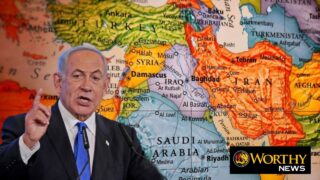
JERUSALEM (Worthy News) – Israeli Prime Minister Benjamin Netanyahu said Israel is now actively focused on “dismantling Hezbollah” as part of its broader campaign against Iran, declaring the military effort remains “in full swing” despite reports suggesting otherwise.
Speaking via videoconference to ministry officials and northern community leaders, Netanyahu stated that Israeli forces have already removed much of Hezbollah’s rocket threat and neutralized the group’s planned ground invasion capabilities. He said these operations have effectively created a “security buffer” beyond Israel’s northern border with Lebanon.
The prime minister indicated that Israel intends to expand this buffer zone further, aiming to push anti-tank missile threats farther from northern towns. He also pledged increased government funding to rebuild affected communities in the Galilee region.
“The situation has fundamentally changed,” Netanyahu said, emphasizing that Israel is now “stronger than ever” while Iran and its proxies are significantly weakened.
Despite these gains, fighting has sharply intensified. According to Israeli military sources, Israel Defense Forces reported that Hezbollah launched more than 600 attacks within a 24-hour period—roughly double the group’s previous peak during earlier phases of the conflict. Most of the rockets, mortars, and drones targeted Israeli troops operating inside southern Lebanon rather than civilian areas.
Military analysts suggest the surge in attacks may reflect Hezbollah’s attempt to influence ceasefire negotiations or pressure Israel into withdrawing from southern Lebanon. However, officials believe the current pace of fire is unlikely to be sustainable over time.
Rafi Milo confirmed that Israeli forces have killed approximately 750 Hezbollah fighters since the conflict escalated, a sharp increase from earlier estimates. Still, Israel appears prepared to continue its operations, including sustained airstrikes and a potential extended ground presence.
Israeli leaders are increasingly signaling that troops may remain in southern Lebanon up to the Litani River for an extended period in an effort to force Hezbollah’s disarmament—something the group has repeatedly refused, even under pressure from the Lebanese government following a prior ceasefire in late 2024.
The evolving battlefield dynamics present a complex challenge. As Israeli forces push deeper into southern Lebanon, they reduce Hezbollah’s ability to strike Israeli civilian centers by forcing rocket units farther north. At the same time, this advance places Israeli troops closer to Hezbollah’s frontline positions, increasing their exposure to direct attacks.
That danger was underscored by the death of IDF Sgt. Aviaad Elchanan Volansky, a 21-year-old tank operator from Jerusalem, who was killed when an anti-tank missile struck his unit during operations. The missile was fired from north of the Litani River, highlighting that Hezbollah retains operational reach even in areas where its presence has been reduced.
While ceasefire discussions tied to the broader Israel-Iran conflict continue, Israel’s latest moves suggest a determination to reshape the security landscape in the north—potentially for the long term.
Copyright 1999-2026 Worthy News. This article was originally published on Worthy News and was reproduced with permission.
Latest News from Worthy News

Russian authorities say at least 13 people were killed and 39 others wounded Monday in Ukrainian drone attacks on an industrial city about 900 kilometers, or 600 miles, east of Moscow. The latest strikes signaled a further escalation of Ukraine’s campaign of air attacks deep inside Russia.

A powerful magnitude 7.4 earthquake struck western Colombia Monday, collapsing buildings, trapping residents beneath rubble, disrupting airports and sending tremors across much of the country and into neighboring Venezuela.

Archaeologists in modern-day Turkey have uncovered remains of an ancient church believed to be connected to the historic site where the First Council of Nicaea was held in A.D. 325, drawing fresh attention to one of the most consequential turning points in the history of Christianity.

President Donald Trump’s sweeping “Make D.C. Safe Again” law-enforcement campaign is approaching its first anniversary with more than 16,000 arrests, as the administration says its unprecedented federal-local partnership is changing the security landscape of the nation’s capital.

President Donald Trump appears prepared to let Iran’s worsening economic crisis intensify rather than immediately launch another major military offensive, as the Islamic Republic struggles with a collapsing currency, soaring inflation, disrupted trade and growing pressure from a U.S. naval blockade.

Israeli Prime Minister Benjamin Netanyahu on Monday formally launched a national artificial intelligence initiative aimed at making Israel one of the world’s leading AI powers, declaring that the Jewish state intends to help shape the technological future rather than merely respond to it.

Overnight drone and missile strikes killed at least eight people and injured dozens more in Ukraine and Russia on Sunday as both sides stepped up strikes in the more than four-year-long war.