
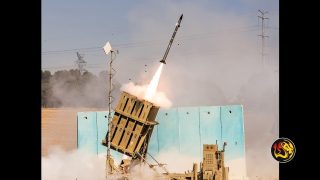
Defense officials say the upgraded system reflects battlefield lessons from the war and recent operations against Iran, strengthening Israel’s ability to confront rockets, drones, cruise missiles, and mass barrages.
by Emmitt Barry, Worthy News Washington D.C. Bureau Chief
JERUSALEM (Worthy News) – Israel’s Ministry of Defense has completed a new series of advanced tests of the Iron Dome air defense system, validating major upgrades intended to strengthen the nation’s ability to confront increasingly complex aerial threats, including rockets, cruise missiles, and drones.
The trials were conducted by the Defense Ministry’s Israel Missile Defense Organization, also known as Homa, within the Directorate of Defense Research and Development, together with Rafael Advanced Defense Systems. The ministry said the tests incorporated operational lessons learned during the ongoing war and recent Israeli operations against Iran.
According to defense officials, the upgraded Iron Dome demonstrated improved performance in complex attack scenarios, including threats designed to test the system’s ability to handle heavy fire, higher volumes of incoming projectiles, and longer-range aerial dangers.
A key milestone in the testing was the integration of Israel’s high-power laser interception system, known as Iron Beam and in Hebrew as Or Eitan, into Iron Dome’s command-and-control network. The laser system, developed by the Defense Ministry’s research and development directorate alongside Rafael and other industry partners, is intended to serve as a complementary layer within Israel’s multi-tiered air defense architecture.
Iron Dome, which became operational with the Israeli Air Force in 2011, has become one of the most important defensive systems in Israel’s modern security history. During years of conflict, and especially in the current war, the system has intercepted thousands of rockets and aerial threats, helping protect civilians, cities, and critical infrastructure from sustained attacks.
The latest trials come as Israel continues to adapt to a changing battlefield. Terror groups and hostile regimes have increasingly relied on drones, cruise missiles, rocket salvos, and coordinated barrages designed to overwhelm traditional missile defenses. Israeli officials said the upgraded capabilities are part of a broader effort to preserve the Jewish state’s qualitative military edge in what they described as an intense security decade.
Moshe Patel, head of the Homa directorate, said the recent war and Operation Rising Lion forced Israel to confront “an unimaginable reality” of heavy barrages, requiring rapid operational flexibility and constant innovation.
“Iron Dome is a central pillar in the State of Israel’s multilayered defense concept for dealing with missiles and aerial threats,” Patel said. “During the test, we also practiced integrating the laser system into Iron Dome’s command-and-control array, bringing the system’s capabilities and importance in defending the home front to new heights.”
Patel said Israel is also working to accelerate interceptor production in both Israel and the United States, a move intended to strengthen readiness for future conflicts and ensure that Israeli forces can sustain defensive operations under prolonged fire.
Rafael CEO Yoav Tourgeman said the successful testing demonstrated new operational capabilities in complex scenarios, including the integration of the Rafael-made Iron Beam laser system, which he said was delivered to the Israel Defense Forces several months ago.
“Iron Dome, a central layer in the defense of the State of Israel, continues to prove itself again and again, even during periods of intensive fighting, and to provide early solutions for future threats and scenarios,” Tourgeman said.
The Iron Beam system is designed to supplement Israel’s existing missile defenses by using directed energy to intercept smaller aerial threats, including drones, rockets, and mortars, while allowing larger missile-based systems to focus on more significant threats. Israeli officials have described the laser system as a major step toward reducing reliance on expensive interceptors and improving Israel’s ability to withstand mass attacks.
Rafael is the lead developer of Iron Dome, alongside Israel Aerospace Industries’ Elta division and mPrest. Iron Beam is being developed by Rafael and Elbit Systems, with additional contributions from Israeli defense industry partners.
Copyright 1999-2026 Worthy News. This article was originally published on Worthy News and was reproduced with permission.
Latest News from Worthy News

The number of Americans filing for unemployment benefits remained relatively low in early August, offering another sign that widespread layoffs have yet to take hold even as hiring across the U.S. economy remains subdued.

The Israel Defense Forces (IDF) carried out a second preemptive airstrike in Gaza in two days Thursday, targeting a Hamas terror cell in Khan Yunis that Israeli military officials said was preparing an attack against Israeli forces.

The Trump administration has announced nearly $2 billion in health and humanitarian assistance for faith-based organizations, placing several major Christian ministries at the center of a reshaped U.S. foreign-aid strategy following sweeping cuts to USAID programs.

Hungarian Prime Minister Péter Magyar has cast doubt on a controversial Russian-led expansion of Hungary’s only nuclear power plant after record-low levels of the Danube River nearly forced its existing reactors into a complete shutdown.

The United States is preparing to send the USS George Washington aircraft carrier to the Middle East, replacing the USS Abraham Lincoln after an exceptionally long deployment supporting American military operations against Iran, according to an exclusive report by The Wall Street Journal.

Saudi Arabia, Turkey and Pakistan are moving to deepen military cooperation under a new mutual-defense pact that Israeli analysts say could reshape the Middle East’s security architecture while reducing dependence on the United States and bypassing Israel.

Americans added another $21 billion in credit card debt during the second quarter of 2026, pushing outstanding balances to roughly $1.26 trillion and bringing consumer borrowing close to its record high.