
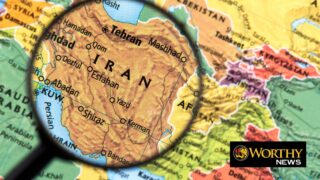
Iranian commander says elite troops conducted 14 cross-border operations, killing and capturing Kurdish dissidents
by Emmitt Barry, Worthy News Washington D.C. Bureau Chief
(Worthy News) – Iran has deployed regular army special forces into northern Iraq, carrying out a series of ground raids against Iranian Kurdish opposition groups as Tehran moves to eliminate forces it views as a potential threat to the Islamic Republic.
Units from Iran’s 23rd Airborne Special Forces Brigade conducted 14 operations during the past two months in the Iraqi Kurdistan provinces of Sulaymaniyah and Erbil, according to Iranian Army adviser Brig. Gen. Mojtaba Jafari.
Jafari said several of the raids occurred in recent days, even as Iran was engaged in negotiations with the United States. Iranian troops reportedly killed several Kurdish opposition fighters, captured others and abducted two Kurdish operatives from Sulaymaniyah on Sunday. He claimed that Iranian forces suffered no casualties.
The operations represent a significant escalation because they were reportedly conducted by Iran’s regular army rather than the Islamic Revolutionary Guard Corps or its Quds Force, which traditionally oversees Tehran’s military and covert operations beyond Iran’s borders.
The 23rd Airborne Special Forces Brigade, also known as the Takavar Brigade, is believed to be the Iranian Army’s largest special operations unit. Originally formed for reconnaissance and commando missions, it later developed airborne capabilities and reportedly operated on a limited basis during the Syrian civil war.
Kurdish Forces Viewed as Potential Threat to Tehran
Iranian Kurdish groups based in northern Iraq emerged as a possible ground force against Tehran earlier this year as the United States and Israel intensified military pressure on the Islamic Republic.
Reuters reported in March that Iranian Kurdish militias had consulted American officials about a possible operation against Iranian security forces in western Iran. Kurdish groups requested military and intelligence assistance as they considered creating conditions for opponents of the Islamic regime to rise against Tehran.
The Associated Press also reported that Kurdish dissident organizations had moved fighters toward the Iranian border and were preparing for a potential cross-border campaign. The groups, which possess thousands of trained fighters and extensive combat experience against the Islamic State, are widely regarded as one of the most organized elements of the Iranian opposition.
Although no major Kurdish offensive ultimately materialized, Tehran appears determined to destroy or intimidate the groups before they can become an organized military threat.
The raids also place Iraq in an increasingly precarious position. Baghdad reached an agreement with Iran in 2023 requiring Kurdish opposition groups to be disarmed and relocated away from the border. Their bases were closed and their movements restricted, but the fighters did not surrender their weapons.
Iran Tightens Its Grip Beyond Its Borders
Iran already exercises considerable influence inside Iraq through heavily armed Shiite militias that receive financial and military support from Tehran. Reuters estimates that roughly 10 factions operating under the Islamic Resistance in Iraq collectively command approximately 50,000 fighters and possess missiles, drones and anti-aircraft weapons.
The deployment of Iranian soldiers into Iraqi Kurdistan, however, crosses another threshold. Rather than relying entirely upon proxy forces, Tehran is now reportedly using its own commandos to pursue political opponents across an international border.
The campaign underscores the Iranian regime’s continuing fear of internal revolt, particularly among ethnic minorities that have endured decades of repression under the Islamic Republic. It also demonstrates Tehran’s willingness to violate Iraqi sovereignty while diplomatic negotiations with Washington remain underway.
For Iraq’s Kurdish region, the danger is growing. Kurdish leaders must now contend not only with Iranian missiles and Iran-backed militias, but with Iranian ground forces operating inside territory that is officially part of Iraq.
Copyright 1999-2026 Worthy News. This article was originally published on Worthy News and was reproduced with permission.
Latest News from Worthy News

Europe’s record-breaking heatwaves are exposing vulnerabilities in electricity systems increasingly dependent on weather-driven renewable energy as part of the European Union’s green agenda.
Two Christians, including a young man and a father of four, have been killed in separate attacks in Pakistan, highlighting growing concern about violence and discrimination facing the Christian minority in the Islamic nation, well-informed sources told Worthy News on Sunday.
Lake Mead has fallen to its lowest level since the massive reservoir was filled nearly 90 years ago, underscoring the growing strain on the Colorado River system that supplies water and electricity across much of the American West.

Two former NBA players are seeking to put the transgender-athlete debate to a real-world test, declaring their intention to enter the 2027 WNBA Draft as questions intensify over who should be eligible to compete in women’s professional basketball.

After days of drawn-out negotiations, the U.S. Senate overwhelmingly passed a short-term government funding stopgap early Saturday morning.
The Trump administration is pressing Egypt to protect religious freedom amid mounting concerns over attacks, imprisonment and discrimination targeting the country’s large Christian community, including converts from Islam and members of the ancient Coptic Church.

Iran has dramatically expanded its conditions for reopening the Strait of Hormuz, demanding that the United States withdraw its forces from the Middle East, lift sanctions, release frozen Iranian assets and fully compensate Tehran for damage suffered during the war.