
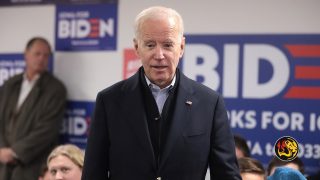
By Stefan J. Bos, Chief International Correspondent Worthy News
WASHINGTON (Worthy News) – U.S. President Joe Biden’s administration says it will help 50 countries to identify and respond to infectious diseases to prevent “pandemics” like the COVID-19 outbreak that paralyzed life in much of the world.
Biden said federal officials will work with the nations to develop better testing, surveillance, communication, and preparedness for pandemics to help “effectively respond to biological threats wherever they emerge.”
U.S. government officials will offer support in the countries, most of them located in Africa and Asia, as part of a strategy to “prevent, detect and effectively respond to biological threats wherever they emerge,” Biden added in a statement monitored by Worthy News.
The Global Health Security Strategy, the president said, aims to protect people worldwide and “will make the United States stronger, safer, and healthier than ever before at this critical moment.”
The announcement about the strategy comes as countries have struggled to meet a worldwide accord on responses to future pandemics.
Critics say these accords will eventually lead to more government control over people’s lives.
Four years after the coronavirus pandemic, officials are pushing for a pandemic treaty to be signed by all 194 members of the World Health Organization (WHO).
TREATY TALKS ONGOING
Talks for the treaty are ongoing, but critical legislators, including in countries like the United States and the Netherlands, have questioned whether it will mean losing sovereignty and sharing more resources with poorer nations, including countries with autocratic, corruption-ridden regimes.
Yet a final text was still expected to be agreed upon next month in Geneva, Switzerland. It is meant to be a legally binding treaty that obliges countries to monitor pandemic threats and share scientific findings.
However, in addition to the issue of handing over control to the WHO, significant disputes have emerged over vaccine equity and transferring the technology used to make the jabs.
Supporters of the deal say there would be few consequences for countries that choose not to abide by the treaty.
The U.S. will push on with its global health strategy to prevent future pandemics, regardless of a pandemic treaty, a senior administration official told reporters on Monday.
Several U.S. government agencies — including the State Department, the Centers for Disease Control and Prevention, Health and Human Services, and the U.S. Agency for International Development, or USAID — will “help countries refine” their infectious disease response, sources said.
U.S. officials defending more coordinated responses say health systems around the globe have been overwhelmed by COVID-19 and other health emergencies, such as the far more deadly Ebola virus, malaria, and mpox. The new strategy will help countries rebuild their agencies, the U.S. agency Centers for Disease Control and Prevention (CDC) said.
NATIONAL SECURITY
“Global health security is national security, and CDC is proud to contribute its expertise, investments, and rapid response to protect the health and safety of the American people and the world,” Mandy Cohen, the CDC’s director, added in published remarks.
Officials say the Biden administration is already supporting nations such as Congo in their response to a mpox virus outbreak, including through immunizations.
Mpox, a virus in the same family as the one that causes smallpox, creates painful skin lesions.
The WHO declared mpox a global emergency in 2022, and there have been more than 91,000 cases spanning across 100 countries to date.
The White House released the names of the countries participating in the anti-mpox effort, and Biden officials say they are seeking to get 100 countries signed onto the program by year’s end.
The U.S. has devoted billions of dollars to its health efforts, including money raised from private donations.
President Biden, a Democrat, is also asking for $1.2 billion for global health safety efforts in his yearly budget proposal to the U.S. Congress. However, whether enough legislators would support this in an election year remained unclear.
Copyright 1999-2026 Worthy News. This article was originally published on Worthy News and was reproduced with permission.
Latest News from Worthy News

Israel and Iran-backed Hezbollah have agreed to a ceasefire that was to begin Friday afternoon, Worthy News learned.

At least 10 people, including four children, were injured in a Russian strike on Ukraine’s northeastern Kharkiv region, Ukrainian authorities said Friday. In southern Ukraine, the State Emergency Service reported that one person was killed and four others were injured in a separate Russian attack on the Odesa region.
President Donald Trump signed the temporary peace deal with Iran ahead of schedule Wednesday at the Palace of Versailles in France, kicking off negotiations over a final nuclear deal.
Iran’s Supreme Leader Mojtaba Khamenei’s statement following the signing of a memorandum of understanding with the United States is being viewed by analysts not as an embrace of peace, but as a carefully crafted declaration that preserves Tehran’s revolutionary posture while allowing the regime to regroup.

The United States imposed new sanctions Thursday on individuals and entities linked to Hezbollah, accusing them of using political and financial influence to obstruct Lebanon’s peace process and delay the Iran-backed group’s disarmament.
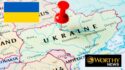
Ukraine launched one of its largest drone attacks on Moscow since the war began, hitting a key oil refinery and other targets around the Russian capital, leaving at least one person dead and numerous others injured, Russian officials said.
Russian President Vladimir Putin hosted Southeast Asian leaders in Kazan this week as Moscow moved to deepen ties with the Association of Southeast Asian Nations and promote its vision of a “multipolar world order” aimed at countering U.S. global dominance.