
by Emmitt Barry, Worthy News Correspondent
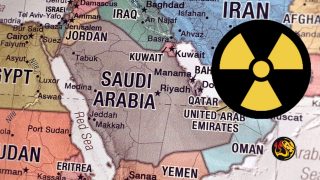
(Worthy News) — U.S. Energy Secretary Chris Wright said Sunday in Riyadh that the U.S. is close to a landmark energy deal with Saudi Arabia to develop its civil nuclear industry, with a preliminary agreement expected soon.
Wright confirmed that the U.S. plans to sign a broad energy cooperation agreement within weeks, with a nuclear deal expected in the coming months.
“I think in the short run, we’ll sign a broader agreement about cooperation across the energy space, in partnerships, in investments, in investigations. Nuclear is certainly one of those areas,” Wright told Al-Arabiya News.
“To get a specific agreement to partner on commercial nuclear development in Saudi Arabia, that’ll take a little bit longer, that’ll be months, not weeks, but you’re gonna get there. I think it’s likely,” he added.
Wright noted that Saudi Arabia has yet to accept the non-proliferation conditions required under the U.S. Atomic Energy Act, which includes nine safeguards to prevent nuclear weapons development or material transfer.
“For a U.S. partnership and involvement in nuclear here, there will definitely be a 123 agreement … there’s lots of ways to structure a deal that will accomplish both the Saudi objectives and the American objectives,” he said.
A 123 agreement with Riyadh refers to Section 123 of the U.S. Atomic Energy Act of 1954, which is required for the U.S. government and American companies to collaborate with Saudi entities on developing a civil nuclear industry.
In the past, talks had stalled over Riyadh’s refusal to rule out uranium enrichment or fuel reprocessing—key steps toward a bomb.
Saudi Crown Prince Mohammed bin Salman has said that if Iran acquires a nuclear weapon, Saudi Arabia would pursue one as well, raising concerns among arms control advocates and some U.S. lawmakers about a potential civil nuclear deal.
Copyright 1999-2026 Worthy News. This article was originally published on Worthy News and was reproduced with permission.
Latest News from Worthy News
President Donald Trump warned Friday that the United States may soon strike Iran’s Pickaxe Mountain, a deeply fortified underground site near the Natanz uranium enrichment complex, as tensions over Tehran’s nuclear program continue to sharpen.
The United States, Britain, France, and Germany are pressing the International Atomic Energy Agency’s Board of Governors to report Iran to the U.N. Security Council, accusing Tehran of violating its nuclear obligations and refusing to fully account for its enriched uranium stockpile.
Israeli Prime Minister Benjamin Netanyahu declared that removing Iran’s ruling regime has become Israel’s “central mission,” telling senior military officials that the goal is now “within reach” as Tehran faces mounting pressure from Israel, the United States, and regional fallout from its terror network.
A new U.S.-Saudi civilian nuclear agreement could eventually give Riyadh a pathway to enrich uranium up to 20%, raising fresh concerns in Washington over nuclear proliferation in the Middle East, according to a Wall Street Journal exclusive.

The Israel Defense Forces said Thursday it had completed clearing a strategic Hezbollah underground facility beneath the Ali Taher Ridge in southern Lebanon and was preparing the tunnel complex for demolition.

Syria has begun destroying chemical weapons materials left behind by the Assad regime, marking the first known destruction process of its kind in the country in roughly a decade, officials told the U.N. Security Council on Thursday.

U.S. lawmakers are raising fresh concerns that China, Russia and other American adversaries could use electromagnetic pulse weapons to cripple the nation’s electrical grid and critical infrastructure, potentially plunging large portions of the country into darkness.