
By Stefan J. Bos, Chief International Correspondent Worthy News
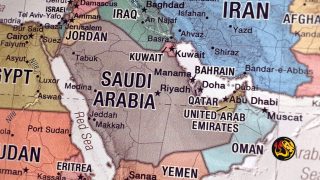
WASHINGTON/RIYADH (Worthy News) – In a controversial move, the administration of outgoing U.S. President Joe Biden has decided to lift a ban on American sales of offensive weapons to Saudi Arabia, despite concerns over human rights violations by the Islamic kingdom, Worthy News learned Sunday.
Israeli and U.S. sources said the administration recently briefed the U.S. Congress on its decision to lift the ban and added that sales could resume as early as next week.
The weapon deliveries would end a three-year-old policy to pressure Saudi Arabia to wind down its war against Iran-backed Houthis in Yemen, which killed hundreds of thousands of people.
Under the deal, the U.S. would authorize an initial shipment of air-to-ground munitions and additional new transfers would be considered “on a typical case-by-case basis,” the Biden administration said.
The sale of certain classes of offensive weapons was frozen in early 2021 to signal administration disapproval of the Saudi war as it not only included hitting Houthis but also strikes against civilian targets there.
Yemen’s war, seen as one of several proxy battles between Iran and Saudi Arabia, began after the Houthis ousted a Saudi-backed government from Sanaa in late 2014.
They have been at war against a Saudi-led military alliance since 2015 in a conflict that has killed hundreds of thousands of people and left 80 percent of Yemen’s population dependent on humanitarian aid.
UN TRUCE
However, following a United Nations-mediated truce in the spring of 2022, “there has not been a single Saudi airstrike into Yemen, and cross-border fire from Yemen into Saudi Arabia has largely stopped,” a senior official said.
That made it easier to decide on resuming weapons sales to Saudi Arabia, according to White House sources. “The Saudis have met their end of the deal, and we are prepared to meet ours, returning these cases regular order through appropriate congressional notification and consultation,” a Biden administration official added.
However, rights activists remain concerned about human rights violations in Saudi Arabia, including against devoted Christians and others deemed a threat to the strict Islamic rulers.
Yet the U.S. needs Saudi Arabia as a partner in its efforts to protect Israel against further attacks, including from Iran-backed Houthis. They have emerged as a strong supporter of the Palestinian Islamist Hamas group in its war against Israel.
Earlier this year, Houthis also attacked commercial ships that they said were linked to Israel or bound for Israeli ports. The weapons deals also come amid hope that Saudi Arabia will improve ties with Israel at a time when the Jewish nation is preparing for an all-out war with Iran and its ally Hezbollah in Lebanon.
However, skeptics suggest there are no signs yet of Ryadh following the examples of the United Arab Emirates and Bahrain, which signed bilateral agreements with Israel under the U.S.-mediated Abraham Accords on September 15, 2020.
Soon after, Morrocco and Sudan also agreed to normalize ties with Israel under the Abraham Accords process, initiated by the administration of then-U.S. President Donald J. Trump.
Copyright 1999-2026 Worthy News. This article was originally published on Worthy News and was reproduced with permission.
Latest News from Worthy News

President Donald Trump signed the temporary peace deal with Iran ahead of schedule Wednesday at the Palace of Versailles in France, kicking off negotiations over a final nuclear deal.
Iran’s Supreme Leader Mojtaba Khamenei’s statement following the signing of a memorandum of understanding with the United States is being viewed by analysts not as an embrace of peace, but as a carefully crafted declaration that preserves Tehran’s revolutionary posture while allowing the regime to regroup.

The United States imposed new sanctions Thursday on individuals and entities linked to Hezbollah, accusing them of using political and financial influence to obstruct Lebanon’s peace process and delay the Iran-backed group’s disarmament.

Ukraine launched one of its largest drone attacks on Moscow since the war began, hitting a key oil refinery and other targets around the Russian capital, leaving at least one person dead and numerous others injured, Russian officials said.

Russian President Vladimir Putin hosted Southeast Asian leaders in Kazan this week as Moscow moved to deepen ties with the Association of Southeast Asian Nations and promote its vision of a “multipolar world order” aimed at countering U.S. global dominance.

Israeli Prime Minister Benjamin Netanyahu said Thursday that Israeli troops will not withdraw from southern Lebanon and will maintain a security zone there for as long as Israel’s defense needs require, placing Jerusalem at odds with both Tehran and the terms of a U.S.-Iran memorandum that calls for an end to hostilities in Lebanon.

U.S. Defense Secretary Pete Hegseth told NATO leaders Thursday that the Pentagon is launching a six-month review of U.S. force posture and basing in Europe, signaling a major push by the Trump administration to ensure European allies assume primary responsibility for defending the continent.