
by Emmitt Barry, Worthy News Correspondent
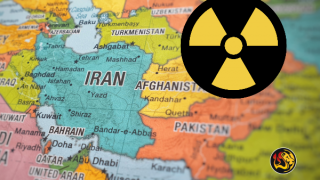
(Worthy News)—The U.S. and Iran held talks in Oman on Saturday and agreed to resume negotiations next week, aiming to curb Tehran’s nuclear program. The meeting followed an April 12 session, during which President Trump warned of military action if no deal was reached.
Special Envoy Steve Witkoff and Iranian Foreign Minister Abbas Araghchi held mostly indirect talks Saturday, mediated by Omani Foreign Minister Sayyid Badr Albusaidi. They also exchanged brief, direct remarks—the first face-to-face contact between U.S. and Iranian officials since the Obama era.
“After the end of more than 2-1/2 hours of indirect talks, the heads of the Iranian and American delegations spoke for a few minutes in the presence of the Omani foreign minister as they left the talks,” Araghchi said on Telegram, calling the meeting “productive and positive.”
He added, “Both sides have agreed to continue the talks next week,” though no date or location was specified.
Speaking to Iranian state television, Araghchi emphasized urgency: “Neither we nor the other party want fruitless negotiations, discussions for discussions’ sake, time-wasting, or talks that drag on forever.” The next round is scheduled for Saturday.
Iran’s Supreme Leader Ayatollah Ali Khamenei has granted Abbas Araghchi “full authority” for the nuclear talks, an Iranian official told Reuters; however, Tehran has made clear its ballistic missile program is off the table.
Last Thursday, Trump stated that the talks marked the beginning of a process, cautioning, “We have a little time, but we don’t have much time because we’re not going to let them have a nuclear weapon.”
U.S. Defense Secretary Pete Hegseth echoed Trump’s position Sunday, stating that while the U.S. still hopes for a diplomatic solution to halt Iran’s nuclear ambitions, the military is ready “to go deep and to go big” if necessary.
Describing the initial Oman talks as “productive” and “a good step,” Hegseth told CBS’s Face the Nation: “We’ve shown a capability to go far, to go deep and to go big. Again, we don’t want to do that, but if we have to, we will to prevent the nuclear bomb in Iran’s hands.”
Israel, viewing Iran’s nuclear program as an existential threat, has joined the U.S. in warning it will take military action if diplomacy fails.
Over the past 18 months, Tehran’s “Axis of Resistance” allies have been dismantled or significantly weakened following the Gaza war and the fall of Bashar al-Assad in Syria last December.
Should talks collapse, the U.S. and Israel are prepared to act militarily. The Pentagon has already deployed two carrier strike groups, along with fighter jets, bombers, and support aircraft near Iran. Additional U.S. air defense systems have also been positioned in Israel in anticipation of a potential conflict.
According to an Axios report, the second round of nuclear talks between the U.S. and Iran is expected to be held next Saturday in Rome, Italy.
Prophecy teachers have pointed out that the second round of talks will begin just as the Feast of Passover and Unleavened Bread concludes on Friday, April 18, 2025.
Copyright 1999-2025 Worthy News. This article was originally published on Worthy News and was reproduced with permission.
Latest News from Worthy News

The Netherlands’ prime minister says Dutch and German intelligence agencies have evidence of Russia’s widespread use of banned chemical weapons in Ukraine, raising concerns about the security of Europe and beyond.

The yearlong countdown towards America’s 250th birthday has begun with First Lady Melania Trump affectionately joining her husband, President Donald J. Trump, on the White House balcony.

Anxiety remained among religious Jews observing the Shabbat in Melbourne after an arsonist set fire to the door of a synagogue, forcing worshipers to flee, while elsewhere in the Australian city, protesters stormed an Israeli restaurant.

A troubling trend is emerging across the United States: increasing acts of hostility, vandalism, and violence against Christian churches. From arson to bomb threats, these incidents reflect what some are calling a spiritual crisis and a growing cultural hostility toward Christianity.

A sudden and violent flash flood in the Texas Hill Country has left at least 24 people dead and dozens more missing–many of them young girls attending Camp Mystic, a beloved Christian summer camp–after relentless storms swelled the Guadalupe River early Friday morning, washing away cabins, homes, and vehicles in its path.

In a dramatic Independence Day spectacle at the White House, President Donald Trump signed into law the “One Big Beautiful Bill,” a sweeping legislative package that delivers on a wide array of his second-term promises and reshapes major sectors of the U.S. economy, tax system, and welfare programs.

Preparations are underway to establish a European Union-led alternative to the World Trade Organization (WTO) as part of a new global marketplace that would challenge America’s economic clout.