
by Karen Faulkner, Worthy News Correspondent
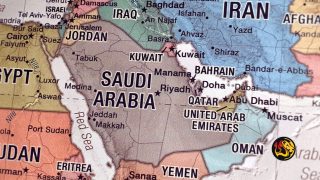
(Worthy News) – The United States’ Biden administration is understood to be in the final stages of negotiating a security pact with Saudi Arabia that stipulates the US would defend the Saudi Kingdom in the event of an attack, while Riyadh would be obligated to block Russia and China from setting up military bases on its territory, the Jerusalem Post reports.
However, the deal is not expected to be approved by the two-thirds US Senate majority required for it to be ratified unless it includes a provision that Saudi Arabia normalizes relations with Israel, JPost notes. The Kingdom has been an official enemy of Israel since the establishment of the Jewish state in 1948, but has been increasingly cooperative with Jerusalem over a shared threat from Iran.
For its part, Saudi Arabia has said it is interested in normalizing relations with Israel, provided a two-state solution to the Palestinian conflict is achieved, JPost reports.
In January, the Saudi ambassador to the United Kingdom, Khalid bin Bandar Al Saud, told BBC News that, despite its criticisms of Israel’s ongoing war against Hamas in the Gaza Strip, Saudi Arabia is interested in establishing diplomatic relations with the Jewish state.
“Absolutely, there’s interest, there’s been interest since 1982 and before,” Al Saud stated. “We’ve been at this for a long time, and willing to accept Israel for a long time; it’s a reality that we have to live with. But we can’t live with Israel without a Palestinian state,” the ambassador said.
Copyright 1999-2026 Worthy News. This article was originally published on Worthy News and was reproduced with permission.
Latest News from Worthy News

President Donald Trump signed the temporary peace deal with Iran ahead of schedule Wednesday at the Palace of Versailles in France, kicking off negotiations over a final nuclear deal.
Iran’s Supreme Leader Mojtaba Khamenei’s statement following the signing of a memorandum of understanding with the United States is being viewed by analysts not as an embrace of peace, but as a carefully crafted declaration that preserves Tehran’s revolutionary posture while allowing the regime to regroup.
The United States imposed new sanctions Thursday on individuals and entities linked to Hezbollah, accusing them of using political and financial influence to obstruct Lebanon’s peace process and delay the Iran-backed group’s disarmament.
Ukraine launched one of its largest drone attacks on Moscow since the war began, hitting a key oil refinery and other targets around the Russian capital, leaving at least one person dead and numerous others injured, Russian officials said.
Russian President Vladimir Putin hosted Southeast Asian leaders in Kazan this week as Moscow moved to deepen ties with the Association of Southeast Asian Nations and promote its vision of a “multipolar world order” aimed at countering U.S. global dominance.
Israeli Prime Minister Benjamin Netanyahu said Thursday that Israeli troops will not withdraw from southern Lebanon and will maintain a security zone there for as long as Israel’s defense needs require, placing Jerusalem at odds with both Tehran and the terms of a U.S.-Iran memorandum that calls for an end to hostilities in Lebanon.
U.S. Defense Secretary Pete Hegseth told NATO leaders Thursday that the Pentagon is launching a six-month review of U.S. force posture and basing in Europe, signaling a major push by the Trump administration to ensure European allies assume primary responsibility for defending the continent.