
by Emmitt Barry, Worthy News Correspondent
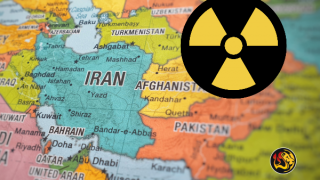
(Worthy News) – Tensions between Iran and Israel remain high as Tehran’s military pledged a strong response to Israel’s strikes last month. At the same time, the UN’s atomic watchdog is focused on preventing nuclear escalation, with IAEA chief Rafael Grossi urging that Iran’s nuclear facilities, including Fordow and Natanz, should not be targeted as he is scheduled to visit the country.
This week, IAEA Director General Rafael Grossi visited Iran for high-level meetings with officials to hold Tehran accountable for past nuclear safeguarding pledges and to gain clarity on the status of its nuclear program.
Since the U.S. withdrawal from the JCPOA in 2018, Iran has expanded its nuclear activities, enriching uranium up to 60 percent, near the 90 percent required for nuclear weapons. The IAEA’s surveillance has been disrupted multiple times, with Iran blocking some of its most experienced inspectors, hindering negotiations.
Despite Iran’s ongoing nuclear development, Rafael Grossi emphasized that its nuclear installations should not be attacked. “I say this with regards to Iran… nuclear installations should not be attacked,” he stated during a joint news conference with Iran’s nuclear chief Mohammad Eslami on Wednesday.
Grossi’s comments came during a news conference on Thursday, just three days after Israeli Defense Minister Israel Katz stated on Monday that Iran was “more exposed than ever [for] strikes on its nuclear facilities.” He added, “We have the opportunity to achieve our most important goal – to thwart and eliminate the existential threat to the State of Israel.”
While the West often views Iran’s nuclear program through a secular lens, the spiritual aspect should not be overlooked.
Iran is the only country where Twelver Shi’ism is the state religion.
Twelver Shīʿism, the largest branch of Shīʿa Islam, makes up about 85% of Shīʿas. “Twelver” signifies belief in twelve divinely appointed leaders, the Twelve Imams, with the last, Imam al-Mahdi, expected to return as the Mahdi. Twelvers see the Imams as Muhammad’s spiritual and political successors, guiding with justice and interpreting Islamic law and the Qur’an’s inner meanings. They are viewed as infallible (Ismah) and divinely chosen (nass).
The Twelvers’ believe that the Mahdi is expected to appear in times of extreme chaos, returning alongside Jesus as a messiah to bring peace and establish Islam globally.
Twelver beliefs, Iran’s nuclear ambitions, and threats toward Israel and the West have raised concerns. Critics suggest that Iran’s Supreme Leader might incite conflict to hasten the 12th Imam’s arrival. Former Iranian President Ahmadinejad has even called for the Imam’s return at the UN, asserting that the Islamic Revolution’s primary goal is to prepare for his reappearance.
Copyright 1999-2026 Worthy News. This article was originally published on Worthy News and was reproduced with permission.
Latest News from Worthy News

President Donald Trump has signed a memorandum of understanding aimed at ending the war with Iran, U.S. officials said, launching a 60-day diplomatic test that could determine whether the Middle East moves toward a fragile ceasefire or back toward confrontation.

In a rare instance of congressional unity, the House and Senate reached a bipartisan, bicameral agreement over legislation to boost housing supply and home ownership across the country.

The central bank would implement new task forces to aid in deciding monetary policy, Kevin Warsh, the new chairman of the Federal Reserve, said Wednesday.

Poland was investigating Thursday the killing of a Russian artist and outspoken critic of President Vladimir Putin after Polish Prime Minister Donald Tusk said the murder bore the hallmarks of a political assassination.

Brazil’s Supreme Court has sentenced Eduardo Bolsonaro, the son of former President Jair Bolsonaro, to four years and two months in prison after finding him guilty of seeking U.S. intervention in legal proceedings involving his father.

A Christian family and supporters have rallied in the eastern Pakistani city of Faisalabad after a 16-year-old Christian girl reportedly disappeared and was allegedly forced to marry and convert to Islam.

The Israeli Air Force was prepared to launch a major strike deep inside Iran last week but was ordered to stand down just one hour before takeoff, according to a letter sent by Israeli Air Force Commander Maj. Gen. Omer Tischler to air force personnel.