
by Stefan J. Bos, Worthy News Chief International Correspondent
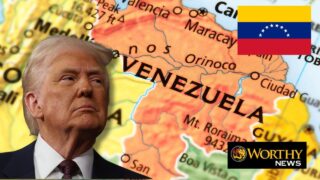
WASHINGTON/CARACAS (Worthy News) – The United States on Wednesday signaled to Russia and other powers that it intends to assert control over Venezuela and its oil sector by seizing two sanctioned tankers and unveiling a plan to channel Venezuelan crude sales through U.S.-approved mechanisms.
The Trump administration said the seizures are part of a broader strategy to control the distribution of oil from Venezuela — home to the world’s largest proven crude reserves — while selectively easing sanctions to allow regulated sales under U.S. oversight. U.S. officials said only oil transported through approved channels consistent with American law and national security interests would be permitted.
One of the vessels, the Bella 1 — later renamed Marinera and reflagged to Russia — was seized in the North Atlantic after a weeks-long pursuit. U.S. European Command said the tanker was seized for violating U.S. sanctions after attempting to evade a blockade on Venezuelan oil shipments. A second tanker, the M Sophia, was seized in the Caribbean Sea, U.S. officials said.
Homeland Security Secretary Kristi Noem said both ships were either last docked in Venezuela or en route to the country and were part of a so-called “shadow fleet” smuggling oil for sanctioned states, including Venezuela, Russia, and Iran.
The seizures follow at least two similar actions last month, bringing the total number of vessels taken by U.S. forces to four.
RUSSIA CONDEMNS TANKER SEIZURES
Russian officials condemned the seizure of the Russian-flagged tanker, demanding humane treatment of crew members and their swift return. A senior Russian lawmaker denounced the action as “blatant piracy,” while Moscow warned the move could further inflame tensions between the two countries.
U.S. authorities said the Bella 1 had attempted to flee when approached by the Coast Guard and was tracked under a federal court warrant. As the pursuit intensified, shipping databases showed the vessel changed its name and flag, with crew members allegedly painting a Russian flag on the hull.
Attorney General Pam Bondi said the Justice Department is investigating crew members for failing to obey Coast Guard orders and warned that criminal charges would be pursued against those who violate U.S. enforcement actions.
Secretary of State Marco Rubio said oil seized from the vessels would be sold as part of a new framework under which Venezuela would supply up to 50 million barrels of oil to the United States, with proceeds held in U.S.-controlled accounts. Venezuelan interim authorities, Rubio said, understand that cooperation with Washington is the only way to move oil and avoid economic collapse.
Vice President JD Vance said the U.S. could exert pressure without military force by controlling where Venezuelan oil is sold. “We control the energy resources,” Vance said, adding that Washington would allow sales only if they serve U.S. national interests.
OIL MARKETS SLIP AMID EXPECTED SUPPLY RETURN
Markets reacted swiftly, with global oil prices slipping as traders weighed the prospect of Venezuelan crude returning to regulated markets. Analysts said tighter U.S. control over exports could give Washington greater leverage over global supply and pricing, even as it raises geopolitical risks.
The Trump administration said oil sales would begin immediately, with between 30 million and 50 million barrels released initially, with sales continuing indefinitely. Proceeds would be distributed at Washington’s discretion, while the U.S. also plans to authorize oil-field equipment imports and invest in Venezuela’s electricity grid to boost production, currently estimated at about one million barrels per day.
Maritime analysts said at least 16 tankers left Venezuela’s coast in recent days, many operating “dark” with tracking systems disabled — a common tactic among vessels seeking to evade sanctions.
The escalating enforcement underscores Washington’s determination to reshape Venezuela’s future through its oil wealth, a strategy that is already reverberating through energy markets and international diplomacy.
Oil prices were last trading at around $60 a barrel for Brent crude and about $56 for U.S. West Texas Intermediate, reflecting expectations that additional Venezuelan supply — even under tight U.S. control — could ease market pressures.
U.S. MOVE SEEN RAISING TENSIONS
Analysts said the moves were expected to deepen geopolitical friction involving Russia, China, and Iran, the main buyers and facilitators of Venezuelan oil exports in recent years, as Washington challenges the opaque shipping networks used to bypass Western sanctions.
Humanitarian groups warn the country is already in crisis, with millions of Venezuelans having fled economic collapse and severe shortages of food, medicine, and basic services in recent years as the economy contracted and infrastructure deteriorated.
There have been rallies against the United States’ attempts to control Venezuela following the ouster of President Nicolás Maduro by U.S. forces, including protests outside Venezuelan diplomatic missions in the region and demonstrations in U.S. cities.
Supporters of the move counter that protesters often overlook Maduro’s poor human rights record and crackdown on dissent, which has been linked to widespread abuses and driven millions to flee the troubled nation.
Copyright 1999-2026 Worthy News. This article was originally published on Worthy News and was reproduced with permission.
Latest News from Worthy News

U.S. Central Command said Wednesday that American forces killed a senior ISIS leader in a precision airstrike in northwest Syria, as the terror group seeks to exploit the country’s unstable security environment following years of war and political upheaval.

An incident at a beauty salon in Pakistan’s largest city has sparked renewed debate about discrimination against Christians after a customer reportedly refused to be served by a Christian employee because of her faith.

A series of major earthquakes shook different parts of the world within less than 24 hours, killing nearly 200 people, injuring many more, and briefly raising fears of a wider global seismic crisis.

Israeli Prime Minister Benjamin Netanyahu said Thursday that Israel will not withdraw from its security zone in southern Lebanon, insisting the Israel Defense Forces will remain in key positions for as long as necessary to protect Israeli citizens from Hezbollah and other jihadist threats.

A federal judge in Boston on Thursday blocked the Trump administration from enforcing major portions of President Donald Trump’s executive order aimed at tightening rules for mail-in voting, delivering another legal setback to the White House as the administration presses its election integrity agenda ahead of November’s federal elections.
The U.S. Senate late Wednesday rejected a Democratic-led effort to restrict President Donald Trump’s military authority against Iran, handing the White House a significant victory as the administration continues negotiations with Tehran.

U.S. Secretary of Defense Pete Hegseth said the first milestone test of Golden Dome for America was a “full mission success,” calling it a major step toward President Donald Trump’s goal of building a next-generation shield to defend the American homeland.