
By Stefan J. Bos, Chief International Correspondent Worthy News
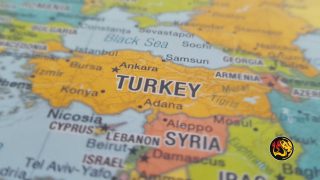
ISTANBUL/MOSCOW (Worthy News) – NATO military alliance member Turkey has requested to join the BRICS bloc of major emerging market nations despite concerns it will move away from the West amid significant global security challenges.
Several sources confirmed Turkey’s move, including the spokesman of Turkish President Recep Tayyip Erdogan’s ruling party, Worthy News established Thursday.
“Our president has many times stated that we want to become a BRICS member… The process is now under way,” said Omer Celik, on behalf of the ruling Justice and Development Party (AKP).
Separately, Yuri Ushakov, Russian President Vladimir Putin’s foreign affairs aide, told reporters that Turkey’s application “for full membership” in the bloc that Russia this year chairs will be considered.
The BRICS alliance was founded in 2006 by Brazil, Russia, India, and China. South Africa joined in 2010 as Moscow and Beijing sought to counter the West’s global influence.
BRICS recently expanded to include Iran, Egypt, Ethiopia, and the United Arab Emirates. Saudi Arabia has also said it’s considering joining, and Azerbaijan and Malaysia have formally applied.
Ahead of his country’s BRICS membership application, which was due to be approved soon, President Erdogan said Turkey also wants to be a partner in the Shanghai Cooperation Organisation (SCO).
POLICY DIFFERENCES
The SCO, a security, political, and economic club launched in 2001 by Russia, China, and Central Asian states, was established as a counterweight to Western alliances.
Analysts say Turkey’s decisions come after differences with the U.S. and European Union over issues ranging from Israel, Russia, migration, security, and economic policies to its treatment of the Kurdish minority and critical thinkers.
On Israel, for instance, Turkish President Erdogan has said NATO can’t continue its partnership with the Israeli administration, angering Washington and other Western capitals.
However, in a recent interview monitored by Worthy News, Turkish Defence Minister Yasar Guler stressed that Turkey’s membership in NATO does not prevent it from developing relations with the other blocs.
Turkey has been frustrated by being sanctioned by the United States and removed from the F-35 fighter jet program in 2019 due to its acquisition of Russian S-400 defenses.
Yet since then, Ankara has been working to procure 40 Block-70 F-16 fighter jets and 79 modernization kits from Washington.
The deal was approved after Turkey blessed Sweden’s NATO membership bid after intense talks.
JETS ACQUISITION
Guler said the acquisition of the jets underscored Turkey’s ongoing commitment toward NATO. “We are pleased with the accord reached on the procurement of the F-16s and modernization, and we hope the project will be completed without a problem until the last jet is delivered,” he stressed.
“Apart from that, our priority is to fulfill our responsibilities to NATO as an important ally and to strengthen the solidarity with our allies. Our focus should be that NATO is prepared, determined, and strong,” Guler added.
Yet Turkey’s moves toward BRICS and perhaps SCO did little to ease tensions as Ankara seeks to expand its geopolitical footprint.
Erdogan said he would invite Syrian President Bashar al-Assad to discuss normalizing ties, which Ankara severed after the 2011 Syrian war.
Assad has said talks could only happen if they focus on core issues, including the withdrawal of Turkish forces from the north of Syria.
In a sign of Turkey’s growing influence, Guler said the neighbors could meet at a ministerial level again “if suitable conditions are created” as part of what is viewed as Ankara’s regional charm offensive launched in 2020.
Copyright 1999-2026 Worthy News. This article was originally published on Worthy News and was reproduced with permission.
Latest News from Worthy News

President Donald Trump signed the temporary peace deal with Iran ahead of schedule Wednesday at the Palace of Versailles in France, kicking off negotiations over a final nuclear deal.
Iran’s Supreme Leader Mojtaba Khamenei’s statement following the signing of a memorandum of understanding with the United States is being viewed by analysts not as an embrace of peace, but as a carefully crafted declaration that preserves Tehran’s revolutionary posture while allowing the regime to regroup.

The United States imposed new sanctions Thursday on individuals and entities linked to Hezbollah, accusing them of using political and financial influence to obstruct Lebanon’s peace process and delay the Iran-backed group’s disarmament.
Ukraine launched one of its largest drone attacks on Moscow since the war began, hitting a key oil refinery and other targets around the Russian capital, leaving at least one person dead and numerous others injured, Russian officials said.
Russian President Vladimir Putin hosted Southeast Asian leaders in Kazan this week as Moscow moved to deepen ties with the Association of Southeast Asian Nations and promote its vision of a “multipolar world order” aimed at countering U.S. global dominance.

Israeli Prime Minister Benjamin Netanyahu said Thursday that Israeli troops will not withdraw from southern Lebanon and will maintain a security zone there for as long as Israel’s defense needs require, placing Jerusalem at odds with both Tehran and the terms of a U.S.-Iran memorandum that calls for an end to hostilities in Lebanon.

U.S. Defense Secretary Pete Hegseth told NATO leaders Thursday that the Pentagon is launching a six-month review of U.S. force posture and basing in Europe, signaling a major push by the Trump administration to ensure European allies assume primary responsibility for defending the continent.