
by Emmitt Barry, Worthy News Washington D.C. Bureau Chief
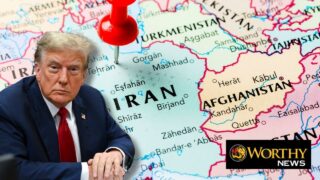
WASHINGTON D.C. (Worthy News) – President Donald Trump is weighing an initial, limited military strike on Iran aimed at forcing Tehran to meet U.S. demands for a comprehensive nuclear agreement, the Wall Street Journal reported.
The proposed opening assault would target select military or government facilities and could come within days if authorized, people familiar with the matter said. Officials described the potential action as a calibrated pressure tactic—designed to compel Iran to end uranium enrichment and return to serious negotiations—while stopping short of a full-scale war that could provoke sweeping retaliation.
If Iran refuses to comply, U.S. officials indicated Washington could escalate to a broader campaign against regime infrastructure, potentially aimed at weakening or toppling the Tehran government.
Trump has not made a final decision. On Thursday, he told reporters he would determine his next steps within “about two weeks,” adding, “We’re going to make a deal or get a deal one way or the other.”
White House spokeswoman Anna Kelly declined to comment on specific military options, saying only that “only President Trump knows what he may or may not do.”
Military Buildup Intensifies
The deliberations are unfolding against the backdrop of a significant U.S. military buildup across the Middle East. Cutting-edge F-35 and F-22 fighter jets have been repositioned to the region, with more than 50 aircraft reportedly moved in recent days. A second aircraft carrier strike group is now en route, further reinforcing American naval power. In addition, command-and-control aircraft—critical for coordinating complex air campaigns—along with advanced air defense systems have been deployed. The scale and pace of these movements represent one of the most concentrated displays of U.S. airpower in the region in recent years.
Diplomatic Efforts Stall
At the same time, diplomatic efforts appear to be faltering. Senior U.S. officials recently met with Iranian counterparts, pressing for an end to Tehran’s nuclear enrichment activities, tighter restrictions on its ballistic missile program, and a halt to its support for regional armed proxies. Iran has rejected sweeping concessions and continues to deny that it is seeking to develop nuclear weapons, deepening the impasse between the two sides.
Iran’s Supreme Leader Ali Khamenei warned that any U.S. strike would be met with “maximum force,” threatening American naval assets in the region.
Echoes of Past Strategy
The limited-strike option mirrors internal debates during Trump’s first term about delivering a “bloody nose” strike against North Korea. At that time, the administration ultimately chose diplomacy over military action.
Whether Trump pursues a similar path with Iran—or opts for escalation—remains uncertain. Officials say options under review range from a brief, targeted strike to a sustained campaign designed to force regime change.
With negotiations stalled and U.S. forces positioned across the region, the coming days could prove decisive.
Copyright 1999-2026 Worthy News. This article was originally published on Worthy News and was reproduced with permission.
Latest News from Worthy News

A suspected Islamic extremist armed with a knife stabbed three men in front of schoolchildren at a train station near Zurich, Switzerland’s financial capital, officials said Thursday.

The Pentagon has spent months positioning warships, aircraft, surveillance assets, and Marines around the Caribbean as President Donald Trump weighs possible military action against Cuba, according to a Politico report.

U.S. Central Command has confirmed to Congress that foreign adversaries have exploited commercially available cell phone location data to surveil and potentially target American military personnel in active war zones, raising fresh concerns over troop security in the Middle East.

The U.S. Department of War is stepping up efforts to protect Christians in Nigeria after President Donald Trump directed military leaders to focus on terrorist networks targeting believers in the West African nation, War Secretary Pete Hegseth said Wednesday.

Israeli Prime Minister Benjamin Netanyahu said Thursday that Israel now controls roughly 60 percent of the Gaza Strip and has ordered the Israel Defense Forces to expand that control to 70 percent, signaling a major escalation in Jerusalem’s campaign to weaken Hamas and prevent the terror group from rebuilding its military rule.

Israel carried out a targeted strike Thursday in a suburb south of Beirut, marking its first attack near the Lebanese capital in three weeks as the conflict with Hezbollah and Iran-backed terrorist groups intensifies.

President Donald Trump is weighing whether to approve a 60-day memorandum of understanding with Iran that would extend the fragile ceasefire in the Middle East, reopen the Strait of Hormuz to unrestricted shipping, and launch a new round of negotiations over Tehran’s nuclear program.