
By Brett Rowland | The Center Square
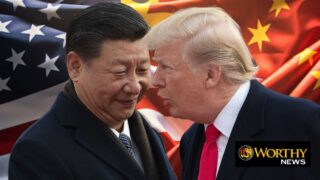
(Worthy News) – President Donald Trump on Friday said imports from China will face a new 100% tariff “over and above” existing import taxes on the world’s second-largest economy.
Trump responded after an earlier tariff truce with China, when Beijing tightened restrictions on rare earth minerals. China holds most of the world’s rare earth minerals, crucial for advanced manufacturing, including military equipment, cars and electronics.
Trump announced the new tariffs in a Truth Social post.
The U.S. president called China’s restrictions on exporting rare earth minerals a hostile act against the rest of the world.
“This affects ALL Countries, without exception, and was obviously a plan devised by them years ago. It is absolutely unheard of in International Trade, and a moral disgrace in dealing with other Nations,” Trump wrote on Truth Social.
Since retaking the White House in January, Trump has levied import taxes on every U.S. trading partner to give U.S. companies a home-field advantage in the global market.
Trump said imports from China will face an added 100% tariff “over and above” the existing 30% rate. Tariffs at this level brought trade between the two superpowers to a near halt earlier this year before the two nations reached a truce in May.
In addition to the new tariffs, Trump said he would restrict U.S. exports of “critical software.”
“It is impossible to believe that China would have taken such an action, but they have, and the rest is History,” Trump wrote.
Earlier in the day, Trump said he might cancel a planned meeting with Xi Jinping.
“I have not spoken to President Xi because there was no reason to do so. This was a real surprise, not only to me, but to all the Leaders of the Free World. I was to meet President Xi in two weeks, at APEC, in South Korea, but now there seems to be no reason to do so,” Trump said.
Earlier this year, trade between the U.S. and China – the world’s two largest economies – came to a standstill after each country hit the other with tariffs above 100%. In May, the two nations reached a 90-day deal to continue talks. At the time, the U.S. said it would reduce its tariffs on China from 145% to 30% while the two nations continued to talk. China said it would cut its levies on U.S. imports from 125% to 10%. That truce was briefly disrupted in June over concerns about rare earth exports, but Trump later said the deal was back on track.
Economists, businesses and some publicly traded companies have warned that tariffs could raise prices on a wide range of consumer products throughout the U.S.
Trump has said he wants to use tariffs to restore manufacturing jobs lost to lower-wage countries in decades past, shift the tax burden away from U.S. families, and pay down the national debt.
A tariff is a tax on imported goods that the importer pays, not the producer. The importer pays the cost of the duties directly to U.S. Customs and Border Protection, a federal agency.
U.S. markets tanked Friday as tensions in the trade war escalated. The Dow Jones fell 1.9%, the NASDAQ shed 3.56% and the S&P lost 2.71%.
Copyright 1999-2026 Worthy News. This article was originally published on Worthy News and was reproduced with permission.
Latest News from Worthy News

A federal appeals court on Tuesday temporarily allowed the Trump administration to continue collecting its 10% global tariff, pausing a lower-court ruling that found the import duties unlawful for three plaintiffs who had won relief last week. The U.S. Court of Appeals for the Federal Circuit issued a short-term administrative stay while it considers whether to keep the tariffs in place during the government’s appeal.
Saudi Arabia launched covert airstrikes inside Iran during the recent Middle East war, according to a Reuters exclusive citing two Western officials and two Iranian officials — a move that, if confirmed, would mark the first known Saudi military action carried out directly on Iranian soil. The reported strikes came in late March after the kingdom suffered Iranian attacks, including missile and drone strikes that exposed vulnerabilities in the U.S.-backed security umbrella protecting Gulf Arab states.
Russian President Vladimir Putin announced Tuesday that Russia had successfully test-fired its new Sarmat intercontinental ballistic missile — nicknamed “Satan II” by NATO — declaring it the most powerful missile in the world and saying it would enter combat service by the end of 2026.

Hungary’s new government signaled Monday it will continue buying Russian energy despite European Union plans to phase out imports of Russian oil and natural gas, raising the prospect of an early confrontation with Brussels.
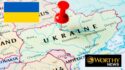
More than 100 new evangelical churches have reportedly opened and thousands of people have been baptized in Ukraine since Russia launched its full-scale invasion of the country in February 2022, church leaders say.

Hezbollah Secretary-General Naim Qassem said an agreement between Iran and the United States may be the best path to ending Israeli military operations in Lebanon, while defiantly rejecting any outside demand that the Iranian-backed terrorist group disarm.
U.S. federal prosecutors announced criminal charges Tuesday against the operator of the cargo ship that struck and destroyed Baltimore’s Francis Scott Key Bridge in 2024, killing six construction workers.