
by Emmitt Barry, Worthy News Correspondent
(Worthy News) – President Donald Trump announced on Monday that the United States and Iran were holding direct talks on Tehran’s nuclear program, marking a surprising development after earlier signals from Iranian officials seemed to reject U.S. proposals for such negotiations.
Trump sent an ultimatum to Supreme Leader Ayatollah Ali Khamenei, which Iranian officials initially dismissed. However, Trump’s recent announcement and his preference for diplomacy suggest a shift in Iranian policy, leading to direct negotiations.
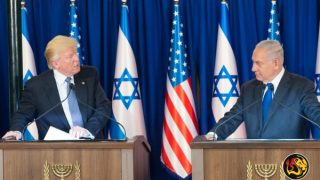
“We’re having direct talks with Iran, and they’ve started. It’ll go on Saturday. We have a very big meeting, and we’ll see what can happen,” Trump said during a meeting with Israeli Prime Minister Benjamin Netanyahu in the Oval Office.
Trump preferred diplomacy over conflict, emphasizing the importance of reaching an agreement with Iran.
“I think everybody agrees that doing a deal would be preferable to doing the obvious. The obvious is not something that I want to be involved with, or frankly that Israel wants to be involved with if they can avoid it,” he stated, clearly hinting at the undesirable alternative of military action against Iran’s nuclear facilities. “So we’ll see if we can avoid it… It’s getting to be very dangerous territory.”
Trump expressed optimism about the upcoming discussions, suggesting a successful outcome would greatly benefit Iran. “Maybe a deal’s going to be made; that would be great. It would be really great for Iran… We are meeting very importantly on Saturday, at almost the highest level,” he noted.
When asked how his potential deal with Iran would differ from the 2015 JCPOA he previously withdrew, Trump responded: “It’ll be different and maybe a lot stronger.”
Regarding the consequences if the talks do not succeed, Trump warned, “Iran will be in great danger.”
Israeli Prime Minister Benjamin Netanyahu, moments before Trump announced that the US is engaging in direct talks with Iran regarding its contentious nuclear program, expressed cautious backing for the initiative.
“We’re both united in the goal that Iran does not get nuclear weapons,” Netanyahu stated alongside the president in the Oval Office. “If it can be done diplomatically, in a comprehensive manner, similar to the approach taken in Libya, I think that would be a good thing.”
Amidst ongoing warfare in Gaza and Lebanon, military strikes in Yemen, a leadership transition in Syria, and skirmishes between Israel and Iran, tensions in the Middle East have intensified. Trump’s threats of military action against Iran have compounded these tensions. Recently, the Pentagon has significantly bolstered its regional military presence, deploying multiple carrier groups and increasing the number of fighter jets, bombers, and support aircraft, all strategically positioned near Iran.
Copyright 1999-2026 Worthy News. This article was originally published on Worthy News and was reproduced with permission.
Latest News from Worthy News

Asbury Theological Seminary says it has been removed from The United Methodist Church’s list of approved schools for ordination candidates, ending an 80-year relationship after the evangelical institution declined to align with the denomination’s unbiblical positions on marriage and human sexuality.

Florida has permanently closed its temporary illegal immigrant holding center known as “Alligator Alcatraz” after all federal detainees were transferred to other facilities, Gov. Ron DeSantis announced June 25.

Israel and Lebanon signed a U.S.-backed framework agreement Friday in Washington, a move officials described as a first step toward ending months of conflict along Israel’s northern border and opening the door to a broader peace settlement.

U.S.-Iran peace negotiations faced new turbulence Thursday after Iran’s Islamic Revolutionary Guard Corps warned commercial vessels against using routes outside Tehran’s approved passage through the Strait of Hormuz, while Iranian officials also rejected U.S. claims that unfrozen funds would be used to buy American agricultural products.

Fulani herdsmen attacked a Christian village in Plateau state, Nigeria, early Monday, killing 28 Christians, including a pastor, after reportedly being guided toward the homes of church leaders, according to Christian Daily International-Morning Star News.

U.S. Central Command said Wednesday that American forces killed a senior ISIS leader in a precision airstrike in northwest Syria, as the terror group seeks to exploit the country’s unstable security environment following years of war and political upheaval.

An incident at a beauty salon in Pakistan’s largest city has sparked renewed debate about discrimination against Christians after a customer reportedly refused to be served by a Christian employee because of her faith.