
By Stefan J. Bos, Chief International Correspondent Worthy News
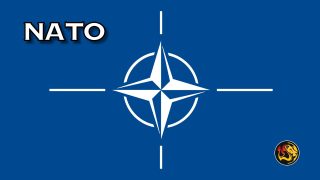
WASHINGTON/BUDAPEST (Worthy News) – U.S. President Joe Biden, physically and politically frail, has presided over what his supporters fear could be his final NATO Summit at a moment when diplomats say the military alliance needs to remain strong to tackle the war in Ukraine and other challenges. Delegates used the summit to celebrate the alliance’s 75th anniversary, announce more aid for Ukraine, and commit to the most significant overhaul in defense measures since what was believed to be the end of the Cold War.
Who thought the Cold War was over after the collapse of the Soviet Union may think twice: The United States will start deploying longer-range missiles in Germany in 2026. Both nations announced at the NATO military alliance summit in Washington that they will counter what they call Russia’s growing threat to Europe.
The decision will see Germany host the most powerful U.S. weapons based on the European continent since the Cold War as a clear warning to Russian President Vladimir Putin.
In a statement, the U.S.-Germany said the “episodic deployments” were in preparation for longer-term stationing in Europe of capabilities that would include SM-6, Tomahawk, and developmental hypersonic weapons with greater range.
The move would have been banned under the 1987 Intermediate-Range Nuclear Forces Treaty signed by the U.S. and the Soviet Union.
But that accord collapsed in 2019, raising fears of a renewed arms race between nuclear superpowers Russia and the United States with its allies.
Additionally, a NATO declaration said the 32 alliance member states intend to provide Ukraine with at least 40 billion euros (nearly $43.3 billion) in military aid within the next year.
The document also strengthened past NATO language on China, calling it a “decisive enabler” of Russia’s war effort in Ukraine and saying Beijing continues to pose systemic challenges to Euro-Atlantic security.
ILLEGAL WAR
NATO Secretary General Jens Stoltenberg told reporters it was the first time the 32 allies had jointly labeled China a decisive enabler of Russia’s war and called it an important message. “32 Allies state very clearly that China is a decisive enabler of Russia’s illegal war against Ukraine. We represent 50 percent of the world economy together, and it’s the first time that all NATO Allies stated this so clearly in an agreed document.”
Beijing has vehemently denied the accusations and says it wants to help broker peace.
Stoltenberg’s comments came before Biden was warmly welcomed at the summit before he gave a speech Tuesday in which he stressed that NATO was “stronger than it’s ever been” and that Ukraine can and will stop Russian leader Putin “with our full, collective support.”
“And today, NATO is better resourced than it ever has been. I want to pause on this because it’s significant,” the president said.
“In the year 2020, the year I was — the year I was elected president, only nine NATO Allies were spending 2 percent of their defense — GDP on defense. This year, 23 will spend at least 2 percent”, he added, provoking thunderous applause. “And some will spend more than that.”
However, diplomats fear that this may have been the last NATO summit of U.S. President Biden, who is physically and politically frail with a chorus of Democratic legislators demanding he steps aside.
Republican presidential candidate Donald J. Trump, who is expected to return to the White House, has questioned the amount of aid given to Ukraine to fight Russia’s invasion and U.S. support for allies generally. Trump told Fox News Radio he would not pull the U.S. out of NATO but reiterated that he wanted members to, in his words, “pay their bills.”
Copyright 1999-2026 Worthy News. This article was originally published on Worthy News and was reproduced with permission.
Latest News from Worthy News

President Donald Trump signed the temporary peace deal with Iran ahead of schedule Wednesday at the Palace of Versailles in France, kicking off negotiations over a final nuclear deal.
Iran’s Supreme Leader Mojtaba Khamenei’s statement following the signing of a memorandum of understanding with the United States is being viewed by analysts not as an embrace of peace, but as a carefully crafted declaration that preserves Tehran’s revolutionary posture while allowing the regime to regroup.

The United States imposed new sanctions Thursday on individuals and entities linked to Hezbollah, accusing them of using political and financial influence to obstruct Lebanon’s peace process and delay the Iran-backed group’s disarmament.
Ukraine launched one of its largest drone attacks on Moscow since the war began, hitting a key oil refinery and other targets around the Russian capital, leaving at least one person dead and numerous others injured, Russian officials said.
Russian President Vladimir Putin hosted Southeast Asian leaders in Kazan this week as Moscow moved to deepen ties with the Association of Southeast Asian Nations and promote its vision of a “multipolar world order” aimed at countering U.S. global dominance.

Israeli Prime Minister Benjamin Netanyahu said Thursday that Israeli troops will not withdraw from southern Lebanon and will maintain a security zone there for as long as Israel’s defense needs require, placing Jerusalem at odds with both Tehran and the terms of a U.S.-Iran memorandum that calls for an end to hostilities in Lebanon.

U.S. Defense Secretary Pete Hegseth told NATO leaders Thursday that the Pentagon is launching a six-month review of U.S. force posture and basing in Europe, signaling a major push by the Trump administration to ensure European allies assume primary responsibility for defending the continent.