
By Stefan J. Bos, Chief International Correspondent Worthy News
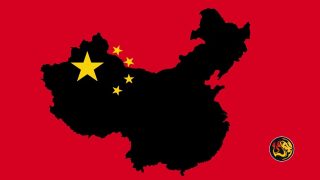
WASHINGTON/BEIJING (Worthy News) – A U.S. government-requested study has concluded that the U.S. army is not ready to respond to tactical nuclear weapons strikes by Communist-ruled China if war breaks out.
The Center for a New American Security (CNAS) study, obtained by Worthy News on Wednesday, was sponsored by the Pentagon’s Defense Threat Reduction Agency.
It said, “As the People’s Republic of China (PRC) dramatically expands and modernizes its nuclear arsenal, the risks of PRC nuclear coercion and escalation are evolving.”
Andrew Metrick, one of three CNAS co-authors of the report, added that in “a protracted conflict, nuclear use is unfortunately plausible as either a substitute for conventional arms or as a gamble for termination. In this future, the U.S. lacks the capabilities and concepts needed to achieve effective intra-war deterrence.”
The CNAS said, “Broadly speaking, the emerging nuclear dynamics between the United States and China appear to have different dynamics than those between the United States and the Soviet Union” during the Cold War.
Additionally CNAS suggested that a China-US standoff will “carry a greater risk of limited nuclear use.”
The study was expected to raise alarm bells at a time when China is increasing its military presence near Taiwan, which Beijing views as part of China, and elsewhere in the South China Sea.
Analysts have warned that China’s military actions could impact the smooth flow of trade and hasten a confrontation with the U.S. military backing allies in the region.
Copyright 1999-2026 Worthy News. This article was originally published on Worthy News and was reproduced with permission.
Latest News from Worthy News

President Donald Trump signed the temporary peace deal with Iran ahead of schedule Wednesday at the Palace of Versailles in France, kicking off negotiations over a final nuclear deal.
Iran’s Supreme Leader Mojtaba Khamenei’s statement following the signing of a memorandum of understanding with the United States is being viewed by analysts not as an embrace of peace, but as a carefully crafted declaration that preserves Tehran’s revolutionary posture while allowing the regime to regroup.
The United States imposed new sanctions Thursday on individuals and entities linked to Hezbollah, accusing them of using political and financial influence to obstruct Lebanon’s peace process and delay the Iran-backed group’s disarmament.

Ukraine launched one of its largest drone attacks on Moscow since the war began, hitting a key oil refinery and other targets around the Russian capital, leaving at least one person dead and numerous others injured, Russian officials said.

Russian President Vladimir Putin hosted Southeast Asian leaders in Kazan this week as Moscow moved to deepen ties with the Association of Southeast Asian Nations and promote its vision of a “multipolar world order” aimed at countering U.S. global dominance.

Israeli Prime Minister Benjamin Netanyahu said Thursday that Israeli troops will not withdraw from southern Lebanon and will maintain a security zone there for as long as Israel’s defense needs require, placing Jerusalem at odds with both Tehran and the terms of a U.S.-Iran memorandum that calls for an end to hostilities in Lebanon.

U.S. Defense Secretary Pete Hegseth told NATO leaders Thursday that the Pentagon is launching a six-month review of U.S. force posture and basing in Europe, signaling a major push by the Trump administration to ensure European allies assume primary responsibility for defending the continent.