
By Stefan J. Bos, Chief International Correspondent Worthy News
BELGRADE/BUDAPEST (Worthy News) – Protesters in Serbia stood in silence for 15 minutes on Friday for the victims of a roof collapse in a northern city that killed more than a dozen people and underscored concerns about corruption in the Balkan nation.
The demonstrators say they want to keep pressure on the populist authorities to punish those responsible for the November 1 tragedy in Novi Sad, where the concrete outer roof at the central railway station smashed down on people.
Initially, 14 people died, and three were injured, but one more person later died in hospital, officials said. The railway station building was reportedly renovated twice in recent years.
Street protests and blockades have been held almost daily since the roof crash, demanding justice. Another rally is planned on Sunday in Novi Sad to mark one month since the tragedy.
While prosecutors have announced the arrests of 13 people, a Serbian court this week released from detention former government construction minister Goran Vesic.
This has fueled public anger about the ongoing investigation, as the ruling populists control both the police and the judiciary.
CHINA’S ROLE
Critics say corruption and a lack of transparency, deeply rooted in Serbia’s ruling elite, contributed to sloppy work and the eventual roof collapse.
The station was renovated as part of a Chinese-led upgrade of Serbia’s railway infrastructure.
The renovation was unveiled in 2022 during the election campaign, underscoring China’s growing regional economic footprint.
However, reconstruction continued until July this year, when the authorities declared the station had been rebuilt “according to European standards.”
Yet Novi documentation concerning the renovation has been classified as confidential, according to well-informed sources.
Serbia’s President Aleksandar Vucic, who has faced criticism over his perceived authoritarian style, accused protesters of being “bullies and thugs.”
‘POLITICAL GAINS’
He said opposition supporters “used people’s deaths for political gains.”
Scuffles erupted both in Serbia’s parliament and during some of the recent rallies when pro-government protesters showed up to break up the opposition-led blockades.
Several incidents were also reported during Friday’s silent protest in Belgrade, the capital city. In Novi Sad, residents held a long black banner for the victims.
Some people at the protests in other cities held white roses or posters with a red handprint, telling authorities they have “blood on their hands.”
More protests were expected Sunday, a month after the tragedy that shocked the nation.
Copyright 1999-2026 Worthy News. This article was originally published on Worthy News and was reproduced with permission.
Latest News from Worthy News

President Donald Trump warned Friday that the United States may soon strike Iran’s Pickaxe Mountain, a deeply fortified underground site near the Natanz uranium enrichment complex, as tensions over Tehran’s nuclear program continue to sharpen.
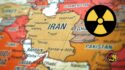
The United States, Britain, France, and Germany are pressing the International Atomic Energy Agency’s Board of Governors to report Iran to the U.N. Security Council, accusing Tehran of violating its nuclear obligations and refusing to fully account for its enriched uranium stockpile.

Israeli Prime Minister Benjamin Netanyahu declared that removing Iran’s ruling regime has become Israel’s “central mission,” telling senior military officials that the goal is now “within reach” as Tehran faces mounting pressure from Israel, the United States, and regional fallout from its terror network.

A new U.S.-Saudi civilian nuclear agreement could eventually give Riyadh a pathway to enrich uranium up to 20%, raising fresh concerns in Washington over nuclear proliferation in the Middle East, according to a Wall Street Journal exclusive.

The Israel Defense Forces said Thursday it had completed clearing a strategic Hezbollah underground facility beneath the Ali Taher Ridge in southern Lebanon and was preparing the tunnel complex for demolition.

Syria has begun destroying chemical weapons materials left behind by the Assad regime, marking the first known destruction process of its kind in the country in roughly a decade, officials told the U.N. Security Council on Thursday.

U.S. lawmakers are raising fresh concerns that China, Russia and other American adversaries could use electromagnetic pulse weapons to cripple the nation’s electrical grid and critical infrastructure, potentially plunging large portions of the country into darkness.