
by Karen Faulkner, Worthy News Correspondent
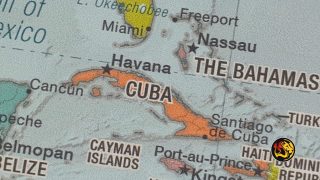
(Worthy News) – A fleet of Russian warships including a nuclear-powered submarine on Monday left Cuba, five days after passing within 30 miles of Florida on its way to conduct planned tactical nuclear drills in Cuban waters, Newsweek reports.
Moscow had said the drills were planned with ally Havana in response to “provocative statements and threats of individual Western officials” over Russia’s ongoing invasion of Ukraine.
Having carried out its exercises, the Russian sent its nuclear submarine north to the Atlantic, and the remaining warships south, where they are expected to dock in Venezuela, Newsweek said.
Given the Russian flotilla had passed within sight of Miami in Florida the US and Canadian Navies said they were continuing to “closely monitor” the Russian submarine’s movements as it headed to the Atlantic this week, Newsweek reports.
The US has said it did not consider Russia’s Cuban exercises to constitute a direct threat from Moscow.
“The threat of Russian ships in Cuban waters depends on what they are doing in Cuba,” Michael Allen, a former senior director at the National Security Council (NSC) noted in comments to Newsweek.
“A mere port call is not a threat—we do those all over the world. If there is cargo being delivered to Cuba, if they are installing even more in the way of spy or satellite dishes, that could be worrying about what they are setting up at our border,” Allen said.
Copyright 1999-2026 Worthy News. This article was originally published on Worthy News and was reproduced with permission.
Latest News from Worthy News

President Donald Trump signed the temporary peace deal with Iran ahead of schedule Wednesday at the Palace of Versailles in France, kicking off negotiations over a final nuclear deal.
Iran’s Supreme Leader Mojtaba Khamenei’s statement following the signing of a memorandum of understanding with the United States is being viewed by analysts not as an embrace of peace, but as a carefully crafted declaration that preserves Tehran’s revolutionary posture while allowing the regime to regroup.

The United States imposed new sanctions Thursday on individuals and entities linked to Hezbollah, accusing them of using political and financial influence to obstruct Lebanon’s peace process and delay the Iran-backed group’s disarmament.

Ukraine launched one of its largest drone attacks on Moscow since the war began, hitting a key oil refinery and other targets around the Russian capital, leaving at least one person dead and numerous others injured, Russian officials said.

Russian President Vladimir Putin hosted Southeast Asian leaders in Kazan this week as Moscow moved to deepen ties with the Association of Southeast Asian Nations and promote its vision of a “multipolar world order” aimed at countering U.S. global dominance.

Israeli Prime Minister Benjamin Netanyahu said Thursday that Israeli troops will not withdraw from southern Lebanon and will maintain a security zone there for as long as Israel’s defense needs require, placing Jerusalem at odds with both Tehran and the terms of a U.S.-Iran memorandum that calls for an end to hostilities in Lebanon.

U.S. Defense Secretary Pete Hegseth told NATO leaders Thursday that the Pentagon is launching a six-month review of U.S. force posture and basing in Europe, signaling a major push by the Trump administration to ensure European allies assume primary responsibility for defending the continent.