
By Stefan J. Bos, Chief International Correspondent Worthy News
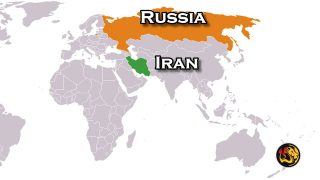
TEHRAN/MOSCOW/BUDAPEST (Worthy News) – Moscow says future talks between Russia and the United States will include discussions on Iran’s nuclear program amid concerns the Islamic Republic will soon have atomic weapons.
The pledge came while details emerged that Russian military experts visited Iran two times last year as Tehran looked to cooperation with Moscow because its proxies and defense capabilities suffered devastating blows in a war with Israel.
Iran has been delivering drones to Russia for use in Moscow’s ongoing invasion of Ukraine, while Moscow apparently offered military expertise.
“Russian missile specialists don’t just appear out of the blue,” said Behnam Ben Taleblu, senior fellow at the Foundation for Defense of Democracies (FDD).
Additionally, Iran purchased Russian fighter jets and helicopters in 2023. “Alarm bells should be going off in Washington and Jerusalem,” Taleblu added.
Several sources confirmed that senior missile and air defense experts reportedly traveled to Tehran in April and September 2024.
The visits reportedly came while Iran was embroiled in a regional confrontation with Israel following the October 7, 2023, Hamas attack in Israel.
NO DIVORCE
FDD’s Taleblu said the visit was proof “that any effort to divorce Russia from Iran will be “self-defeating” for the United States.
Yet, with a Russia-Ukraine peace deal on the horizon and the U.S. seeking to re-establish trade and diplomatic ties with Russia, Iran competes for the Kremlin’s attention.
The Kremlin revealed that the subject of Iran’s nuclear program had been “touched upon” in an initial round of U.S.-Russia talks last month.
Russia said that it has agreed to assist President Donald J. Trump’s administration in talks with Iran on issues like Tehran’s nuclear program and its support for anti-U.S. proxies such as Hamas, Hezbollah, and others.
Experts agree that Russia and Iran are collaborating to keep one another strong and pursue their mutual objective of eroding U.S. global influence.
Moscow and Tehran further deepened their partnership in January after signing a 20-year “comprehensive strategic partnership treaty.
However, the pact doesn’t include a bilateral security agreement; if it’s up to Washington, it will stay that way.
Copyright 1999-2026 Worthy News. This article was originally published on Worthy News and was reproduced with permission.
Latest News from Worthy News

President Donald Trump abruptly canceled planned U.S. strikes against Iran on Thursday, saying a multinational agreement to end the conflict had been approved by top Iranian leadership and was awaiting final documents and a formal signing.

Federal authorities said Thursday they have accounted for 146,000 unaccompanied migrant children who entered the United States during former President Joe Biden’s administration, while roughly 300,000 minors remain unaccounted for, amid allegations that many vulnerable children were placed with fraudulent sponsors and exposed to abuse, labor exploitation, and sex trafficking.

Congress left Washington without renewing Section 702 of the Foreign Intelligence Surveillance Act, allowing a key foreign surveillance authority used to track foreign terrorists and national security threats to expire Friday.

The U.S. Court of Appeals for the Federal Circuit on June 11 temporarily allowed President Donald Trump’s 10 percent global tariffs to remain in effect, extending a pause on a lower court ruling that had struck down the duties as unlawful.

Dutch police detained a young man l man after four people, including three children, were killed when a car struck a group of cyclists during a school outing near the Belgian border on Thursday, officials said.

The leaders of Hungary, Poland, the Czech Republic, and Slovakia are expected to meet this month amid growing debate within the European Union over how future member states should be admitted and monitored.

China has condemned the European Union’s ban on public funding for Chinese-made solar inverters, a move that analysts say could affect more than a fifth of new solar capacity and complicate efforts to meet the bloc’s self-imposed “climate targets.”