
By Stefan J. Bos, Chief International Correspondent
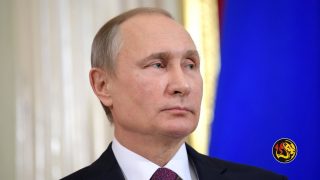
MOSCOW/BUDAPEST (Worthy News) – Russia’s president has inaugurated two new nuclear submarines after announcing he would run for re-election in March.
Vladimir Putin presided at a flag-raising ceremony for two new submarines, including the Emperor Alexander III, which last month tested a nuclear-capable Bulava intercontinental ballistic missile.
He also placed his nuclear forces on raised alert and announced the deployment of tactical nuclear missiles in Belarus, his neighbor and ally.
Last month, Putin signed a law revoking Russia’s ratification of the global treaty that bans nuclear testing, although Moscow says it will not carry out a test.
A Russian test in a later stage would be Russia’s first since the 1991 collapse of the Soviet Union – unless the United States does so.
Some security analysts say nuclear weapons have assumed greater importance in Putin’s thinking and rhetoric.
His conventional forces struggled in Ukraine following Russia’s invasion of the country early last year.
Western countries weaned themselves off Russian energy, weakening their ability to exert pressure by cutting off oil and gas.
Yet the unveiling of new nuclear submarines made sure the West would continue to pay attention to Russia as tensions increasingly escalated into a new Cold War. And with Putin expected to win the presidency for another six-year term, policies were not expected to change.
Copyright 1999-2026 Worthy News. This article was originally published on Worthy News and was reproduced with permission.
Latest News from Worthy News

A Dutch community remained in shock Saturday after a 13-year-old girl was detained following the discovery of her parents’ bodies in their home in the northern Netherlands.
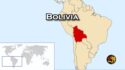
Bolivian President Rodrigo Paz declared a 90-day state of emergency Saturday, empowering the military to clear road blockades after nearly 50 days of anti-government protests that have included widespread road blockades, leaving at least 14 people dead and crippling the nation’s economy.
A powerful thunderstorm system sweeping across Western Europe killed at least one person in the Netherlands, injured several others in Belgium and Germany, and caused widespread damage as nearly 190,000 lightning flashes illuminated the skies, authorities said Saturday.
Israeli strikes killed at least 10 people in Lebanon on Saturday despite a ceasefire that took effect hours earlier, officials said, with Israel claiming it was responding to attacks by the Iran-backed Hezbollah group.
Israel and Iran-backed Hezbollah have agreed to a ceasefire that was to begin Friday afternoon, Worthy News learned.
At least 10 people, including four children, were injured in a Russian strike on Ukraine’s northeastern Kharkiv region, Ukrainian authorities said Friday. In southern Ukraine, the State Emergency Service reported that one person was killed and four others were injured in a separate Russian attack on the Odesa region.

President Donald Trump signed the temporary peace deal with Iran ahead of schedule Wednesday at the Palace of Versailles in France, kicking off negotiations over a final nuclear deal.