
By Stefan J. Bos, Chief International Correspondent Worthy News
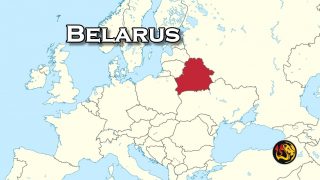
MOSCOW/MINSK (Worthy News) – The Belarusian president confirmed on Christmas Day that Russia completed its shipments of tactical nuclear weapons to Belarus in a warning to the Western NATO military alliance.
Alexander Lukashenko told delegates at a Moscow-led economic bloc in the Russian city of St Petersburg that the deliveries “were finished in October.”
He declined to say how many or where they have been deployed, but experts made clear they were likely undetected by the United States and its Western allies.
Tactical nuclear weapons are designed for use on the battlefield and have a short range and a low yield compared with much more powerful nuclear warheads fitted to long-range missiles.
They can have a yield as small as about 1 kiloton, significantly less than the 15 kiloton-yield of the U.S. bomb used on Hiroshima during the Second World War.
Russia said it would maintain control over the weapons it sends to Belarus.
Lukashenko said hosting Russian nuclear weapons in Belarus is meant to deter NATO-member Poland, which supports Ukraine with military, humanitarian, and political backing.
RUSSIAN INVASION
Russian troops based in Belarus invaded Ukraine from the north in the war’s opening days in February last year.
The devices delivered to Belarus, a close ally of Russia, are compact and can be discreetly carried on a truck or plane, according to experts.
Aliaksandr Alesin, an independent Minsk-based military analyst, said recently that the weapons use containers that don’t emit radiation and could have been moved to Belarus without the West knowing.
“They easily fit in a regular Il-76 transport plane,” broadcaster Sky News quoted him as saying in July when further reports of shipments were made. “There are dozens of flights a day, and it’s very difficult to track down that special flight. The Americans could fail to monitor it.”
Belarus has 25 underground facilities – built during the Cold War – for nuclear-tipped intermediate-range missiles that can withstand missile attacks, Alesin added.
Only five or six such depots could actually store tactical nuclear weapons, he said, but the military apparently operates at all of them to confuse Western intelligence services.
The deliveries were expected to raise international concerns about a widening of the armed conflict in Ukraine, in which hundreds of thousands of people are believed to have been killed.
Copyright 1999-2026 Worthy News. This article was originally published on Worthy News and was reproduced with permission.
Latest News from Worthy News

A Dutch community remained in shock Saturday after a 13-year-old girl was detained following the discovery of her parents’ bodies in their home in the northern Netherlands.
Bolivian President Rodrigo Paz declared a 90-day state of emergency Saturday, empowering the military to clear road blockades after nearly 50 days of anti-government protests that have included widespread road blockades, leaving at least 14 people dead and crippling the nation’s economy.

A powerful thunderstorm system sweeping across Western Europe killed at least one person in the Netherlands, injured several others in Belgium and Germany, and caused widespread damage as nearly 190,000 lightning flashes illuminated the skies, authorities said Saturday.

Israeli strikes killed at least 10 people in Lebanon on Saturday despite a ceasefire that took effect hours earlier, officials said, with Israel claiming it was responding to attacks by the Iran-backed Hezbollah group.

Israel and Iran-backed Hezbollah have agreed to a ceasefire that was to begin Friday afternoon, Worthy News learned.

At least 10 people, including four children, were injured in a Russian strike on Ukraine’s northeastern Kharkiv region, Ukrainian authorities said Friday. In southern Ukraine, the State Emergency Service reported that one person was killed and four others were injured in a separate Russian attack on the Odesa region.

President Donald Trump signed the temporary peace deal with Iran ahead of schedule Wednesday at the Palace of Versailles in France, kicking off negotiations over a final nuclear deal.