
by Emmitt Barry, with reporting from Worthy News Jerusalem Bureau Staff
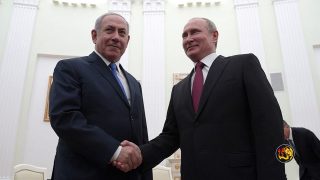
MOSCOW/JERUSALEM (Worthy News) – Russian President Vladimir Putin and Israeli Prime Minister Benjamin Netanyahu held a rare phone conversation Monday focusing on regional stability, the Gaza peace proposal backed by Washington, and ongoing Middle East tensions, according to official statements from both sides.
The Kremlin said the two leaders discussed “current developments in the Middle East,” with particular attention to U.S. President Donald J. Trump’s 20-point plan for ending the war in Gaza. Putin reaffirmed Moscow’s stance “in favor of a comprehensive settlement of the Palestinian issue within the framework of international law.”
Netanyahu and Putin also reviewed the Iranian nuclear question and efforts to stabilize Syria, a country where both Russia and Iran maintain a military presence that continues to concern Israel. The conversation reportedly reflected an ongoing effort by Netanyahu to balance Israel’s security interests with Moscow’s influence in the region.
According to Israeli broadcaster KAN News, Netanyahu’s government has recently been working to reduce tensions between the United States and Russia amid the continuing war in Ukraine. The Kremlin, meanwhile, continues to emphasize its close relationships with Palestinian factions, including Hamas.
Earlier this year, after the release of Russian-Israeli hostage Sasha Troufanov, Putin publicly credited the group’s leadership. “Your release is a result of Russia’s long-standing ties with Palestinians, their representatives, and various organizations. We should thank Hamas’s leadership for this humanitarian act,” Putin told the former hostage and his family.
The call also included personal gestures — Netanyahu extended birthday greetings to the Russian leader, who in turn wished Israel well on the Jewish festival of Sukkot.
Copyright 1999-2026 Worthy News. This article was originally published on Worthy News and was reproduced with permission.
Latest News from Worthy News

Thousands of Hungarians rallied outside Budapest’s Sándor Palace on Thursday in protest against Prime Minister Péter Magyar, whom they accuse of undermining democracy through planned constitutional changes that would pave the way for removing President Tamás Sulyok from office.

Israel has provided the United States with new intelligence indicating that Iran may be developing a fresh plan to assassinate President Donald Trump, according to people familiar with the matter cited by The Wall Street Journal.

President Donald Trump is pressing congressional Republicans to move quickly on two of his biggest unfinished priorities: a $350 billion defense funding package and a sweeping nationwide voter ID mandate.

Tens of thousands of Christians have been killed in Nigeria over the past six years, many in attacks blamed on radicalized Fulani militant groups, according to a new report by the Observatory for Religious Freedom in Africa.

President Donald Trump’s Board of Peace is preparing pilot “humanitarian zones” in southern Gaza aimed at sheltering vetted Palestinian civilians outside Hamas control, according to a source familiar with the planning.
President Donald Trump closed a tense NATO summit Wednesday by hailing what he called “tremendous unity” inside the alliance, even after delivering blunt warnings to Spain, renewing his push for U.S. control of Greenland, and announcing a major step to strengthen Ukraine’s air defenses against Russia.

President Donald Trump used the closing press conference of the NATO summit in Ankara to deliver one of his sharpest warnings yet about communism, saying the ideology is gaining ground in the United States and abroad and poses a grave danger to American liberty.