
By Stefan J. Bos, Chief International Correspondent Worthy News
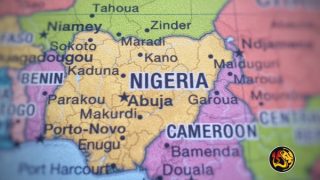
ABUJA (Worthy News) – Residents in northern Nigeria were grieving Thursday after authorities confirmed that more than 140 people, including children, were killed when an overturned gasoline tanker truck exploded in flames while they tried to scoop up fuel.
Most of the bodies were unrecognizable, emergency services said, adding that dozens of people more were injured.
Witnesses said the accident occurred around midnight in northern Jigawa state’s Majiya town when the tanker driver lost control on a highway. Police spokesperson Lawan Adam said locals rushed to the scene before the “massive inferno” that quickly burned many people.
“Close to 140 people were put in a mass grave, apart from people buried in other places,” the head of the National Emergency Management Agency in the region, Nura Abdullahi, said.
Resident Sani Umar told local Channels Television the fire spread so quickly that many couldn’t escape. “People were running in all directions, screaming for help,” Umar recalled.
But by that time, it was too late for many. Most of the victims were “burned to ashes” at the scene, added Dr. Haruna Mairiga, head of the Jigawa emergency services. “If they knew [about the danger], they wouldn’t have gone to fetch [the fuel], Mairiga concluded.
MORE DEATHS
The Nigerian Medical Association urged doctors to rush to nearby emergency rooms to help with the influx of patients.
It was the latest tragedy in northern Nigeria, which also suffers from anti-Christian violence that has killed thousands of people every year.
Several deadly tanker accidents have occurred in Nigeria as Africa’s most populous country lacks an efficient railway system for transporting cargo.
Observers noted that petrol has become a precious commodity during Nigeria’s worst economic crisis in a generation.
In a nation marred by poverty, people often salvage fuel with cups and buckets — mainly because of soaring fuel prices, which have tripled since the government ended costly gas subsidies last year.
More than 1,500 accidents involving fuel tankers occurred in Nigeria in 2020, resulting in 535 deaths, according to Nigeria’s Federal Road Safety Corps. In many cases, there are no prosecutions, and victims or their families are not compensated, experts say.
TANKER COLLIDES
At least 48 people were killed in September when a fuel tanker collided with another truck in north-central Nigeria.
Yet the latest accident revived questions about implementing safety measures and traffic regulations in West Africa.
In a statement, Nigerian Vice President Kashim Shettima called for a safety review and said the federal government was sending resources to support those affected.
Many tankers are not designed according to international standards to avoid spillage during accidents, explained Timothy Iwuagwu, president of the Institute of Safety Professionals of Nigeria.
He complained that the agencies charged with enforcing safety regulations also often fail to do so.
“There are also not enough awareness campaigns, [and] people are not willfully compliant” with safety measures when such accidents happen, Iwuagwu stressed.
Yet, with new questions raised, Nigerian lawmakers observed a minute’s silence in the Senate, commemorating the victims of yet another tragedy in this troubled land.
Copyright 1999-2026 Worthy News. This article was originally published on Worthy News and was reproduced with permission.
Latest News from Worthy News

President Donald Trump has invoked the Cold War-era Defense Production Act to accelerate the production of U.S. munitions, missiles, interceptors, and critical defense components as American stockpiles face mounting strain from the war with Iran and years of heavy weapons transfers to allies, including Ukraine and Israel.

Fulani herdsmen killed five Christians at a mining site in central Nigeria’s Plateau state, highlighting continuing attacks on Christian communities in Africa’s most populous nation, Christians say.

Hundreds of employees have reportedly been dismissed from media outlets aligned with former Hungarian Prime Minister Viktor Orbán, highlighting growing turmoil within the country’s right-wing media landscape following his election defeat and the subsequent loss of political influence.

Journalists jailed, attacked, or otherwise targeted across several countries marked fresh setbacks for press freedom this month, with media advocates highlighting cases ranging from Azerbaijan and Iran to Russia and Armenia.
A new Canadian parliamentary committee report recommends that people with mental illness should be “indefinitely excluded” from eligibility for assisted dying, a recommendation that could set a precedent for other liberal countries dealing with this issue.
President Donald Trump has signed a memorandum of understanding aimed at ending the war with Iran, U.S. officials said, launching a 60-day diplomatic test that could determine whether the Middle East moves toward a fragile ceasefire or back toward confrontation.

In a rare instance of congressional unity, the House and Senate reached a bipartisan, bicameral agreement over legislation to boost housing supply and home ownership across the country.