

by Worthy News Washington D.C. Bureau Staff
(Worthy News) – A team of researchers operating in Antarctica has detected strange and unexplained radio signals emanating from beneath the continent’s vast ice sheets, challenging current scientific understanding.
The discovery, published in Physical Review Letters, occurred during an experiment using the Antarctic Impulsive Transient Antenna (ANITA) — a sophisticated array of instruments designed to study cosmic particles.
ANITA, launched by balloon 40 kilometers (29 miles) above the Antarctic ice, was intended to detect radio waves produced when high-energy neutrinos from space collide with the ice below. Antarctica was chosen for this mission due to its minimal radio interference, providing a pristine environment to capture signals from cosmic events across the universe.
But instead of picking up expected neutrino interactions, researchers found radio waves coming from deep below the ice at steep angles–signals that defy current models of particle physics. “The radio waves that we detected were at really steep angles, like 30 degrees below the surface of the ice,” explained Stephanie Wissel, associate professor of physics, astronomy, and astrophysics at Penn State. “The waves should have been absorbed by thousands of kilometers of rock. We still don’t actually have an explanation for these anomalies.”
Neutrinos, often described as “ghost particles,” are produced by high-energy cosmic sources and rarely interact with matter. Trillions pass through Earth–and even our bodies–every second without a trace. Detecting them offers rare insights into distant and extreme cosmic events. As Wissel put it: “If we detect them, it means they have traveled all this way without interacting with anything else. We could be detecting a neutrino coming from the edge of the observable universe.”
However, when the ANITA team compared their data with two other neutrino experiments, the results did not align, indicating that the signals were not neutrinos after all. The source remains a mystery. Some scientists speculate the waves could be linked to dark matter or unknown radio propagation effects near ice, but no theory has been confirmed.
“My guess is that some interesting radio propagation effect occurs near ice and also near the horizon that I don’t fully understand,” Wissel said. “But we certainly explored several of those, and we haven’t been able to find any of those yet either.”
The findings have raised new questions about what lies beneath Antarctica’s ice and how radio waves can travel in ways previously thought to be impossible. For now, the signals remain one of the many unsolved mysteries at the edge of our scientific knowledge.
Copyright 1999-2026 Worthy News. This article was originally published on Worthy News and was reproduced with permission.
Latest News from Worthy News

The United States launched a new wave of strikes against Iran on Wednesday, targeting air defense and radar sites near the Strait of Hormuz as President Donald Trump increased military pressure on Tehran following days of escalating attacks and stalled nuclear negotiations.

Tehran warned Wednesday it would “reassess” its participation in peace talks with the United States after President Donald J. Trump said Iran would have to “pay the price” as the two nations traded fire overnight.

The killing of a 22-year-old Christian man in Pakistan’s Punjab province has sparked grief and renewed concerns about the safety of religious minorities, Christian leaders told Worthy News on Wednesday.

Turkish President Recep Tayyip Erdogan warned Wednesday that Israel’s military operations in Syria and Lebanon have reached the point of threatening Turkey itself, escalating a bitter war of words with Israeli Prime Minister Benjamin Netanyahu as tensions widen across the Middle East.

U.S. inflation rose by 0.5% in May, coming up to 4.2% over the last 12 months, according to data from the U.S. Bureau of Labor Statistics released on Wednesday.
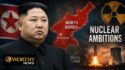
North Korea’s uranium-enrichment capacity could soon rise by roughly 75% once a new facility at its Yongbyon nuclear complex reaches full production, according to a Wall Street Journal exclusive citing analysis from Vertic, a London-based arms-control verification group.

Israel’s Knesset on Wednesday approved in a preliminary reading a controversial Basic Law proposal that would declare Torah study a foundational value of the State of Israel and effectively recognize long-term yeshivah study as a form of meaningful service comparable to serving in the Israel Defense Forces.