

By Stefan J. Bos, Chief International Correspondent Worthy News
AMSTERDAM/BUDAPEST (Worthy News) – Millions across Europe are coping with extreme cold, and thousands were left without power in the Nordic countries as floods hit France, Germany, and the Netherlands.
Thousands in the Nordic countries were still without power as gusty winds and snow wreaked havoc in the region. Many were left drivers stuck in their cars on hazardous, clogged highways.
Finland and Sweden recorded temperatures minus 40 Celsius (-40 Fahrenheit) earlier this week – the coldest temperatures recorded this winter.
The temperatures came despite climate change, observing scientists saying the world is warming faster than ever before in human history.
The climate was a hot topic in the Netherlands, where on Saturday, roads in the north and northwest were closed Friday because of flooding. Rivers bursting their banks or dams also caused damage, including in the southern city of Maastricht, where a houseboat hit a bridge.
Earlier in Hungary, authorities said that they had overcome the worst flooding in years, including in the capital, Budapest, where the Danube River recorded its highest level since 2013.
In France, a flood warning issued at the highest level was lifted near the Belgian border as waters receded.
PEOPLE EVACUATED
However, several hundred people had to be evacuated, and thousands of homes were damaged in repeated floods that hit the same region of France in November.
French authorities warned that waterways would likely remain extremely high in the coming weeks.
In Britain, the ground was already saturated from a series of fall tempests when Storm Henk struck with intense rainfall. Even as drier weather arrived, hundreds of flood warnings were in place Friday, and the Environment Agency warned that the impact of flooding could last another five days.
But perhaps nowhere were people as hard hit by weather that concerned scientists linked to “climate change” rather than “global warming” as in Sweden: Schools were closed, and an extreme chill caused havoc on the roads.
In the area, some 4,000 homes already were left in the dark on Thursday, with temperatures plunging to -38 Celsius (nearly minus 40 Fahrenheit), Swedish public radio reported.
The day before, the mercury dropped to -43.6 Celsius, or Fahrenheit, the lowest January temperature recorded in Sweden in some 25 years.
The biting cold that hit Scandinavia was part of a storm that has also impacted Western Europe, with more turbulence expected as 2024 gets underway.
Copyright 1999-2026 Worthy News. This article was originally published on Worthy News and was reproduced with permission.
Latest News from Worthy News

A Dutch community remained in shock Saturday after a 13-year-old girl was detained following the discovery of her parents’ bodies in their home in the northern Netherlands.

Bolivian President Rodrigo Paz declared a 90-day state of emergency Saturday, empowering the military to clear road blockades after nearly 50 days of anti-government protests that have included widespread road blockades, leaving at least 14 people dead and crippling the nation’s economy.
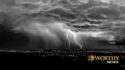
A powerful thunderstorm system sweeping across Western Europe killed at least one person in the Netherlands, injured several others in Belgium and Germany, and caused widespread damage as nearly 190,000 lightning flashes illuminated the skies, authorities said Saturday.

Israeli strikes killed at least 10 people in Lebanon on Saturday despite a ceasefire that took effect hours earlier, officials said, with Israel claiming it was responding to attacks by the Iran-backed Hezbollah group.

Israel and Iran-backed Hezbollah have agreed to a ceasefire that was to begin Friday afternoon, Worthy News learned.

At least 10 people, including four children, were injured in a Russian strike on Ukraine’s northeastern Kharkiv region, Ukrainian authorities said Friday. In southern Ukraine, the State Emergency Service reported that one person was killed and four others were injured in a separate Russian attack on the Odesa region.

President Donald Trump signed the temporary peace deal with Iran ahead of schedule Wednesday at the Palace of Versailles in France, kicking off negotiations over a final nuclear deal.